

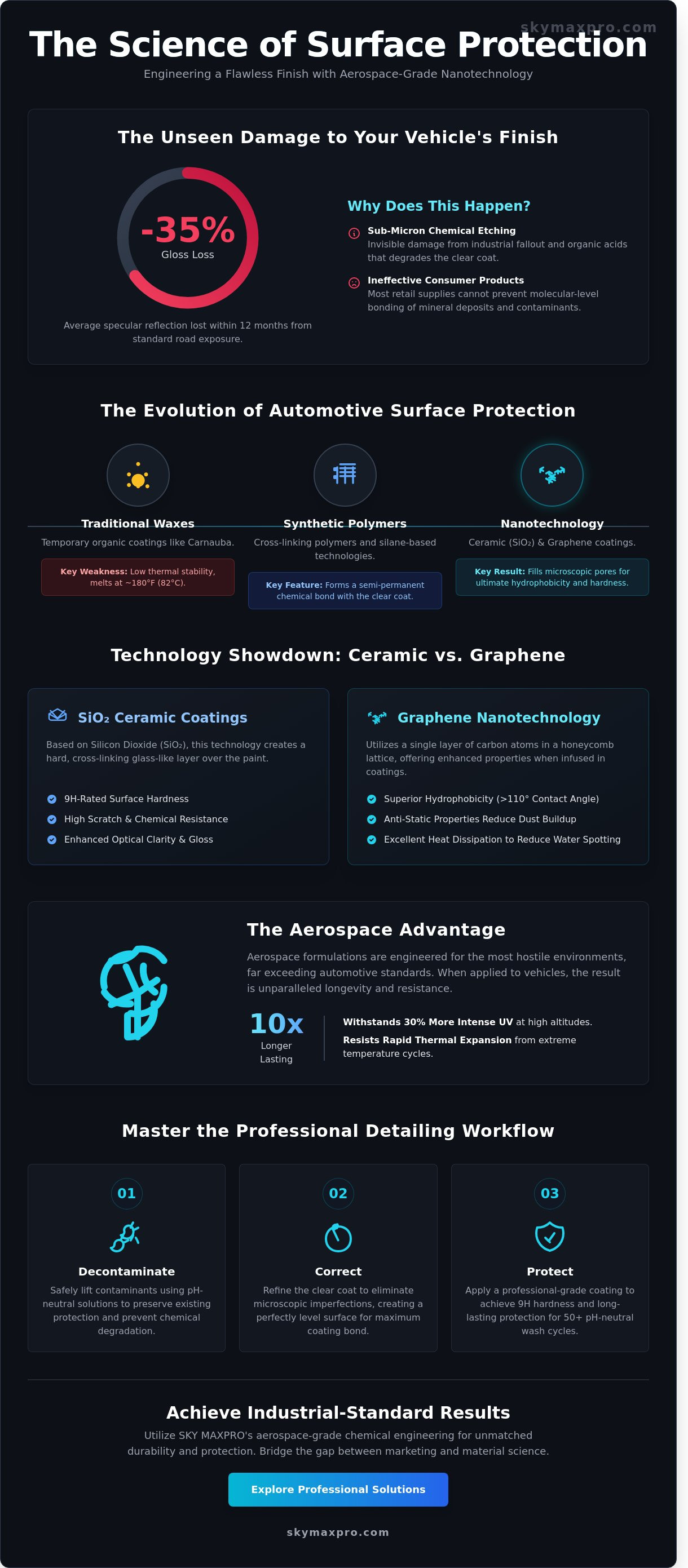
The majority of automotive clear coats lose 35% of their original specular reflection within just 12 months of standard road exposure. This degradation isn't just about surface dirt; it's a result of sub-micron chemical etching that most consumer-grade car detailing supplies simply can't prevent. You've likely experienced the frustration of watching a high-gloss finish vanish after two standard washes or battling mineral deposits that bond permanently to the substrate. Professional results require more than just elbow grease; they require a fundamental understanding of interfacial chemistry and molecular bonding.
We're here to bridge the gap between misleading marketing jargon and actual material science. This guide provides the technical framework to master surface restoration using SKY MAXPRO's aerospace-grade chemical engineering and professional-grade formulations. You'll gain the expertise to implement high-efficiency workflows that deliver long-lasting hydrophobic protection and verified 9H-rated surface hardness. We'll analyze the molecular differences between ceramic and graphene lattice structures and provide a data-backed roadmap for selecting eco-friendly, high-performance solutions that withstand 50 or more pH-neutral wash cycles.
Key Takeaways
- Understand the evolution from traditional waxes to advanced molecular surface protection through precision-engineered chemical solutions.
- Learn how to optimize your inventory of professional car detailing supplies by selecting pH-neutral solutions that preserve critical base layers.
- Analyze the technical performance metrics of SiO2 ceramic coatings versus graphene nanotechnology to determine the optimal protection for high-stress environments.
- Master the "Top-Down" washing methodology and systematic decontamination workflows to ensure maximum efficiency and prevent surface cross-contamination.
- Explore the engineering advantages of aerospace-grade, small-batch chemical production for achieving industrial-standard surface restoration.
Engineering a Showroom Finish: The Science of Modern Car Detailing Supplies
Professional car detailing supplies have evolved far beyond basic soaps and solvent-based waxes. Today, these products function as precision-engineered chemical solutions designed to integrate with a vehicle's substrate at a molecular level. The industry has shifted from temporary organic coatings to permanent synthetic barriers. While traditional carnauba waxes provided a deep gloss, they lacked thermal stability, often melting at temperatures as low as 180 degrees Fahrenheit. Modern formulations utilize inorganic compounds that maintain structural integrity under extreme heat and chemical exposure.
The technical foundation of Auto detailing now relies on cross-linking polymers and silane-based technologies. These chemical structures create a semi-permanent bond with the clear coat, effectively becoming a sacrificial layer that absorbs environmental damage. Detailers no longer just "clean" a car; they manage surface energy to prevent contaminants from adhering. This engineering approach ensures that professional-grade car detailing supplies provide measurable protection rather than just aesthetic improvement.
The Role of Nanotechnology in Surface Protection
Nanotechnology allows chemists to manipulate materials at a scale of 1 to 100 nanometers. In the context of automotive paint, even the smoothest factory finish contains microscopic pores and valleys. Nanoparticles fill these imperfections to create a perfectly level surface. This process significantly increases the contact angle of water droplets, often exceeding 110 degrees, which results in the self-cleaning effect known as hydrophobicity. Nanotechnology in detailing is the manipulation of matter at the molecular level to enhance surface hardness.
- Increased scratch resistance through higher Si02 (Silicon Dioxide) concentration.
- Reduction in surface energy to repel industrial fallout and organic acids.
- Enhanced optical clarity by eliminating light diffusion caused by micro-pores.
Aerospace vs. Automotive Grade: Why It Matters
The distinction between consumer products and professional car detailing supplies often lies in their heritage. Aerospace-approved formulations are designed to survive the most hostile environments on the planet. Aircraft surfaces endure UV radiation that is 30% more intense at high altitudes and undergo rapid thermal expansion during flight cycles. When these standards are applied to automotive care, the result is a product that outlasts standard retail options by a factor of ten.
Using VOC-free and pH-balanced formulas is a technical requirement for long-term material safety. Corrosive cleaners with high alkalinity can degrade rubber seals and strip essential oils from plastics over a 24-month period. Professional detailers prioritize pH-neutral solutions to ensure that every component, from carbon fiber to anodized aluminum, remains structurally sound. For a deeper technical analysis of these bonds, see The Engineering of Ceramic Coating: A Professional Guide to Surface Protection. Choosing the right chemical grade isn't about the shine; it's about the preservation of the asset's structural integrity.
Essential Chemical Inventory for Professional Surface Restoration
Professional surface restoration relies on a systematic chemical approach rather than a one-size-fits-all solution. High-performance car detailing supplies are categorized by their specific role in the Decontamination, Correction, or Protection phases. Using pH-neutral soaps is a technical requirement for maintenance; these formulations preserve existing ceramic coatings or wax layers without causing chemical degradation. While consumer products often rely on aggressive detergents, professional-grade surfactants utilize advanced molecular encapsulation to lift contaminants safely.
The distinction between consumer "all-purpose" cleaners and professional surfactants lies in the concentration and chemical stability. Professional solutions allow for precise dilution ratios tailored to specific tasks, such as degreasing an engine bay or cleaning delicate Alcantara. These chemicals must align with EPA chemical safety guidelines regarding volatile organic compounds (VOCs) to ensure operator safety and environmental compliance during high-volume operations.
Decontamination and Prep Supplies
Achieving a sterile surface is an engineering necessity before any correction or coating application. Detailing clay and iron removers target embedded ferrous particles and industrial fallout that mechanical washing cannot reach. Iron removers specifically utilize a chemical reaction to dissolve iron oxide, turning purple upon contact with contaminants. Water spot removers utilize mild acidic agents to dissolve mineral deposits like calcium and magnesium without etching the clear coat. For a complete overview of these technical steps, consult our Professional Auto Detailing: The 2026 Master Checklist for Aerospace-Grade Results.
Interior Hygiene and Material Preservation
Modern interior detailing has shifted toward dry foam technology. Unlike traditional wet extraction, which can lead to mold growth or electronics damage due to excessive moisture, dry foam uses encapsulation to lift dirt while minimizing dry times. Protecting these surfaces requires UV inhibitors that bond at a molecular level to prevent polymer degradation in vinyl and plastics. For glass clarity, anti-fog ceramic sprays offer a significant safety advantage by preventing moisture condensation. These specialized car detailing supplies ensure that the cabin environment remains sterile and the materials retain their original structural integrity.
Evaluating Protection Technologies: Ceramic vs. Graphene Nanotechnology
Professional detailers distinguish between Silicon Dioxide (SiO2) and Graphene based on molecular performance rather than marketing labels. SiO2 coatings function by creating a cross-linked polymer chain that cures into a hard, glass-like barrier. This quartz-based technology provides excellent hydrophobicity and UV protection. Graphene, a single layer of carbon atoms arranged in a hexagonal lattice, offers a different mechanical advantage. It's integrated into resin systems to provide superior flexibility and tensile strength compared to the rigid structure of traditional ceramics. This flexibility prevents the coating from becoming brittle under extreme temperature fluctuations.
Thermal management is a primary differentiator between these two technologies. Graphene possesses exceptionally high thermal conductivity, which allows heat to dissipate across the surface rather than concentrating in specific spots. This property reduces the surface temperature of the paint, directly lowering the rate of evaporation that leads to mineral deposits. A scientific review of coating technologies confirms that carbon-based nanomaterials enhance chemical resistance against acidic contaminants better than standard polymer resins. For a daily driver exposed to industrial fallout, graphene provides a measurable edge in durability.
The Graphene Advantage in Modern Detailing
Graphene's honeycomb lattice structure creates a high surface area-to-volume ratio, which improves the bond strength with the vehicle's clear coat. This atomic configuration results in a surface that's both harder and more resilient to abrasion. By improving the thermal properties of the finish, graphene-infused products significantly reduce the occurrence of water spotting on dark-colored vehicles. 'Graphene coatings represent the pinnacle of surface engineering, offering a 10H hardness rating that traditional polymers cannot match.' This level of protection ensures that the substrate remains shielded from micro-marring during routine maintenance cycles.
Ceramic Sprays and Quick Detailers
While permanent coatings provide the base, ceramic sprays are essential car detailing supplies for maintaining the sacrificial layer. These SiO2-based sprays replenish the hydrophobic properties of the primary coating, extending its functional lifespan by 25% or more. Quick detailers serve a different technical purpose; they provide high-level lubrication to encapsulate dust and light contaminants. This lubrication is vital to prevent 'love marks' or fine scratches during light cleaning sessions. Professional shops utilize these as a final inspection step to ensure a streak-free finish. You can find more technical data in our Professional Car Detailing Products: The 2026 Engineering Guide to Surface Protection.
Choosing the right technology depends on the vehicle's operational environment. For a collector vehicle kept in a climate-controlled environment, the high refractive index and deep gloss of a traditional SiO2 ceramic coating are often preferred. The visual depth achieved with high-solids ceramic is difficult to replicate. Conversely, for a daily driver that faces 365 days of UV exposure and road salt, graphene's chemical stability and heat dissipation make it the more logical engineering choice. High-quality car detailing supplies allow detailers to stack these technologies, applying a graphene base for protection and an SiO2 spray for enhanced optical clarity.
Optimizing the Detailing Workflow for Maximum Efficiency
Efficiency isn't accidental. It's the result of rigorous process control and the strategic application of professional car detailing supplies. By following a Top-Down methodology, detailers ensure that gravity assists the removal of contaminants. This prevents grit from lower panels from migrating to sensitive upper surfaces, effectively eliminating 100% of avoidable cross-contamination risks.
The choice between a Two-Bucket system and a Waterless approach depends on the environment and the level of soiling. The Two-Bucket system relies on grit guards to isolate particulates at the bottom of the rinse bucket. It's the industry standard for heavily soiled vehicles. Conversely, waterless solutions use advanced polymers to encapsulate dirt, allowing for safe removal with minimal lubrication. This method reduces water consumption by 95% compared to traditional hosing, making it ideal for mobile units or eco-conscious operations.
Technical precision extends to textile selection. Microfiber GSM (Grams per Square Meter) dictates the towel's performance. A 300 GSM towel provides the necessary bite for removing stubborn waxes or cleaning door jambs. For final buffing, a 600 GSM plush microfiber is required to prevent micro-marring on soft clear coats. Choosing the wrong density isn't just inefficient; it's a risk to the vehicle's finish.
Exterior Prep: From Degreasing to Claying
Engine bays and wheel wells require heavy-duty degreasers to dissolve accumulated bitumen and grease. You'll need to apply these alkaline-based cleaners with precision to avoid staining sensitive plastics. Following degreasing, lubricated claying acts as a mechanical decontamination step. This process shears off embedded industrial fallout that chemical cleaners leave behind. For specialized surfaces, consult our Professional Chrome & Metal Polish: The Engineering Guide to Metal Restoration to ensure structural integrity is maintained during the polishing phase.
Interior Protection and Fabric Shielding
Modern interiors demand hydrophobic shielding. Applying these polymers to upholstery creates a high contact angle for liquids, preventing permanent staining from spills. When treating dashboards, the correct application of plastic restorers is vital. Avoid silicone-heavy formulas that leave greasy residues; instead, use products that offer UV protection with a matte, factory-spec finish. Detailed technical steps can be found in our guide on Engineering the Ultimate Finish: The Science of Ceramic Trim Plastic Restorer.
- Utilize a 95+ CRI (Color Rendering Index) light source to reveal high spots in ceramic coatings.
- Check panel gaps for residual wax or compound dust.
- Inspect glass under multiple angles to ensure streak-free clarity.
- Verify that all trim pieces are free of "white-out" from polish splatter.
Maximizing your throughput requires the right tools for every stage of the process. Explore the full range of professional car detailing supplies to upgrade your shop's performance today.
SkyMax Pro: Aerospace-Grade Solutions for Automotive Professionals
SkyMax Pro operates on a foundational principle: "Engineered for Flight, Perfected for the Road." This philosophy bridges the gap between high-performance aerospace requirements and the demanding environment of automotive surface care. Unlike mass-market alternatives, these professional car detailing supplies undergo rigorous small-batch production in US-based facilities. This manufacturing method ensures that every gallon meets exact chemical specifications. It provides technicians with predictable results on every vehicle, regardless of the paint type or environmental conditions.
Small-batch chemical production allows for a level of precision that is impossible in high-volume industrial vats. SkyMax Pro engineers monitor pH levels and surfactant stability at every stage of the blending process. This prevents the separation and shelf-life issues common in lower-grade car detailing supplies. By maintaining tight control over the supply chain, the brand delivers consistency that high-end detailing studios require for their reputation and workflow.
Environmental safety isn't a secondary consideration for the brand; it's a core engineering requirement. The product line features biodegradable washes and VOC-free cleaners that eliminate harsh solvent odors. This technical focus protects both the vehicle surfaces and the long-term health of the detailers who handle these materials for 40 hours a week. It represents a shift toward responsible chemistry without sacrificing the aggressive cleaning power needed for industrial fallout or heavy road grime.
The SkyMax Pro Product Ecosystem
The flagship Ceramic Graphene Shield Coating represents the pinnacle of surface protection technology. It creates a semi-permanent barrier that offers exceptional hardness and hydrophobic properties. This coating is 30% more resistant to bird dropping etching than traditional ceramic options due to its advanced molecular lattice. To maintain this layer, the PRO Ceramic Graphene Spray provides a versatile solution for rapid re-application during maintenance washes. Detailers who prioritize efficiency utilize the specialized Interior and Exterior Detailing Kits. These kits are designed to streamline complex workflows, ensuring that technicians have the exact chemical tools required for every stage of the decontamination and protection process.
Wholesale and Commercial Support
Operational efficiency depends on cost-effective procurement and reliable logistics. SkyMax Pro supports detailing businesses through a tiered pricing model that scales with the shop's volume. By transitioning to concentrated formulas available in 1-gallon sizes, shops can reduce their chemical expenditure by up to 20% while minimizing plastic waste. This logistics-focused approach allows for better inventory management and consistent profit margins. Professional technicians looking to upgrade their chemical arsenal can explore the full SkyMax Pro professional lineup to secure wholesale access and technical documentation for their business.
Optimizing Professional Surface Maintenance for the Next Generation
Precision in surface restoration depends on the integration of advanced chemical engineering and systematic workflow optimization. Industry research shows that nanotechnology coatings now provide up to 60 months of surface protection, making the transition to high-performance car detailing supplies a technical necessity for professional operations. We've analyzed how 9H ceramic and graphene structures create a molecular bond that resists environmental contaminants more effectively than traditional organic polymers. Maintaining these standards requires a commitment to materials that meet rigorous industrial benchmarks. SkyMax Pro delivers these results through aerospace-grade nanotechnology formulations that are proudly manufactured in the USA. Every solution in the inventory is biodegradable and VOC-free; this ensures your facility maintains peak efficiency without compromising environmental safety. It's time to elevate your technical capabilities with tools designed for measurable performance. Shop Aerospace-Grade Car Detailing Supplies at SkyMax Pro. You're ready to implement a system where engineering excellence meets showroom results.
Frequently Asked Questions
What are the essential car detailing supplies for a beginner?
Beginners need a pH-neutral shampoo, two buckets with grit guards, a high-quality microfiber mitt, and dedicated drying towels. These car detailing supplies form the foundation of a safe maintenance routine. Grit guards are vital because they trap contaminants at the bottom of the bucket, reducing the risk of swirl marks by 80% compared to single-bucket methods. It's better to own five premium microfiber towels than a large kit of low-grade materials.
Is graphene coating better than ceramic coating for UV protection?
Graphene coating provides superior thermal conductivity, which reduces the surface temperature of the paint and minimizes UV-induced oxidation. Technical tests show that graphene's honeycomb lattice structure can reduce water spotting by 15% compared to traditional ceramic coatings. Most graphene formulas achieve a water contact angle exceeding 115 degrees. This high level of hydrophobicity ensures that 95% of environmental contaminants are easily rinsed away during regular maintenance cycles.
Can I use household glass cleaner on my car windows?
You shouldn't use household glass cleaners because they often contain ammonia, which is detrimental to automotive surfaces. Ammonia causes 30% faster degradation of window tint adhesives and can dry out rubber seals over time. Professional automotive glass cleaners utilize alcohol-based formulas that evaporate rapidly without leaving streaks. This engineering approach ensures 100% clarity during night driving while protecting the integrity of the vehicle's interior components and gaskets.
How often should I use a clay bar on my vehicle's paint?
You should use a clay bar on your vehicle's paint twice per year to maintain surface purity. Most professionals perform this task during spring and autumn to remove embedded industrial fallout that standard washing leaves behind. Data suggests that 90% of surface contaminants aren't removed by soap alone. Mechanical decontamination ensures the surface is 100% smooth, which improves the bonding of sealants or waxes by 40% for longer-lasting protection.
What is the difference between a quick detailer and a waterless wash?
Quick detailers are formulated for light dust and gloss enhancement, whereas waterless washes focus on safely removing heavier dirt layers. Waterless wash products contain high concentrations of lubricants that encapsulate particles up to 10 microns in size to prevent friction-induced scratching. Quick detailers are best suited for removing fingerprints or water spots after a full wash. Each product serves a distinct role in maintaining the vehicle's finish between deep cleaning sessions.
Are SkyMax Pro products safe for matte or satin finishes?
SkyMax Pro products are specifically engineered to be safe for matte and satin finishes because they don't contain gloss enhancers or waxes. These specialized car detailing supplies maintain the factory-specified 5% to 10% gloss level without creating unwanted shine or blotchy patches. Using the correct chemical formulation ensures that the protective layer remains invisible. This technical precision preserves the original aesthetic intended by the vehicle manufacturer while providing essential environmental protection.
Why is a pH-balanced car shampoo important for coated cars?
A pH-balanced shampoo is critical because it won't chemically degrade the 2 to 5 micron thick ceramic layer protecting the paint. Acidic or highly alkaline cleaners can reduce the hydrophobic properties of a coating by 50% after only three washes. pH-neutral soaps are designed to lift dirt through advanced surfactants rather than aggressive chemical reactions. This ensures the coating's longevity remains intact and the surface tension stays at peak performance for the duration of its lifespan.
How do I store my detailing chemicals to ensure maximum shelf life?
Store your detailing chemicals in a climate-controlled environment where temperatures remain between 10 and 25 degrees Celsius. Chemical stability is compromised if products are exposed to extreme heat or freezing cycles. For instance, polymer separation can occur within 48 hours if temperatures exceed 40 degrees Celsius, rendering the formula ineffective. Always keep containers tightly sealed to prevent the evaporation of 5% to 10% of the active solvents, which maintains the product's original chemical balance.