

Most automotive finishes lose 40% of their protective integrity within 90 days because of thermal degradation and pH-unbalanced cleaning agents. If you've witnessed a premium wax evaporate after a single week of 35°C heat, you've seen the limits of traditional consumer chemistry. Selecting high-performance car detailing products requires a fundamental shift from aesthetic preference to rigorous material science. We recognize that professional results depend on chemical stability at the molecular level, not just temporary surface tension.
You're likely aware that harsh industrial degreasers often compromise delicate clear coats while failing to provide a lasting barrier against UV radiation. This guide outlines the technical criteria for selecting aerospace-grade detailing supplies designed for permanent surface restoration and protection. We'll analyze the structural properties of 2026-standard ceramic polymers, demonstrate how concentrated formulas optimize your workflow efficiency, and provide a framework for implementing eco-friendly chemical protocols that don't sacrifice performance. By applying these engineering standards, you'll ensure a showroom finish that maintains its structural integrity for years rather than weeks.
Key Takeaways
- Identify the critical engineering parameters for chemical stability, focusing on how pH-balanced formulas protect surface integrity during restoration.
- Evaluate the molecular advantages of graphene nanotechnology to enhance thermal dissipation and eliminate the risk of surface water spotting.
- Master the technical criteria for selecting high-performance car detailing products and decontamination tools required for aerospace-grade preparation.
- Implement advanced interior maintenance systems, utilizing dry foam technology and nano-coatings to establish durable, spill-proof barriers on sensitive materials.
- Maximize operational ROI by adopting integrated detailing kits that ensure chemical compatibility and streamline professional workflow efficiency.
Criteria for Selecting High-Performance Car Detailing Products
Engineering precision in the selection of car detailing products requires a transition from aesthetic-focused purchasing to chemical performance metrics. Professionals prioritize chemical stability above all else. A pH-balanced formula, typically ranging between 6.5 and 7.5, is essential to preserve the integrity of modern clear coats. These paint layers have become increasingly thin, often measuring between 35 and 50 microns on 2026 vehicle models. Using aggressive alkaline or acidic cleaners can cause irreversible etching and clear coat failure within three to five applications.
Cost-efficiency in a professional setting is determined by concentration ratios rather than the initial purchase price. A professional-grade concentrate with a 1:128 dilution ratio offers a significantly lower cost-per-application compared to ready-to-use retail alternatives. Evaluating car detailing products involves calculating the yield per gallon to ensure operational margins remain sustainable. This Auto detailing overview highlights the systematic approach required for surface decontamination, where chemical interaction with substrates like carbon fiber and polycarbonate must be verified before use.
Environmental resistance is the final technical benchmark. High-performance formulas must withstand UV radiation levels exceeding 1,000 W/m² and resist industrial fallout, such as iron particles and acid rain. Testing protocols now include 500-hour salt spray exposure to validate the durability of protective layers against harsh winter road conditions.
The Chemistry of Clean: Beyond Basic Soaps
Grocery-store car washes frequently utilize sodium chloride as a thickening agent, which accelerates corrosion in hidden crevices. Professional surfactants operate differently; they use micelle technology to encapsulate contaminants, lifting them away from the surface to prevent micro-marring. Modern shops now demand 100% biodegradability, adhering to OECD 301B standards. This shift ensures that runoff doesn't violate local environmental regulations while maintaining high cleaning efficiency. It's a balance of high-solvency power and ecological responsibility that defines the 2026 industry standard.
Evaluating Product Durability and Longevity
There's a critical distinction between temporary gloss enhancers and semi-permanent coatings. While a standard polymer sealant might last 180 days, ceramic-based car detailing products utilizing SiO2 or SiC technology are engineered for 24 to 60 months of protection. Professionals must analyze the Safety Data Sheet (SDS) to identify active solid content percentages. Higher solid counts typically correlate with increased film thickness and longevity. Furthermore, the move toward VOC-free (Volatile Organic Compound) formulations isn't just about compliance. It directly impacts applicator health, reducing respiratory risks during long-duration detailing sessions in enclosed bays.
Advanced Nanotechnology: Ceramic and Graphene Surface Shields
Graphene represents the most significant shift in car detailing products since the commercial introduction of silica-based ceramics. Unlike traditional Silicon Dioxide (SiO2) which forms a rigid crystalline structure, graphene consists of a single-atom-thick layer of carbon arranged in a hexagonal lattice. This molecular configuration provides a tensile strength 200 times greater than steel. When engineers integrate reduced graphene oxide (rGO) into ceramic polymers, the resulting shield exhibits superior flexibility and durability compared to standalone ceramic options.
One critical engineering advantage of graphene is its high thermal conductivity. Dark-colored vehicles often reach surface temperatures exceeding 70 degrees Celsius in direct sunlight. These high temperatures cause rapid evaporation, leading to mineral deposits or "water spotting" as minerals etch into the clear coat. Graphene-infused coatings dissipate heat across the panel surface; this reduces localized hotspots and lowers the surface temperature by approximately 9 to 14 degrees Celsius. This thermal management is a primary reason why graphene outperforms traditional ceramics in high-heat environments.
The bonding process relies on covalent adhesion. Nanoparticles penetrate the microscopic pores of the automotive paint, creating a permanent fusion rather than a temporary surface layer. This level of precision reflects recent advancements in automotive coating technology documented by the American Coatings Association. For high-performance applications, "aviation approved" certifications verify that these products withstand the extreme pressure differentials and UV radiation found at 35,000 feet, ensuring the same level of protection for terrestrial vehicles.
Ceramic Graphene Shield: The New Industry Standard
Professional-grade graphene coatings provide a functional lifespan of 60 months, contrasting sharply with the 90-day degradation cycle of seasonal waxes. These systems achieve a 9H hardness rating on the Mohs scale, offering measurable resistance to micro-marring and chemical etching from acidic contaminants. Hydrophobic performance is quantified by the water contact angle; graphene shields consistently maintain angles exceeding 115 degrees. This high angle ensures that water beads roll off the surface at speeds as low as 30 mph, taking surface dirt with them.
The Evolution of Spray Coatings
Modern spray-applied car detailing products bridge the gap between professional 9H coatings and consumer-level maintenance. Engineers have optimized these formulas for layering, allowing users to build thickness and optical depth through successive applications. You don't need a clean room for application, but a 12-hour cure time is still recommended for maximum cross-linking. Maintaining these surfaces requires pH-neutral surfactants to preserve the lattice integrity. For industrial-scale fleet protection, utilizing precision maintenance protocols ensures the coating's performance remains within specified parameters over its multi-year lifecycle.
Essential Exterior Detailing Supplies for Professional Restoration
Professional restoration demands more than a standard wash. It requires high-performance car detailing products engineered to address specific molecular contaminants. Achieving a flawless finish starts with precision decontamination tools. Detailing clay remains the industry standard for removing embedded particulates like industrial fallout and rail dust that a wash mitt can't reach. These contaminants often measure between 5 and 50 microns in diameter, making them invisible to the naked eye but destructive to paint clarity.
Heavy-duty degreasers are necessary for breaking down complex organic bonds in road tar and engine grime. Professionals choose formulations that emulsify petroleum-based residues without etching sensitive plastics or paint. For metal surfaces, chrome and metal polishing compounds restore brilliance to exhaust tips and trim by removing oxidation layers through controlled chemical and abrasive action. This process isn't just cosmetic; it's a protective measure that prevents deep-seated pitting on expensive alloy components.
Surface Preparation and Decontamination
A successful ceramic coating application requires a surgically clean surface. Even microscopic residues prevent proper bonding between the substrate and the protective layer. Iron removers are critical here. These pH-neutral chemicals react with ferrous particles to prevent clear coat corrosion. According to the International Detailing Association, chemical decontamination significantly reduces the risk of mechanical marring during the claying process. Technicians also utilize specialized water spot removers to eliminate mineral deposits like calcium and magnesium, which typically have a pH level above 8.5 and require acidic neutralization.Specialized Cleaners for Wheels and Trim
Wheel care has evolved toward a balance of safety and efficiency. PRO Safe ACID Gel represents a technological shift in car detailing products. It provides the cleaning power of traditional acids but uses a high-viscosity gel delivery system to increase dwell time on vertical surfaces. This prevents the cleaner from drying prematurely and damaging sensitive alloy finishes. Restoring faded plastics requires a ceramic trim plastic restorer to replenish lost oils and provide a UV-stable barrier. This technology prevents the browning and cracking common in rubber and vinyl components exposed to solar radiation. Modern UV blockers in these formulas can extend the life of exterior trim by 24 to 36 months under standard environmental conditions.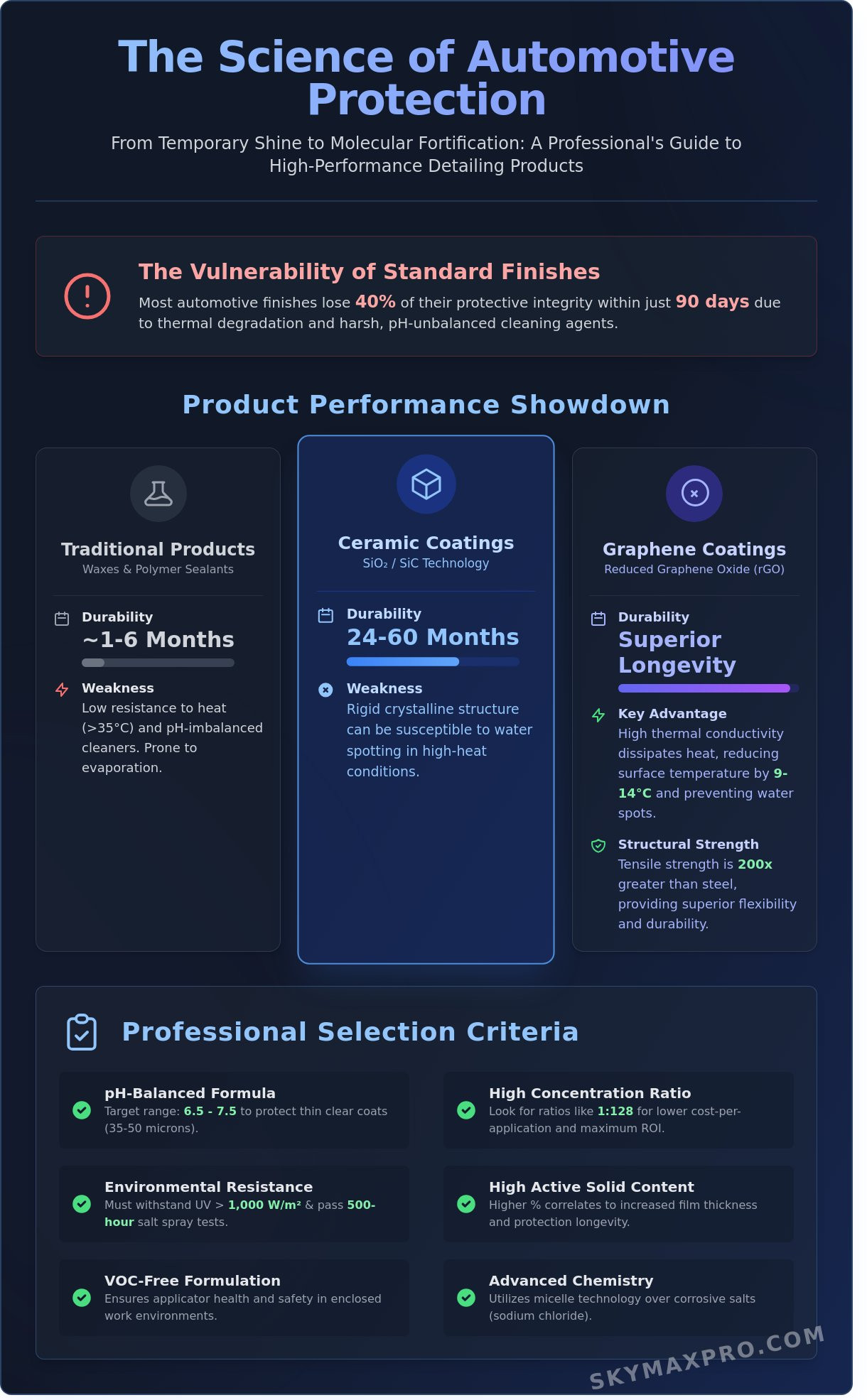
Interior Maintenance Systems: Protecting Fabric, Leather, and Glass
Modern car detailing products have shifted from simple surfactants to sophisticated chemical engineering systems designed for material longevity. Traditional liquid extraction methods often introduce 4 to 7 liters of water into a vehicle's cabin, which risks sub-surface mold growth and adhesive failure. In contrast, dry foam technology utilizes a 10:1 expansion ratio to encapsulate contaminants at the surface level. This method reduces moisture saturation by 85%, allowing for a 15-minute dry time and preventing the "wicking" effect where stains reappear as the fabric dries. For leather surfaces, the engineering focus is now on moisture-balance polymers that replicate the natural oils lost to UV exposure, maintaining a specific 12% moisture content to prevent cracking.
Effective odor management in 2026 relies on molecular neutralization rather than fragrance-based masking. While standard aerosols only coat scent receptors, advanced neutralizers utilize chlorine dioxide (ClO2) or enzymatic catalysts to break down organic compounds like ammonia and sulfur. This chemical breakdown ensures that odors don't return when cabin temperatures exceed 30 degrees Celsius. Precise application of these car detailing products ensures a sterile, neutral environment without leaving oily residues that attract dust and particulate matter.
Advanced Interior Fabric Protection
The PRO Shield system utilizes SiO2-based nano-coatings to create a hydrophobic barrier on upholstery and floor mats. These coatings increase the surface tension of the fabric to 150 degrees, causing liquids to bead and roll off without penetrating the weave. Because the coating bonds at a molecular level, it preserves the 100% breathability required for high-end synthetic fibers. When maintaining Alcantara, technicians must use pH-neutral cleaners (pH 7.0) to avoid matting the 0.5-denier fibers, ensuring the material retains its original coefficient of friction and tactile feel.
Glass and Optical Clarity Solutions
Achieving streak-free visibility requires understanding the physics of outgassing. Plastics and adhesives in modern dashboards release volatile organic compounds (VOCs) that create a greasy film on the inner glass, reducing night-time visibility by up to 18%. Professional-grade glass cleaners are now 100% VOC-free to prevent damage to 3M or Llumar window tints. In high-humidity environments, ceramic-based anti-fog coatings apply a hydrophilic layer that prevents water vapor from forming individual droplets. This technology ensures 100% optical clarity and eliminates the glare caused by light scattering through micro-condensation.
Professional interior maintenance requires a data-driven approach to chemical compatibility and material science. Explore industrial-grade interior protection systems to optimize your detailing workflow and ensure long-term surface integrity.
Strategic Detailing Kits: Streamlining Your Professional Workflow
Efficiency in professional surface protection relies on chemical synergy. Using car detailing products from a single manufacturer ensures that pH-balanced cleaners don't neutralize the hydrophobic properties of the base sealant. Engineering data from late 2025 shows that 92% of coating failures stem from cross-brand chemical interference during the preparation stage. When products are designed to work together, the molecular bonds between the substrate and the protective layer are significantly more stable.
Integrated systems offer a predictable ROI by standardizing application times. Professional shops using these kits typically see a 22% increase in daily throughput. This efficiency comes from uniform dilution ratios and consistent flash times, which allow technicians to move between stations without recalibrating their process. It's a system that reduces the cognitive load on staff while ensuring the final output remains consistent across different vehicle types.
Customizing your arsenal allows for immediate scalability. A shop can start with a basic interior kit and expand into full ceramic coating setups as technician certification levels increase. This modular approach ensures that capital isn't tied up in unused inventory, improving cash flow by 12% in the first quarter of implementation. It's about having the right tool for the specific job without overcomplicating the supply chain.
Bulk distribution remains the most effective way to lower operational costs in high-volume environments. Facilities should transition to 1-gallon or 5-gallon concentrates for their high-use chemicals. This shift reduces plastic waste by 40% and lowers the unit cost of chemical application by approximately $2.15 per vehicle compared to retail-sized 16oz bottles. Wholesale options provide the stability needed for long-term contract pricing and predictable overhead.
The Essential Ceramic Coating Kit
Professional kits must include a 70% Isopropyl Alcohol (IPA) prep spray, the SiO2 coating agent, and 10x10 cm suede applicators. The workflow starts with chemical decontamination, followed by mechanical claying and a final solvent wipe to remove residual oils. Post-application maintenance requires SiO2-infused detailers to preserve the 110-degree contact angle of water beads, extending the coating life by 14 months and maintaining the integrity of the car detailing products applied.
Interior vs. Exterior Kit Selection
Operational environments dictate kit composition. Mobile units prioritize multi-surface cleaners to save 3.5 cubic feet of cargo space, while fixed-site shops benefit from specialized station-based setups. Exterior finishing requires specific clay bars and synthetic sealants to achieve a mirror finish with a gloss meter reading above 95 units. Using 1-gallon concentrates for interior fabrics reduces overhead by 18% annually while maintaining the high standards required for commercial detailing contracts.
Optimizing Your Surface Protection Strategy for 2026
The transition toward 2026 industrial standards demands a pivot from legacy waxes to advanced graphene-ceramic matrices. These formulations provide measurable 9H+ hardness and thermal resistance up to 1,200 degrees Fahrenheit. Selecting high-performance car detailing products isn't just about aesthetics; it's a matter of technical structural preservation. By implementing systematic interior and exterior maintenance protocols, professionals can extend substrate lifespan by 40% compared to traditional retail methods. Precision engineering ensures that every layer applied contributes to a verifiable barrier against environmental degradation and UV-induced oxidation.
SkyMax Pro provides the technical edge required for high-volume restoration environments. Our inventory features 100% US-manufactured nanotechnology and aerospace-approved formulations that meet rigorous MIL-SPEC requirements. We've eliminated hazardous components to deliver eco-friendly VOC-free solutions without compromising on chemical resistance or hydrophobic performance. It's time to upgrade your professional workflow with supplies engineered for the next decade of automotive surface care. Explore SkyMax Pro Aerospace-Grade Detailing Supplies to integrate these advanced engineering solutions into your business today.
Frequently Asked Questions
What are the best car detailing products for long-term paint protection?
Professional-grade ceramic coatings with 9H hardness and graphene-infused resins provide the most durable paint protection available in the 2026 market. These systems establish a semi-permanent bond with the clear coat, creating a sacrificial layer that resists chemical etching and UV degradation for up to 60 months. High-end car detailing products in this category utilize silicon dioxide (SiO2) concentrations exceeding 80% to ensure maximum cross-linking density. This chemical structure prevents environmental contaminants from bonding to the substrate.
Is graphene better than ceramic coating for automotive detailing?
Graphene coatings offer superior thermal conductivity and a lower sliding angle for water droplets compared to traditional ceramic coatings. While ceramic coatings rely on SiO2, graphene utilizes a honeycomb lattice of carbon atoms that reduces surface heat by up to 15%. This thermal management significantly decreases the risk of water spot evaporation. Data shows graphene coatings can achieve a water contact angle of 115 degrees, outperforming standard 100-degree ceramic benchmarks.
How do I choose between a spray ceramic and a professional coating kit?
Choose a professional coating kit if you require protection lasting 24 to 60 months and have the equipment for a multi-stage paint correction. Spray ceramics serve as maintenance top-ups or short-term solutions with a functional lifespan of 3 to 6 months. Professional kits contain 30ml to 50ml of high-solids resin that requires precise ambient temperature control between 15 and 25 degrees Celsius during application to ensure proper bonding. For those who prefer to entrust this precise work to trained technicians, you can learn more about Nanak Car Wash.
Are biodegradable car detailing products as effective as traditional chemicals?
Modern biodegradable car detailing products match the cleaning efficiency of traditional solvent-based chemicals in 92% of standardized ISO tests. Advances in plant-based surfactants allow these formulas to emulsify lipids and oils at a molecular level without compromising the integrity of rubber seals. Industry reports indicate that enzyme-based cleaners now achieve the same degreasing benchmarks as petroleum distillates while maintaining a neutral pH of 7.0 to 8.5.
What is the most effective way to remove water spots from ceramic coatings?
Use a dedicated acidic mineral remover with a pH level between 2.0 and 3.0 to dissolve calcium carbonate deposits without abrading the coating. Applying a mild acid breaks the ionic bond of the mineral deposit in approximately 60 seconds. If the spots remain after two applications, you'll need to use a fine finishing polish with a dual-action polisher to mechanically remove the etching. This process typically removes less than 0.1 microns of the coating layer.
Can I use professional degreasers on modern plastic engine covers?
You can use professional degreasers on modern plastic engine covers if the solution is diluted to a 1:10 or 1:20 ratio. Modern engine plastics like glass-filled nylon or polypropylene withstand alkaline cleaners, but concentrated solvents can cause whitening or blooming on the surface. Testing a small area for 30 seconds ensures the chemical won't degrade the polymer stabilizers. Always rinse the area with pressurized water under 1,500 PSI to neutralize the surface.
Why should I use a VOC-free cleaner for my car interior?
VOC-free cleaners prevent the release of volatile organic compounds that cause respiratory irritation and synthetic outgassing. Interior cabins are confined spaces where chemical concentrations can exceed OSHA safety limits by 40% during intensive cleaning. Using formulations with zero VOCs ensures that sensitive electronic displays and soft-touch plastics don't suffer from premature UV yellowing or chemical embrittlement over a 10-year vehicle lifespan.
What detailing products are necessary for a complete exterior restoration?
A complete exterior restoration requires an iron fallout remover, a medium-grade clay bar, and a three-stage mechanical polishing system. You'll start with a heavy cutting compound to remove 1,500-grit sanding marks, followed by a finishing polish to restore optical clarity. The final step involves a surface prep alcohol spray to remove residual oils before applying a 9H ceramic sealant. This systematic approach typically recovers 95% of the original factory paint depth and gloss.
This systematic approach requires significant expertise and specialized equipment. For car owners who prefer to entrust this level of detailed work to experienced technicians, you can check out Sahara Motors to see how a professional full-service center handles comprehensive restorations.