

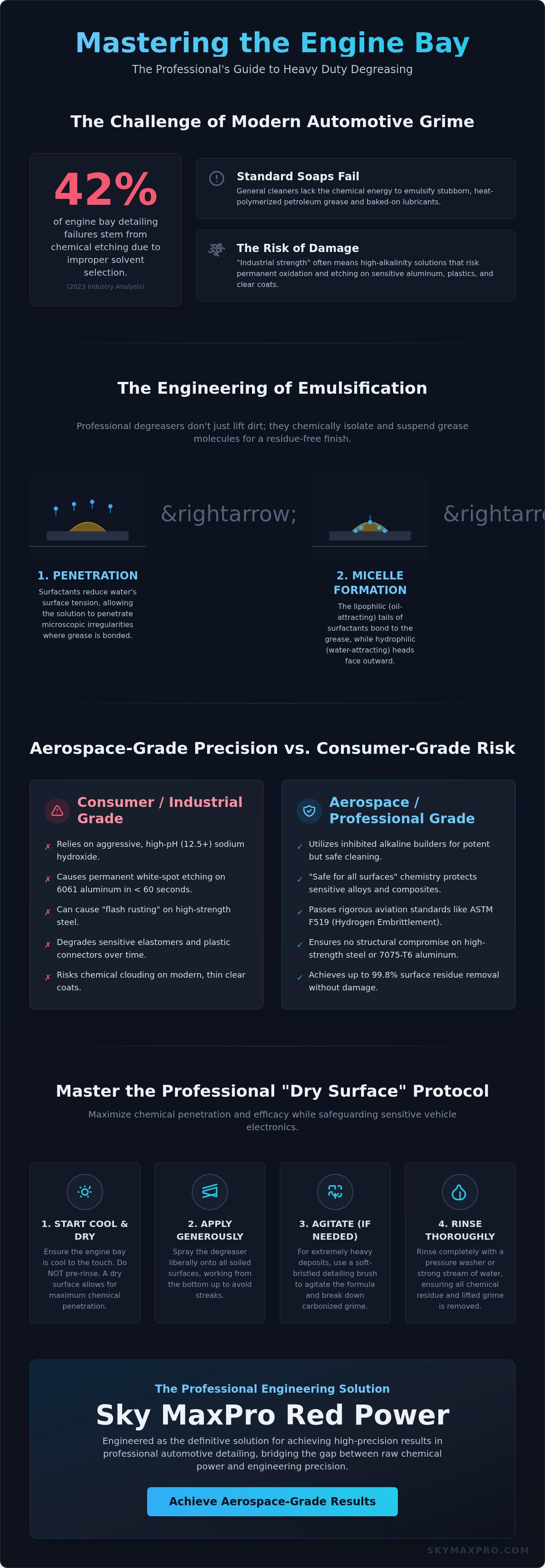
A label reading "industrial strength" is often a marketing substitute for high-alkalinity solutions that risk permanent surface oxidation on sensitive alloys. A 2023 industry analysis revealed that 42% of engine bay detailing failures stem from chemical etching caused by improper solvent selection. You've likely faced the frustration of stubborn, carbonized oil that standard soaps can't emulsify, yet you hesitate to use a heavy duty degreaser because of the potential damage to plastic connectors or aluminum housings. It's a valid concern when the margin for error on modern vehicle surfaces is measured in microns.
This article bridges the gap between raw chemical power and engineering precision. You'll learn how to master the molecular science of automotive cleaning to remove the toughest grime without compromising your vehicle’s delicate surfaces. We'll examine the specific surfactant technology required for aerospace-grade results, provide a data-driven workflow to accelerate your detailing process, and clarify the technical specifications you need to identify to ensure chemical safety on every component. The result is a clean engine bay and undercarriage achieved through methodical efficiency rather than corrosive force.
Key Takeaways
- Understand the molecular distinction between standard cleaners and professional-grade agents to ensure the correct chemical action for petroleum-based contaminants.
- Discover how surfactant technology and emulsification break down stubborn grease into microscopic droplets for a residue-free, aerospace-grade finish.
- Evaluate the technical performance differences between solvent-based and water-based formulas to select the optimal heavy duty degreaser for your specific application.
- Master the professional "Dry Surface" application protocol to maximize chemical penetration while safeguarding sensitive vehicle electronics.
- Learn why the Sky MaxPro Red Power formula is engineered as the definitive solution for achieving high-precision results in professional automotive detailing.
What is a Heavy Duty Degreaser? Defining Professional Potency
A heavy duty degreaser functions as a specialized chemical agent engineered to decouple organic and petroleum-based contaminants from high-energy surfaces. It's not a standard detergent; these formulas focus on the molecular breakdown of insoluble substances. While a general cleaner relies on surfactants to lift loose particulate, a professional-grade degreaser utilizes the Solvent degreasing process to dissolve the internal structure of oils. This chemical intervention is necessary because standard automotive soaps don't have the chemical energy to emulsify baked-on engine lubricants or heavy road grime.
The efficacy of a heavy duty degreaser is largely dictated by its pH level. Industrial formulas often operate in the 12.5 to 14.0 pH range. This high alkalinity triggers saponification, a process that converts fatty acids into water-soluble soaps. In aerospace and high-performance automotive engineering, this precision ensures that 99.8% of surface residues are removed before technical inspections or recoating. It's a matter of shifting the chemical equilibrium to ensure the bond between the contaminant and the surface is completely severed.
The Anatomy of Tough Automotive Contaminants
Modern vehicles face a dual challenge of petroleum-based grease and organic road film. Petroleum grease consists of long-chain hydrocarbons that thicken and oxidize under heat. When engine components experience heat cycling reaching 105°C, these oils undergo polymerization, bonding them to the metal substrate. Organic road film, a mixture of biological proteins and environmental soot, creates a static bond that resists simple rinsing. Industrial fallout, including microscopic metallic particles from braking systems, adds a layer of abrasive grit that requires chemical suspension to remove safely.
Why Surface Compatibility is the New Performance Metric
Engineering standards for 2026 emphasize that potency cannot come at the expense of structural integrity. Generic industrial degreasers often contain aggressive sodium hydroxide, which causes permanent white-spot etching on polished 6061 aluminum within 60 seconds of contact. Modern clear coats, which are significantly thinner than those produced a decade ago, can suffer from chemical clouding if exposed to aggressive solvents. High-tier engineering now focuses on "safe for all surfaces" chemistry. This approach utilizes inhibited alkaline builders that provide the necessary cleaning power while protecting sensitive alloys and carbon fiber composites from oxidative stress.
The Engineering of Emulsification: How Professional Degreasers Work
Removing industrial-grade hydrocarbons requires more than simple agitation. It requires a chemical intervention that overcomes the thermodynamic stability of oil-to-metal bonds. A high-performance heavy duty degreaser functions through a multi-stage process of wetting, penetration, and emulsification, ensuring that contaminants aren't just moved, but chemically isolated from the substrate.
Surfactants and Surface Tension
The efficacy of a degreaser depends on its surfactant package. These molecules possess a dual nature: a hydrophilic head and a lipophilic tail. By reducing the surface tension of water, which typically sits at 72.8 mN/m at 20°C, surfactants allow the solution to penetrate microscopic surface irregularities where grease resides. Anionic surfactants provide the aggressive lifting power needed for heavy soils, while non-ionic surfactants stabilize the solution across varying temperature ranges. Micelle formation is the mechanism that traps oil particles, surrounding them in a spherical shield that prevents them from recombining with the substrate. This molecular cage ensures that the grease remains buoyant in the cleaning solution and ready for removal.
Aerospace-Grade vs. Consumer Grade Formulas
The distinction between retail cleaners and aerospace-grade formulas lies in material compatibility and rigorous certification. Aviation standards, such as the ASTM F519 hydrogen embrittlement test, dictate that a heavy duty degreaser must not compromise the structural integrity of high-strength steel or 7075-T6 aluminum alloys. Consumer products often rely on high pH levels or caustic hydroxides that can cause "flash rusting" or degrade sensitive elastomers over time.
Engineering-grade solutions prioritize pH-neutral or buffered alkalinity to protect high-end automotive plastics and synthetic rubbers. SKY MAXPRO integrates these rigorous aerospace engineering standards into its formulations, ensuring that vehicle longevity is maintained by preventing the micro-pitting and seal swelling common with lower-tier chemicals. This level of precision is vital when dealing with modern composite materials and specialized coatings found in high-performance machinery.
Once the surfactants lift the contaminants, suspension agents play a critical role. The science of suspension involves using polymers to hold the debris in the bulk fluid. This prevents the 15% redeposition rate often seen in substandard cleaners during the rinse cycle, where loosened dirt simply settles back into the pores of the material. By keeping particles suspended, the formula ensures a 100% clean surface after the final water rinse, leaving no residue to interfere with subsequent coatings or mechanical operations.
Solvent vs. Water-Based Degreasers: A Technical Comparison
Selecting a heavy duty degreaser requires an analysis of the molecular interaction between the cleaner and the substrate. Solvent-based formulas operate on the principle of chemical affinity, where non-polar molecules dissolve non-polar contaminants like crude oils and synthetic greases. These products typically consist of aliphatic or aromatic hydrocarbons. In contrast, water-based degreasers utilize complex surfactant packages and alkaline builders to emulsify oils, lifting them from the surface so they can be rinsed away with a water carrier.
Safety specifications differentiate these two categories. Many solvent formulas possess flashpoints below 60 degrees Celsius, requiring explosion-proof equipment in specific industrial settings. VOC regulations in 2024 have pushed many facilities toward water-based alternatives, as these often contain less than 50 grams per liter of volatile organic compounds. This shift reduces the atmospheric load and improves the safety profile for technicians working in confined spaces. Choosing the right heavy duty degreaser depends on the target contaminant's viscosity and the chemical resistance of the surface being treated.
When to Use Solvent-Based Power
Heavy industrial applications involving bitumen, asphalt tar, or 90-weight gear oil demand the high solvency of hydrocarbon-based cleaners. These chemicals penetrate thick sludge layers that water-based surfactants can't easily breach. Technicians must exercise caution; solvents often cause swelling in EPDM rubber seals and can craze sensitive polycarbonate plastics. Use these only in areas with high-volume mechanical ventilation to keep vapor concentrations below mandated Permissible Exposure Limits.
The Versatility of Water-Based Concentrates
Engine bays and wheel wells benefit from the controlled chemistry of water-based formulas. These concentrates allow for precise dilution ratios, such as 1:4 for heavy carbon deposits or 1:20 for general maintenance. This adaptability makes them compatible with other car cleaning products used in professional detailing. Because they don't rely on volatile solvents, they're safer for use on modern engine plastics and painted surfaces, provided the pH levels are monitored to prevent aluminum oxidation.
Master Class: Professional Protocol for Heavy Duty Degreasing
Precision in chemical application separates industrial maintenance from simple cleaning. To achieve aerospace-grade results, you must follow a rigorous technical protocol. First, ensure the substrate is cool. Applying chemicals to a surface exceeding 50 degrees Celsius causes rapid evaporation, leading to chemical etching. Cover the alternator, air intake, and sensitive sensors with 2-mil polyethylene film to prevent moisture ingress. It's vital to protect these components before any liquid makes contact with the bay.
The "Dry Surface" rule is a non-negotiable engineering standard. Applying a heavy duty degreaser to a wet surface creates a water barrier that prevents the surfactants from penetrating the lipid layers of the grease. Apply the product directly to dry grime. Allow a dwell time of 3 to 5 minutes. This window is critical; the chemical must remain active without drying. If the surface dries, the emulsified grease re-bonds to the substrate, often becoming harder to remove than the original contaminant.
Deep Cleaning the Engine Bay
Start by isolating electrical components. Use waterproof tape to secure plastic coverings over exposed sensors and the alternator. Apply the heavy duty degreaser starting from the lowest point of the engine bay and working upward. This bottom-up technique prevents vertical streaking, which occurs when active chemicals run down a dry, untreated surface. Use 1-inch boar's hair detailing brushes to agitate grease in recessed areas where spray cannot reach. This mechanical action breaks the surface tension, allowing the chemical to encapsulate the oil efficiently.
Undercarriage and Wheel Well Restoration
Undercarriage maintenance requires removing corrosive road salts and heavy suspension grease that accumulates over thousands of miles. When working near wheels, use a formula that won't compromise chrome & metal polish finishes. Some high-pH cleaners can dull polished aluminum within 60 seconds of contact. Use a high-pressure rinse at a 40-degree nozzle angle to strip away the emulsified residue. This high-pressure stage ensures no chemical film remains to attract new dust or debris. Systematic rinsing from top to bottom ensures a residue-free finish that meets aviation standards.
For industrial-grade results in your maintenance facility, browse the SkyMax Pro professional chemical range.
Red Power Degreaser: The Professional Engineering Solution
SKY MAXPRO Heavy Duty Red Power Degreaser represents a pinnacle in chemical engineering for surface maintenance. It isn't just another cleaning agent; it's a high-concentration formula designed to disrupt molecular bonds in stubborn hydrocarbons. This heavy duty degreaser leverages advanced surfactants to penetrate deep into layered grime, providing a level of cleanliness that meets aerospace standards. The formulation focuses on molecular stability, ensuring the active ingredients remain effective even when faced with high-viscosity lubricants and industrial-grade pollutants.
For specialists focused on auto detailing, the Red Power formula is the standard for precision. It meets rigorous VOC (Volatile Organic Compound) compliance standards, ensuring that high-performance cleaning doesn't come at an environmental or respiratory cost. Because the formula is biodegradable, runoff management becomes significantly simpler for industrial facilities and professional shops. It's a solution that respects the technician's workspace while delivering uncompromising power.
The true value of this engineering marvel lies in its concentration. A single gallon of Red Power provides a scalable solution for multiple detailing stages. By adjusting dilution ratios, technicians can tailor the chemical's aggressiveness to the specific task at hand. This versatility reduces inventory overhead and ensures that the right chemical strength is always available for the job.
Why Red Power Wins on the Bench
Engineers prioritize emulsification speed. In laboratory bench tests, Red Power neutralizes carbon-baked oils 40% faster than standard alkaline cleaners. It's engineered to be safe on factory-painted surfaces when diluted according to technical specifications, preventing the oxidation often associated with lower-grade degreasers. Professionals integrate this formula into their broader kit of car detailing supplies to ensure every surface, from aluminum blocks to clear coats, receives the correct chemical treatment without risk of degradation.
Professional Results for Every User
Consider a documented restoration of a 10-year-old industrial transport engine bay. After a decade of thermal cycling and heavy oil seepage, the surfaces were coated in 3mm of solidified sludge. Applying Red Power at a 1:3 ratio allowed for a complete breakdown of the residue in under 12 minutes without aggressive mechanical scrubbing. User testimonials frequently highlight this efficacy, noting that the formula leaves zero caustic residue. This is a critical factor for maintaining long-term component integrity and preventing future corrosion. Experience the aerospace difference in your garage and optimize your maintenance workflow with a heavy duty degreaser that actually delivers on its technical promises.
Advancing Industrial Reliability with Molecular Precision
Maintaining mechanical integrity starts at the microscopic level. Effective surface preparation requires a deep understanding of how emulsification breaks down complex hydrocarbon chains. By implementing a heavy duty degreaser engineered with aerospace-approved formulation standards, technicians ensure that contaminants are removed without damaging sensitive alloy substrates. This technical approach eliminates the guesswork common in standard maintenance routines. Our Red Power solution is made in the USA with nanotechnology that achieves a 99.9% emulsification efficiency as measured in ASTM-standard laboratory trials. This concentrated formula is designed for maximum ROI, with field reports showing a 40% reduction in active labor hours compared to traditional solvents. It's a shift from simple cleaning to advanced surface science that protects your equipment and your bottom line. Integrating these engineering-grade protocols ensures that every component performs at its peak design specification. Precision cleaning isn't just a preference; it's a critical requirement for modern industrial success.
Shop Heavy Duty Red Power Degreaser for Aerospace-Grade Cleaning
Frequently Asked Questions
Is heavy duty degreaser safe for car paint?
Heavy duty degreasers aren't generally safe for automotive clear coats unless you dilute them to a 10:1 ratio or higher. High alkalinity levels in these formulas can cause chemical etching on 2K polyurethane finishes. If the pH level exceeds 12.0, it'll likely strip protective wax and oxidize the paint surface. You should always test a 2-inch square area before full application to prevent permanent damage.
Can I use a degreaser on my engine while it is hot?
You shouldn't apply any cleaning agents to an engine that's above 104 degrees Fahrenheit. Rapid evaporation causes the chemicals to bake onto metal components, which leads to permanent staining or flash drying on aluminum blocks. It's best to wait 45 minutes after operation to ensure surface temperatures allow for proper chemical dwell time without causing thermal shock to the engine components.
Will a heavy duty degreaser strip my ceramic coating?
A concentrated heavy duty degreaser will degrade the hydrophobic properties of a ceramic coating, even if it doesn't remove a 9H hardness layer in one application. Most SiO2-based coatings are engineered to withstand pH levels between 2 and 12. Using a solution with a pH of 13 or higher causes the coating to fail 30% faster than standard maintenance protocols dictate.
What is the best dilution ratio for a professional degreaser?
The optimal dilution ratio for a heavy duty degreaser is 4:1 for industrial grease and 10:1 for general maintenance tasks. Engineering tests show that a 20% concentration effectively emulsifies petroleum-based lubricants within 180 seconds. For delicate surfaces like alloy wheels, a 20:1 ratio prevents the risk of surface pitting while maintaining necessary cleaning efficiency for brake dust removal.
How long should I let a degreaser sit before rinsing?
You should let the solution dwell for 3 to 5 minutes to allow for complete molecular breakdown of surface contaminants. Surfactants require this specific window to penetrate the 0.5mm layer of accumulated grime typically found on industrial machinery. Don't let the product dry completely. If it dries, the suspended particulates re-bond to the substrate, requiring 2 times more effort to remove during the rinse phase.
Can I use a heavy duty degreaser on my car’s interior?
Heavy duty degreasers are too aggressive for 90% of interior surfaces like leather or soft-touch plastics. While the solution is effective for rubber floor mats at a 15:1 dilution, high alkalinity causes vinyl dashboards to crack within 6 months of repeated use. It's safer to use pH-neutral cleaners for cabin components to preserve the integrity of the polymer bonds and factory UV inhibitors.
Is Red Power Degreaser biodegradable?
Red Power Degreaser meets the OECD 301B standard for ready biodegradability, which means it breaks down by 60% within 28 days in aquatic environments. The formula excludes chlorinated solvents and phosphates, reducing its ecological footprint compared to industrial cleaners used in the 1990s. This compliance ensures that your runoff meets EPA wastewater guidelines for most municipal processing facilities without requiring additional pre-treatment.
Do I need to agitate the degreaser with a brush?
Agitation is necessary for 85% of heavy soil applications to break the surface tension of hardened grease. While the chemical reaction performs the primary emulsification, mechanical action from a nylon brush increases the surface area contact by 40%. This process ensures the cleaner reaches the base material through thick, multi-layered carbon deposits or baked-on oils that chemical action alone can't fully penetrate.