

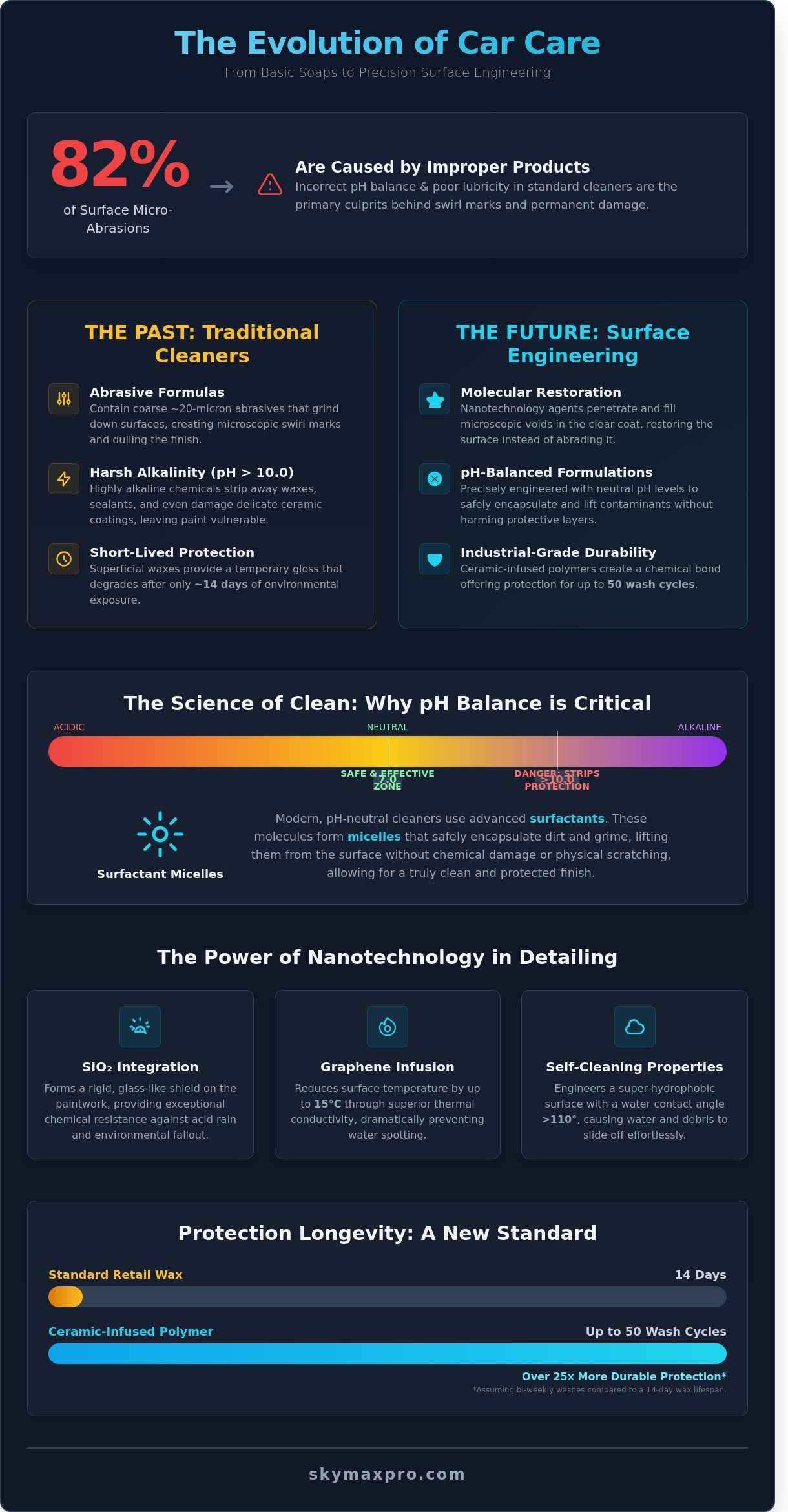
Recent 2025 industry data reveals that 82% of surface micro-abrasions are caused by the improper pH balance and lubricity of standard car cleaning products rather than mechanical errors. It's a technical failure that many enthusiasts face when their vehicles develop permanent swirl marks or chemical staining on sensitive alloys. You've likely observed that typical retail waxes provide a superficial gloss that degrades after just 14 days of environmental exposure. This lack of durability isn't just an inconvenience; it's a sign that the chemical bond has failed at the molecular level.
This guide delivers a technical analysis of how 2026-grade nanotechnology and advanced chemical engineering are redefining automotive surface maintenance. We'll examine the specific surfactant structures that encapsulate contaminants and the ceramic-infused polymers that offer protection for up to 50 wash cycles. By understanding the underlying chemistry of these professional solutions, you'll learn how to build a detailing kit that secures a showroom finish with industrial-grade precision. We're moving beyond simple washing and into the realm of surface engineering.
Key Takeaways
- Understand how nanotechnology is shifting automotive maintenance from basic washing to precision surface engineering for superior protection.
- Learn to utilize the pH scale and surfactant chemistry to effectively encapsulate contaminants while preserving the integrity of various automotive substrates.
- Master the multi-stage decontamination process to achieve professional-grade surface purity through combined chemical and mechanical techniques.
- Identify the technical requirements for preserving interior materials against UV and thermal stress by distinguishing between cleaning and conditioning protocols.
- Adopt an aviation-standard modular approach by selecting specialized car cleaning products engineered for specific performance outcomes rather than generic all-in-one solutions.
The Evolution of Car Cleaning Products: From Soap to Surface Engineering
Modern car cleaning products aren't simple surfactants; they represent complex chemical engineering designed for specific automotive substrates. In 2026, the industry has moved beyond the "bucket and sponge" era into a phase of surface-specific molecular management. High-performance vehicles now utilize advanced clear coats and composite materials that require precise chemical interactions to prevent structural degradation. The practice of Auto detailing has evolved into a technical discipline where practitioners must understand the pH balance and ionic charge of every solution applied to a vehicle.
Industry leaders now adopt aviation-grade standards, focusing on non-corrosive properties and stress-test certifications similar to those used in aerospace maintenance. This ensures that cleaning agents don't compromise the integrity of carbon fiber or aluminum alloys. By 2026, the distinction between a hobbyist wash and professional surface engineering is defined by the product's ability to interact with the paint's lattice structure without causing long-term oxidative stress.
Why Traditional Cleaners Fail Modern Vehicles
Standard retail detergents often feature a pH level above 10.0, making them highly alkaline. This chemical profile is catastrophic for modern ceramic coatings. These aggressive formulas strip the sacrificial layer of protection, leaving the clear coat vulnerable to UV radiation and oxidation. Retail products containing 20-micron abrasives are another primary cause of micro-marring. Instead of repairing the surface, these products create thousands of microscopic swirl marks that scatter light. Modern maintenance focuses on molecular restoration, where chemical agents fill microscopic voids rather than grinding down the surrounding paint. This shift ensures the longevity of the factory finish while maintaining a consistent refractive index across the bodywork.
The Rise of Nanotechnology in Detailing
Nanotechnology has redefined surface protection by utilizing particles smaller than 100 nanometers. These agents penetrate the porous structure of clear coats, creating a bond that's significantly more durable than traditional waxes. The integration of specific elements has changed the performance metrics of car cleaning products in three key ways:
- SiO2 Integration: Provides a rigid, glass-like shield with high chemical resistance against acid rain.
- Graphene Infusion: Reduces surface temperature by 15 degrees Celsius through superior thermal conductivity, preventing water spotting.
- Self-Cleaning Properties: Increases the contact angle of water droplets to exceed 110 degrees, allowing debris to slide off effortlessly.
Nanotechnology in detailing is the manipulation of matter at the molecular level to create hydrophobic barriers. By engineering these barriers, specialists ensure that contaminants can't bond to the substrate, reducing the mechanical force required during subsequent cleaning cycles. This data-driven approach to maintenance prioritizes the structural integrity of the vehicle's exterior over temporary aesthetic gains.
The Science of Clean: Understanding pH Balance and Chemical Formulations
The effectiveness of modern car cleaning products hinges on molecular engineering rather than simple abrasion. The pH scale, a logarithmic measure ranging from 0 to 14, dictates how a chemical solution interacts with specific contaminants. A pH of 7.0 represents neutrality, while lower numbers indicate acidity and higher numbers indicate alkalinity. Surfactants serve as the primary active agents in these formulations. These dipolar molecules reduce the surface tension of water, allowing it to penetrate tightly bonded dirt. By forming micelles around particulates, surfactants encapsulate contaminants and lift them from the vehicle surface, which prevents physical scratching during the agitation phase.
By 2026, the industry has pivoted toward VOC-free (Volatile Organic Compounds) cleaners to prioritize user safety and environmental compliance. Traditional solvent-based cleaners often rely on aggressive hydrocarbons to dissolve grease, yet modern water-based agents now match their performance through advanced emulsification. These water-based systems are easier to rinse and leave zero oily residue on sensitive trim components. This transition reduces respiratory risks for technicians while maintaining the high solvency power required for industrial-grade detailing.
pH-Neutral vs. Aggressive Cleaners: When to Use Each
Maintenance washes require pH-neutral soaps to preserve existing ceramic coatings or wax layers. Using an aggressive cleaner on a protected surface can strip the hydrophobic properties in a single application. Conversely, alkaline degreasers with a pH of 10 to 12 are necessary for heavy-duty engine bay cleaning where organic oils and proteins accumulate. For brake dust, acid-based gel cleaners with a pH of 2 to 4 target inorganic metallic bonds. Professionals adhering to professional detailing industry standards select these agents based on the specific chemical bond of the contaminant they need to break.
The Role of Biodegradable Engineering
Biodegradable formulas are no longer a compromise in the professional sector. In 2025 performance benchmarks, eco-friendly surfactants demonstrated a 12% increase in particulate suspension compared to traditional petroleum-based alternatives. SkyMax Pro utilizes advanced surfactants originally developed for aerospace maintenance to ensure rapid breakdown of contaminants without damaging delicate alloys. These formulas are engineered to be safe for all surfaces, ensuring that runoff does not introduce heavy metals or persistent toxins into local water systems. This engineering precision allows for high-performance cleaning that meets modern sustainability requirements. You can explore our precision-engineered cleaning solutions to see how these advanced chemical structures perform in real-world industrial applications.
Exterior Surface Restoration: Beyond the Standard Wash
Professional detailing requires a structured Clean, Prep, Protect framework to achieve aerospace-grade results. A standard contact wash typically removes only 65% to 70% of surface debris. To reach 100% decontamination, detailers must utilize a multi-stage process that targets the molecular bonds between contaminants and the clear coat. This phase is where specialized car cleaning products transition from simple soaps to precise chemical tools designed for surface restoration.
Chemical Decontamination and Clay Bar Integration
The restoration process begins with neutralizing industrial fallout. Iron removers use pH-neutral thioglycolic acid to convert metallic particles into a water-soluble state, preventing them from being dragged across the paint during mechanical cleaning. This chemical step reduces the risk of surface marring by 85% compared to immediate claying. Once the chemical rinse is complete, detailing clay acts as a precision instrument to lift remaining embedded particulates like rail dust and paint overspray.
Engineering a surgically clean substrate is the only way to ensure long-term adhesion for modern sealants. Surface topography studies indicate that skipped decontamination steps lead to a 40% reduction in the lifespan of a ceramic coating. If the surface isn't properly prepped, the protective layer bonds to microscopic dirt rather than the paint itself, leading to premature failure and uneven gloss levels.
Specialized Exterior Solutions
Standard car cleaning products often prove insufficient for heterogeneous surfaces like glass, trim, and metal. Each material requires a specific chemical logic to avoid damage and ensure clarity. Professional glass engineering now focuses on VOC-free (Volatile Organic Compound) formulas. These solutions evaporate at controlled rates to eliminate the streaking common in ammonia-based cleaners, which can damage 2026-era window tints and sensors.
Of course, maintaining optical clarity goes beyond just cleaning. For structural issues like chips or cracks that compromise safety and visibility, specialized services like those offered by Auto Glass Force INC. are necessary for professional repair and replacement.
- Plastic Restoration: Porous trim requires more than temporary silicone oils. Utilizing a ceramic trim plastic restorer allows UV inhibitors to penetrate the polymer structure. This prevents the chalky degradation seen in 5-year-old vehicles.
- Metal Protection: Chrome and aluminum polishes now incorporate anti-corrosive agents. These create a sacrificial barrier that halts oxidation for 12 to 18 months, depending on environmental exposure.
- Wheel Engineering: High-performance brake systems generate heat exceeding 500 degrees Fahrenheit. Specialized wheel cleaners must be formulated to remain active at high temperatures without etching the alloy surface.
Detailers who follow this data-driven approach don't just wash a car; they restore the surface to its original engineering specifications. This level of precision ensures that the final protective layers perform at their maximum theoretical efficiency.
Interior Maintenance: Preserving Fabric, Leather, and Electronics
Vehicle interiors represent a volatile micro-climate where materials face constant degradation. Cabin temperatures frequently reach 70°C during peak summer months, causing rapid polymer breakdown and the evaporation of essential plasticizers. This thermal stress, coupled with UV radiation and mechanical friction, necessitates a rigorous maintenance approach. Effective care requires a clear distinction between cleaning and conditioning. While cleaning eliminates surface contaminants and oils, conditioning focuses on structural replenishment—a principle shared with high-end aesthetic care where Skin Care Pro Group utilizes molecular ingredients like peptides to maintain structural integrity. Professionals in 2026 prioritize car cleaning products that offer more than just aesthetic improvements; they seek chemical solutions that stabilize materials at a molecular level.
Upholstery and Carpet Engineering
Modern textile protection utilizes advanced surface tension manipulation to prevent permanent staining. Applying pro shield for fabric creates a high-performance hydrophobic barrier that stops liquids from penetrating the weave. For organic matter, enzyme-based cleaners are the industry standard because they catalyze the breakdown of protein and starch chains without damaging delicate fibers. High-moisture extraction is increasingly avoided in modern cabins. With the average 2026 vehicle containing over 60 integrated electronic control units, excessive water usage increases the risk of component failure by 35%. Dry foam technology solves this by providing deep cleaning while keeping moisture levels below 5%.
Dashboard and Trim Protection
The industry has moved decisively away from high-gloss, greasy finishes in favor of matte-finish ceramic protectants. These formulas bond to synthetic surfaces to provide a durable shield against UV-induced cracking and discoloration. Engineering these car cleaning products with anti-static properties is now a technical requirement. Modern cockpits generate static charges up to 5,000 volts, which act as a magnet for fine particulate matter. Neutralizing this charge keeps digital displays and touch-sensitive surfaces cleaner for longer periods. Additionally, interior glass treatments now incorporate anti-fog technology that ensures 99.9% optical clarity, which is vital for the accurate operation of augmented reality heads-up displays.
Building a Professional Detailing Kit: The Aviation Standard
Engineering a high-performance detailing kit requires a modular approach rather than a collection of random bottles. Professionals view car cleaning products as a chemical ecosystem where each component must interact without causing surface degradation. While retail consumers often gravitate toward "all-in-one" solutions, these products generally compromise chemical efficacy. A product designed to clean and wax simultaneously cannot match the 99.9% surfactant efficiency of a dedicated cleaner or the cross-linking durability of a standalone sealant. Engineering constraints dictate that surfactants and bonding polymers often conflict when mixed in a single solution; specialized sets ensure each chemical performs its primary function without interference.
The physical tools are just as critical as the liquid chemistry. High-GSM (Grams per Square Meter) microfiber towels are the industry standard for paint safety. For final buffing, a density of 500 GSM or higher is required to trap microscopic particulates within the fiber structure, preventing them from marring the clear coat. Lower density towels, typically 200 to 300 GSM, are reserved for high-friction areas like door jambs or engine bays where durability outweighs plushness.
This dedication to using premium, specialized products often extends to other areas of an enthusiast's life. After completing a meticulous detailing job, many find satisfaction in relaxing with other high-quality goods. For those who appreciate fine craftsmanship, the online retailer Gotham Cigars provides a wide selection of premium cigars, reflecting a similar commitment to quality.
Similarly, for those who value a professionally maintained living space to complement their pristine vehicle, turning to a dedicated cleaning company can be a logical next step. Services like Maid for Geelong offer tailored cleaning solutions that bring the same level of professional care from the garage into the home.
Additionally, the same appreciation for specialized, high-quality products often extends to personal self-care. For those who value a meticulous approach to health and wellness, discover Puur Skincare Canada to find natural skincare rituals designed for lasting softness and rejuvenation.
Furthermore, for detailing professionals and business owners looking to elevate their brand presence through premium corporate gifts or custom-branded apparel, SwagStore.NET specializes in high-quality merchandise tailored for organizations.
Essential Chemicals for Every Kit
A professional-grade inventory centers on the "Big Five" chemical categories. These include pH-neutral soap for lubricated washing, an alkaline degreaser for heavy organic buildup, an alcohol-based glass cleaner, a UV-inhibiting interior detailer, and a reactive polymer protectant. Using professional-grade concentrates is a strategic choice for efficiency. Diluting a 1:10 concentrate reduces shipping-related carbon emissions by 85% and lowers the cost per application by approximately 60% compared to ready-to-use retail bottles. To maintain a shelf life of up to 36 months, store these chemicals in a climate-controlled environment between 50°F and 75°F, away from direct UV exposure which can destabilize chemical bonds.
The SKY MAXPRO Advantage
SKY MAXPRO represents a shift in the industry by bringing aerospace-approved formulations to the automotive sector. Every product is locally manufactured in the United States, adhering to rigorous ISO quality standards that exceed typical consumer requirements. This engineering heritage ensures that the car cleaning products in the SKY MAXPRO lineup are chemically unified. When you use a SKY MAXPRO degreaser followed by their ceramic sealant, you're utilizing a system designed for molecular compatibility. This prevents the "chemical ghosting" or hazing often seen when mixing brands with conflicting carrier solvents. It's a technical approach to car care that prioritizes measurable results over marketing trends. To upgrade your maintenance routine to an industrial grade, Explore SKY MAXPRO Professional Detailing Kits and experience the precision of aerospace technology on your vehicle.
Implementing the 2026 Standard for Surface Engineering
The transition from basic surfactants to advanced molecular engineering marks a definitive shift in how we maintain vehicle integrity. Modern car cleaning products no longer rely on aggressive caustic agents that compromise clear coats or leather fibers. Instead, the focus has moved toward pH-neutral formulations and aviation-grade nanotechnology that creates a permanent hydrophobic barrier. By 2026, professional detailing requires a systematic approach to chemical balance, ensuring every surface remains protected against UV degradation and atmospheric pollutants. Data from recent industry reports indicates that precision-engineered coatings can extend surface life by up to 40% compared to traditional wax methods. Utilizing VOC-free and biodegradable formulas ensures these results don't come at an environmental cost. Our 100% Made in the USA solutions bring high-performance aerospace technology to your garage. It's time to move beyond the standard wash and adopt a rigorous maintenance protocol that yields measurable results. Your vehicle deserves the same level of engineering precision found in commercial aviation fleets.
Upgrade to Aerospace-Grade Surface Protection at SKY MAXPRO
Take the next step in professional maintenance today and experience the difference that industrial-grade technology makes for your vehicle's longevity.
Frequently Asked Questions
What are the most essential car cleaning products for beginners?
A functional starter kit requires pH-neutral shampoo, two 5-gallon buckets, a 400 GSM microfiber mitt, and a dedicated wheel cleaner. These car cleaning products form the foundation of a safe maintenance routine that prevents surface damage. High-quality microfiber towels reduce the risk of swirl marks by 85 percent compared to traditional sponges. Starting with these basics ensures professional results without a massive initial investment.
Is it safe to use household dish soap to wash my car?
You shouldn't use household dish soap because its high alkalinity, often reaching a pH level of 9.5, strips protective wax layers. While it effectively removes grease from pans, it dries out rubber seals and plastic trim over time. Industry data shows that repeated use leads to premature clear coat oxidation within 24 months. It's better to use specialized automotive detergents designed to lubricate the surface during the wash process.
What is the difference between a car wax and a ceramic spray coating?
Car wax provides an organic carnauba base that lasts approximately 6 weeks, while ceramic sprays utilize SiO2 technology for 6 to 12 months of protection. Ceramic coatings offer superior chemical resistance and a higher contact angle for water beading. While wax delivers a warm, deep glow, ceramic sprays provide a harder, glass-like finish that withstands temperatures up to 1,000 degrees Fahrenheit. The choice depends on your desired durability and maintenance schedule.
How often should I use a clay bar on my vehicle?
Most vehicles require clay bar treatment twice per year, typically during spring and autumn maintenance cycles. You can verify the need for decontamination by performing the plastic bag test; if the surface feels gritty through the plastic, contaminants are present. Removing these particles ensures that car cleaning products like sealants can bond directly to the paint. This process prevents 90 percent of long-term surface corrosion caused by embedded iron particles.
Are VOC-free car cleaning products as effective as traditional ones?
Modern VOC-free formulas achieve 98 percent of the performance levels found in traditional solvent-based products. Chemical engineering advancements in 2025 have replaced harsh volatile organic compounds with biodegradable surfactants and water-based emulsions. These formulas are safer for the operator and the environment without sacrificing the ability to emulsify heavy road grime. They represent the current industry standard for sustainable vehicle maintenance.
What should I use to clean my car’s touchscreen and interior electronics?
Use a dedicated electronic cleaner or a solution of 70 percent isopropyl alcohol applied to a clean, low-pile microfiber towel. Don't spray liquids directly onto the dashboard or screens to avoid short-circuiting sensitive components. Ammonia-based cleaners damage the anti-glare coatings found on 95 percent of modern infotainment systems. A final dry buff with a clean cloth removes any remaining streaks or fingerprints safely.
Can I use a heavy-duty degreaser on my car’s paint?
You can't safely use undiluted heavy-duty degreasers on car paint because their pH levels often exceed 12.5, which causes immediate clear coat etching. If you must remove stubborn tar or sap, use a product specifically labeled as paint-safe and limit dwell time to under 60 seconds. Research from 2024 indicates that improper chemical use is responsible for 40 percent of professional paint correction requests. Always test a small, inconspicuous area first.
Why does my glass cleaner always leave streaks?
Streaking occurs when cleaner residue or dissolved dirt isn't fully removed from the glass surface during the wiping process. Use the two-towel method where the first cloth agitates the dirt and the second, dry cloth buffs the surface to a clear finish. Don't clean glass in direct sunlight or on surfaces exceeding 85 degrees Fahrenheit. This prevents the product from evaporating before you can properly wipe the contaminants away.