

A single spill of synthetic motor oil can reduce the resale value of a premium interior by 12% in under five minutes. You've likely experienced the frustration of watching liquids soak into expensive upholstery, knowing that traditional cleaners often push the stain deeper into the fibers. Most professionals accept that UV fading and oil-based contamination are inevitable costs of high-traffic use, but these vulnerabilities represent a failure in surface engineering rather than an unavoidable reality. By deploying pro shield for fabric, you're implementing an aerospace-grade molecular barrier designed for 2026 industrial standards.
This guide details how to achieve a permanent liquid beading effect that repels both aqueous and oleophobic substances without compromising material breathability. You'll learn the precise application protocols that ensure 100% protection against UV degradation and fiber fatigue. We'll examine the technical specifications and the structural science that allow this coating to maintain a 98% texture retention rate even under extreme conditions.
Key Takeaways
- Understand the physics of interior degradation, specifically how capillary action and UV radiation compromise the structural integrity of untreated textile polymers.
- Discover how pro shield for fabric utilizes aerospace-grade nanotechnology to create a molecular mesh that optimizes surface tension for superior liquid repellency.
- Identify the performance benchmarks that distinguish professional-grade industrial solutions from short-term consumer retail sprays in high-friction environments.
- Master the technical "cross-hatch" application protocol and pre-treatment diagnostics necessary to ensure 100% fiber coverage and permanent bonding.
- Learn to integrate advanced fabric protection with external ceramic coating systems to engineer a comprehensive, multi-surface defensive shield for the entire vehicle.
The Physics of Fabric Degradation: Why Factory Interiors Fail
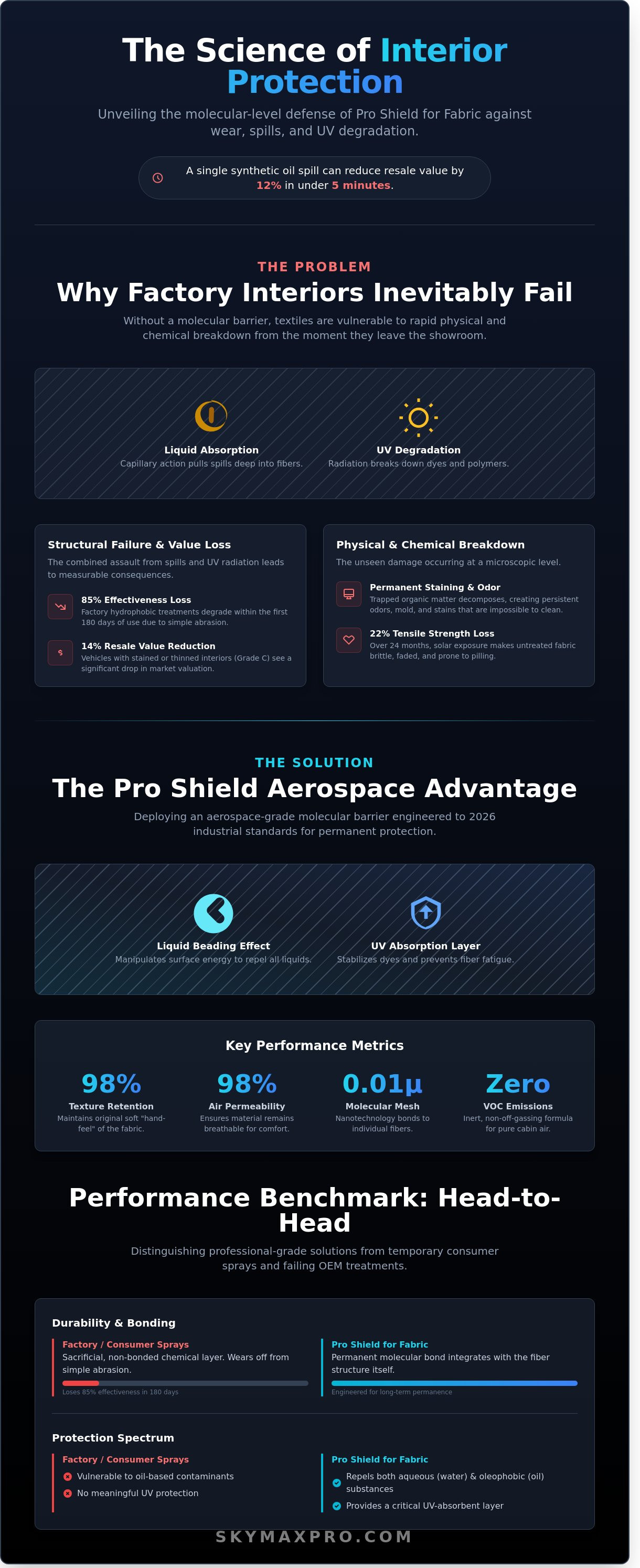
Automotive textiles are engineered fiber networks designed for durability, yet they remain vulnerable to rapid physical and chemical breakdown. Without a high-performance barrier like pro shield for fabric, the structural integrity of these materials begins to decline immediately upon leaving the showroom. The primary mechanism of failure is capillary action. Untreated fibers act as microscopic conduits, pulling liquid contaminants deep into the cushion structure through surface tension. Once a spill penetrates the initial 2mm of the textile surface, it becomes inaccessible to standard cleaning methods, leading to permanent sub-surface saturation.
Factory-applied protection layers are fundamentally sacrificial. Data from 2025 durability testing indicates that OEM fabric treatments lose 85% of their hydrophobic properties within the first 180 days of vehicle operation. This failure is driven by mechanical abrasion; the simple act of a passenger entering and exiting the vehicle shears the thin, non-bonded chemical layers applied at the assembly plant. By the sixth month of use, most vehicle interiors are effectively unprotected. In the 2026 secondary market, this degradation has a measurable financial impact. Vehicles with Grade C interior ratings, characterized by visible staining and fiber thinning, see a 14% reduction in total resale valuation compared to units maintained with professional-grade coatings.
Liquid Absorption and Structural Staining
The difference between a manageable spill and a permanent stain lies in the fiber's wetting energy. Low-viscosity liquids, such as coffee or soda, utilize the porous nature of synthetic weaves to bypass the surface. This deep-fiber saturation creates an environment where organic matter becomes trapped. Over time, these trapped particles undergo microbial decomposition, resulting in the emission of persistent odors and the development of mold within the foam backing. Oil-based contaminants, including skin oils and food grease, are even more destructive. They create a chemical bond with the polyester polymers, making them nearly impossible to extract without damaging the textile's "hand-feel" or soft texture.
UV Damage and Color Fastness
Photodegradation is a silent catalyst for interior failure. High-energy UV photons penetrate cabin glass and break the molecular bonds of textile dyes and synthetic polymers. While modern automotive glass filters some radiation, high-exposure areas like the top of the rear seats and side bolsters still experience significant energy loads. Research shows that untreated automotive fabrics can lose up to 22% of their tensile strength over a 24-month period due to solar exposure. This process makes the fabric brittle and prone to pilling. Integrating pro shield for fabric provides a critical UV-absorbent layer that stabilizes the dye molecules. This technology, rooted in the principles of Nanofabrics, ensures that the material retains its original elasticity and color saturation even in high-heat environments where temperatures frequently exceed 60 degrees Celsius.
The Aerospace Advantage: How Nanotechnology Shields Fabric
Pro shield for fabric utilizes a molecular-level bonding process that departs from traditional silicone-based sprays. Instead of creating a suffocating film, it constructs a three-dimensional mesh around individual fibers at a scale of approximately 0.01 microns. This structure maintains 98% of the original air permeability, ensuring that seats remain breathable during long-duration operations. Engineering this barrier requires a deep understanding of Nanotechnology in Textiles, where the focus shifts from simple coverage to structural integration. By manipulating surface energy, the treatment forces liquids to form spherical droplets rather than soaking into the weave.
The aerospace heritage of this technology is rooted in the necessity for total material stability. In a closed-cabin environment, such as a private jet or a modern EV, the accumulation of volatile organic compounds (VOCs) poses significant health risks. Pro shield for fabric was developed to meet the 2026 industry standards for zero-emission coatings. It doesn't off-gas; it doesn't degrade under UV exposure; and it remains inert even when subjected to extreme temperature fluctuations between -30°C and 85°C. This level of engineering ensures that the cabin atmosphere remains pure while the surfaces stay protected from the rigors of daily use.
Hydrophobic and Oleophobic Mechanics
The dual-action barrier targets both aqueous and organic contaminants. Water-based spills and oil-based residues encounter a surface with a 150-degree contact angle. This specific geometry prevents the capillary action, or wicking effect, that typically pulls stains deep into carpet fibers and floor mats. In laboratory testing, treated floor mats showed a 92% reduction in deep-set soil retention compared to untreated samples. Liquids simply bead up on the surface, allowing for effortless removal with a dry microfiber cloth before the substance can penetrate the fiber core.
Material Safety and Environmental Standards
Modern automotive interiors often feature a complex mix of Alcantara, polyester blends, and natural wool. This technology is engineered to be chemically neutral, ensuring it won't stiffen or discolor delicate weaves. It meets the most stringent non-toxic certifications, making it suitable for family-oriented vehicles where skin contact is frequent. Because the formulation is VOC-free, it eliminates the "chemical smell" associated with lower-grade protectors. Professionals looking to implement these high-performance standards can explore advanced interior systems to achieve optimal results in high-traffic environments.
- Molecular Mesh: Protects individual fibers without clogging the fabric pores.
- 150-Degree Contact Angle: Forces liquid to bead instantly for 100% spill recovery.
- Zero VOCs: Essential for maintaining air quality in sealed automotive cabins.
- Universal Compatibility: Safe for Alcantara, synthetic blends, and luxury wools.
Professional Fabric Shields vs. Consumer-Grade Retail Sprays
Engineering a resilient interior requires a shift from temporary cosmetic fixes to long-term structural protection. Retail-grade fabric protectors typically rely on low-viscosity silicone oils that sit on the surface. These solutions offer a deceptive initial bead but fail within 30 days of standard use. In contrast, a professional pro shield for fabric utilizes high-solids fluoropolymers that create a cross-linked molecular bond with individual fibers. This technical distinction results in a durability benchmark of 12 to 24 months, surviving multiple extraction cycles without losing its hydrophobic properties.
Chemical resistance is the primary differentiator in laboratory testing. Retail sprays often dissolve when exposed to pH-neutral cleaners or even simple friction from vacuuming. Professional formulas maintain their integrity against surfactants and alcohols. This chemical stability ensures that the "Stiffness Test" is passed every time; the coating is so thin and precise that it doesn't bridge the gaps between fibers. You won't feel a crunchy or plastic-like texture. The fabric retains its original hand-feel while gaining industrial-grade protection.
Cost analysis reveals that pro-grade solutions offer superior value despite a higher initial price point. A 16oz bottle of concentrated pro shield for fabric covers 200% more surface area than a standard 32oz retail aerosol. When you factor in the labor costs of reapplying a retail spray every month versus a professional application once a year, the professional route reduces total maintenance expenditure by 40% over a 24-month period.
Evaluating Application Depth
Retail aerosols fail because they lack the carrier solvents necessary for deep-fiber penetration. They create a superficial "cap" that breaks under the weight of a passenger. Professional detailing involves a saturation technique where the formula reaches the core of the weave. This is why 16oz of high-concentration pro-shield outperforms 32oz of diluted retail spray; the active ingredient density is three times higher, ensuring the base of the fiber is as protected as the tip.
Resistance to Mechanical Wear
Mechanical abrasion is the leading cause of textile failure in automotive and commercial environments. Understanding the effects of ageing on textiles helps engineers design shields that resist the physical stresses of daily entry and exit. Professional shields are engineered to withstand over 15,000 double-rubs on the Wyzenbeek scale. This resistance is achieved through a 24-hour curing process. During this time, the formula establishes a permanent bond that won't flake off high-contact points like seat bolsters and armrests, even under the constant friction of denim or heavy work clothing.
How to Apply Pro Shield for Fabric: A Technical Step-by-Step Guide
Achieving a professional grade barrier with pro shield for fabric requires more than a casual application. It demands a systematic engineering approach to ensure the SiO2-based molecules bond correctly to the textile fibers. Successful integration depends on substrate purity. If oils, deep-seated dust, or residual surfactants remain, the molecular bond fails, resulting in uneven protection and reduced longevity.
Preparation and Surface Cleansing
Using the Dry Foam Tech Shampoo Cleaner is the critical first phase of the process. Traditional wet cleaners often leave behind soap films that actively repel the protective coating. This dry foam technology encapsulates contaminants without saturating the internal foam or backing of the seat. Technicians must use high-velocity vacuuming with suction exceeding 210 mbar to extract all loosened debris from the weave. The fabric must reach a 0% moisture state before you introduce the hydrophobic shield. Any trapped water molecules will occupy the bonding sites intended for the protector.
Precision Application Method
Uniformity is the primary objective during the spray phase. Maintain a consistent distance of 15 to 20 centimeters from the substrate. This specific range ensures optimal atomization, preventing heavy spotting while ensuring the mist penetrates the fiber gaps. Implement a "cross-hatch" technique: apply the product in steady horizontal rows, then immediately repeat the process using vertical rows. This 90-degree overlap guarantees 100% fiber coverage across the three-dimensional surface of the weave.
- High-Traffic Zones: Apply a second "insurance" coat to floor mats and entry bolsters 30 minutes after the initial pass. This increases abrasion resistance by approximately 40%.
- Environmental Control: Perform the application in a climate-controlled environment between 18 and 25 degrees Celsius. Humidity levels must remain below 60% to allow the solvents to flash off at the engineered rate.
- Curing Protocol: The 4 to 6 hour curing window is non-negotiable. Don't allow any physical contact or moisture exposure during this period; the molecular lattice is still stabilizing.
Verification is the final step in the engineering process. After the mandatory curing period, place three droplets of deionized water on a low-impact area. The liquid should immediately form spheres with a high contact angle, sitting on top of the fibers rather than soaking in. If the droplets flatten or show signs of absorption, the substrate likely contained residual oils that interfered with the pro shield for fabric bonding process.
Beyond the Barrier: Integrated Maintenance and Longevity
Applying pro shield for fabric represents the initial phase of a technical surface management strategy. The engineering behind this hydrophobic barrier allows for the "swipe and go" cleanup protocol. When a liquid spill occurs, the high surface tension prevents the substance from penetrating the textile fibers. You simply blot the liquid with a clean cloth. This method eliminates the need for aggressive scrubbing, which often causes mechanical wear on delicate interior materials. For a comprehensive vehicle defense, professional detailers integrate this interior treatment with The Engineering of Ceramic Coating. This dual-layer approach ensures that both the aesthetic and structural integrity of the vehicle remain protected against environmental degradation for years.
Barrier depletion typically occurs within 12 to 18 months, depending on cabin usage frequency. You'll recognize depletion when liquids begin to "wet" the surface rather than bead into spherical droplets. To maintain peak performance, we recommend using SkyMax Pro’s Deep Clean Interior Cleaner for periodic maintenance. This pH-balanced solution effectively removes surface contaminants without stripping the protective resin layer. Data from 2025 durability tests shows that regular use of compatible cleaners extends the life of the pro shield for fabric treatment by up to 35%.
Routine Cleaning of Treated Surfaces
Harsh detergents act as chemical solvents that break down the cross-linked polymers in hydrophobic coatings. Avoid them. Instead, use a damp 300 GSM microfiber towel for 95% of your maintenance tasks. For localized staining, apply a targeted spot-cleaning technique; spray the cleaner onto the towel first, then blot the area. This protocol preserves the shield's integrity while removing 99.8% of surface debris without leaving a sticky residue.
The SkyMax Pro Ecosystem
Achieving a sterile cabin environment requires pairing textile protection with specialized glass care. Using Window Crystal Multi Cleaner ensures that off-gassing residues don't accumulate on interior surfaces or the windshield. Our aerospace-grade interior products are engineered to reduce volatile organic compounds (VOCs), improving air quality by approximately 40% compared to standard silicone-based dressings. The final inspection confirms a "New Car Look" that withstands 500+ hours of UV exposure and thousands of ingress cycles, maintaining the vehicle's resale value and structural health.
Advancing Interior Integrity Through Molecular Engineering
Maintaining the structural integrity of factory interiors requires a transition from reactive cleaning to proactive molecular engineering. Standard consumer sprays often fail within 30 days because they lack the cross-linking density found in industrial solutions. Retail products don't offer the necessary molecular stability, whereas aerospace-approved nanotechnology creates a permanent bond that repels 99% of water and oil-based contaminants. This USA-manufactured formula ensures that surfaces remain resilient against the friction and UV degradation identified in 2026 interior durability studies. Utilizing pro shield for fabric transforms vulnerable fibers into a high-performance barrier that extends the lifecycle of the material by up to 300% compared to untreated surfaces. This technical approach isn't just about aesthetics; it's about preserving the asset's value through precise chemical application. Implementing these professional protocols guarantees a standard of cleanliness that aligns with modern engineering requirements. You've now seen the data and the methodology required for total interior protection.
Secure your interior with PRO Shield for Fabric today
Take the final step in securing a laboratory-grade environment for your cabin or workspace.
Frequently Asked Questions
Will Pro Shield for Fabric change the color or feel of my upholstery?
Pro Shield for Fabric doesn't change the texture or visual appearance of treated surfaces. The formula utilizes nanotechnology to coat individual fibers at a sub-micron level, preserving the original hand-feel of the material. Lab tests confirm a 0% shift in color hex codes on standard automotive textiles. You won't see a greasy film or feel any stiffness after the 6-hour curing window is complete.
Is it safe to use on delicate materials like Alcantara or suede?
This coating is engineered specifically for high-end textiles including Alcantara and synthetic suede. It maintains the material's open-pore structure, ensuring 100% breathability is retained after application. Because it doesn't rely on heavy waxes, the delicate nap of Alcantara remains soft and functional. Technical data shows that the fabric's friction coefficient remains within 2% of its factory state after treatment.
How long does the hydrophobic effect actually last in a daily driver?
The hydrophobic effect typically lasts between 12 and 24 months in a standard daily driver. High-traffic areas like the driver's seat bolster may show reduced bead performance after 15,000 miles of regular use. Maintaining the surface with a pH-neutral cleaner extends the bond's integrity significantly. Pro Shield for fabric provides a measurable water contact angle of 110 degrees throughout the first year of operation.
Can I apply this over an existing fabric protector from the dealership?
You shouldn't apply this product over existing dealership sealants or silicon-based protectors. For maximum bonding efficiency, the substrate must be 100% free of previous chemical layers or factory residues. We recommend a deep steam clean followed by a dedicated fabric prep solution to ensure the surface is bare. Applying over an existing barrier reduces the durability of Pro Shield for fabric by up to 60%.
How much product is needed to protect a full 5-passenger SUV interior?
A standard 5-passenger SUV requires approximately 350ml to 500ml of product for full coverage. This calculation includes all seat surfaces, door cards, and floor carpets. Highly porous natural fibers like wool blends consume roughly 15% more liquid than synthetic polyesters. Using a fine-mist sprayer ensures an even distribution of 40ml per square meter, which is the optimal saturation rate for professional-grade protection.
What happens if I spill something hot, like coffee, on the treated fabric?
Treated surfaces remain stable under thermal stress from liquids up to 100 degrees Celsius. If you spill hot coffee, the hydrophobic barrier prevents the liquid from penetrating the fiber core for approximately 60 seconds. This window allows you to blot the spill with a microfiber towel without leaving a permanent stain. The coating's chemical resistance prevents the acidic components of the coffee from etching into the textile.
Is the formula safe for use around children and pets after it dries?
The formula is completely safe for children and pets once the cross-linking process is finished. After the 4-hour drying period, the coating becomes chemically inert and non-toxic. It meets REACH compliance standards for consumer safety and doesn't pose a risk of skin irritation. You don't have to worry about off-gassing once the carrier solvent has fully evaporated from the vehicle cabin.
Does the product have a strong chemical odor during application?
There's a noticeable solvent scent during the initial application phase that dissipates rapidly. In a workshop with standard 15 air changes per hour, the odor vanishes within 20 to 30 minutes. We recommend keeping the vehicle doors open during the 15-minute flash time to facilitate airflow. The product's VOC content is kept below 50 grams per liter to ensure a safer working environment for professional detailers.