

A graphene coating isn't just premium paint protection; it's a high-performance carbon-nanostructure that requires an engineering-grade maintenance protocol to function correctly. Many owners invest in this advanced technology but inadvertently degrade the surface by using aggressive alkaline soaps or abrasive mechanical tools. Mastering how to wash a car with graphene coating is the only way to preserve the aerospace-grade protection and the deep, "day-one" gloss that defines high-end detailing.
It's common to feel hesitant when cleaning such a sophisticated surface, especially with the risk of micro-marring or mineral spotting. You want to ensure the structural integrity of your Ceramic Graphene Shield Coating remains intact for its full five-year rating. This guide provides the technical specifications for a professional-grade wash. We'll examine the chemistry of pH-neutral shampoos, the mechanics of the two-bucket method, and the precise drying techniques required to maintain maximum hydrophobicity without leaving a single streak behind.
Key Takeaways
- Understand the chemical necessity of pH-neutral surfactants to avoid clogging the 2D carbon hexagonal lattice of your graphene coating.
- Master the technical execution of the two-bucket method and foam cannon pre-wash to safely learn how to wash a car with graphene coating without surface abrasion.
- Implement aerospace-grade drying protocols using compressed air or high-GSM microfiber towels to prevent mineral deposits and micro-marring.
- Identify the correct maintenance intervals for applying graphene-infused quick detailers to restore peak hydrophobicity and structural integrity.
The Engineering Behind Graphene Coating Maintenance
Understanding What is Graphene at a molecular level is the foundation of effective vehicle maintenance. As a 2D carbon allotrope arranged in a precise hexagonal lattice, graphene provides incredible tensile strength and chemical resistance when suspended in a high-quality resin. When you apply a Ceramic Graphene Shield Coating, you're essentially bonding a layer of carbon-nanostructures to your clear coat. However, maintaining this performance requires specific knowledge of how to wash a car with graphene coating to ensure the carbon structure remains unobstructed by environmental contaminants. Unlike traditional waxes, graphene doesn't rely on a thick layer of oil or silicone; its efficacy comes from its structural integrity and surface energy.
A common failure point in long-term protection is "coating clogging." This occurs when road film, industrial fallout, or organic matter accumulates on top of the lattice. These contaminants mask the hydrophobic properties, making the surface appear "dead" even though the protection is still present. Using traditional waxes or silicon-heavy sealants is detrimental to this engineering. These products have higher surface tension and lower thermal resistance than graphene, creating a "sticky" layer that attracts dust and prevents the coating from shedding water efficiently. To keep the surface performing at an aerospace grade, you must remove these contaminants without leaving behind any sacrificial residues that could interfere with the coating's nanostructure.
Graphene vs. Ceramic: Maintenance Requirements
The primary engineering advantage of graphene is its reduced surface tension compared to a standard ceramic coating. This property makes it naturally more resistant to water spotting, as the water droplets have a harder time clinging to the surface. Graphene also possesses high thermal conductivity, which helps dissipate heat across the panel. In practical terms, this means water is less likely to "bake" into the surface during the washing process, though working in direct sunlight is still discouraged. Maintaining pH-neutrality during cleaning is vital. Harsh chemicals can weaken the resin bonds that hold the graphene in place, shortening the lifespan of the five-year protection.
The Critical Curing Window
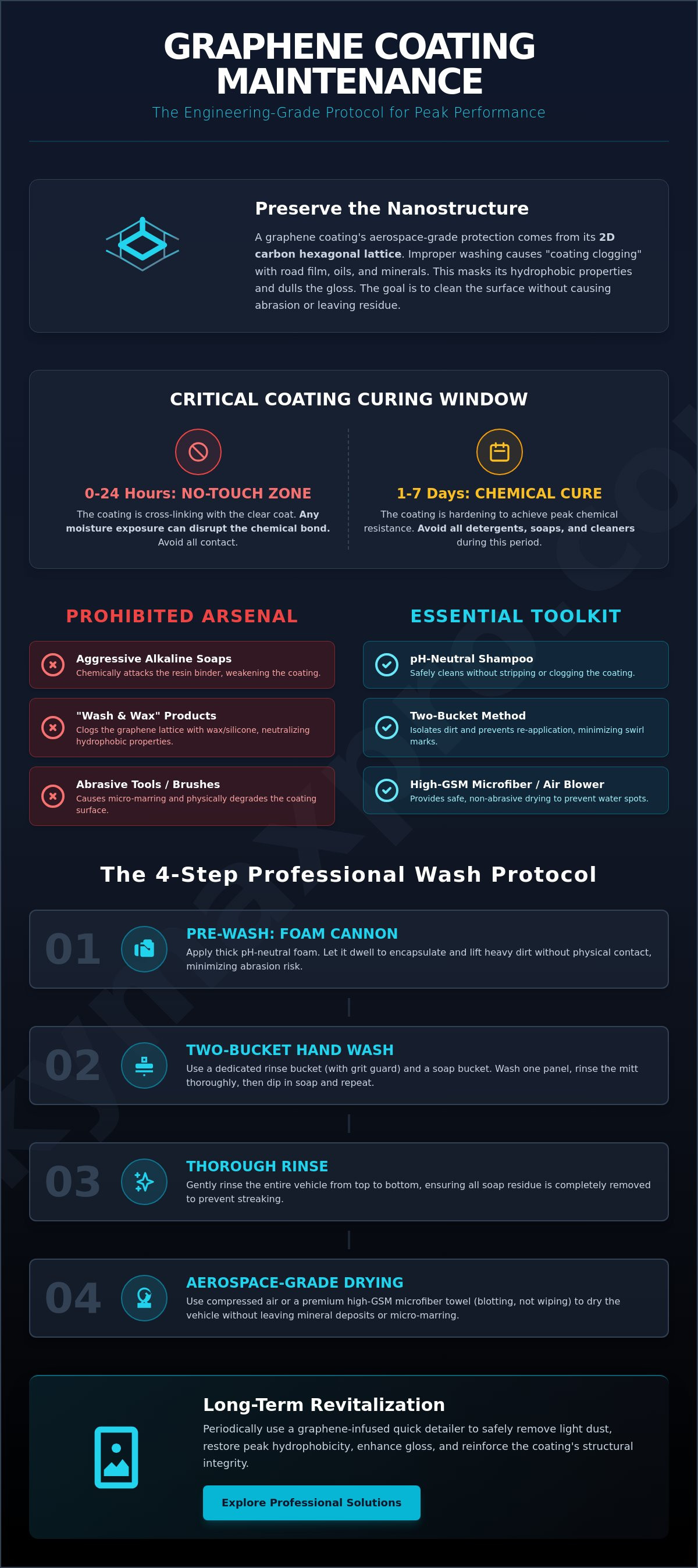
The first 24 hours after application represent a "no-touch" zone where moisture is the primary enemy. During this phase, the coating is actively cross-linking with the clear coat, and any exposure to water can disrupt this chemical bond. After this initial period, a 7-day chemical cure follows. It's essential to avoid all detergents and soaps during this week; the coating is still hardening and hasn't reached its peak chemical resistance. Environmental factors like high humidity can extend this window, while dry, warm conditions can accelerate it. Understanding these timelines is the first step in learning how to wash a car with graphene coating without compromising the structural integrity of the shield.
Selecting Aerospace-Grade Chemistry for Graphene Surfaces
Selecting the correct chemical agents is a critical phase in the maintenance lifecycle of any protected vehicle. While many consumers believe any automotive soap is sufficient, the technical reality is that graphene requires specific surfactant chemistry to maintain its performance. Using a "Wash and Wax" product is fundamentally counterproductive. These formulas leave behind a layer of carnauba or low-grade silicone that fills the hexagonal carbon lattice, effectively neutralizing the hydrophobic properties you paid for. To understand how to wash a car with graphene coating properly, you must prioritize pure, high-lubricity shampoos that act as a barrier between the wash mitt and the surface. This lubrication is the primary defense against micro-marring and swirl marks during the mechanical agitation phase.
Aggressive, high-alkaline degreasers pose a different risk to the surface. These chemicals can chemically attack the resin binder, leading to premature thinning of the coating layer. A Purdue University Graphene Study highlights how graphene serves as an exceptional oxidation barrier, but this protection relies on the integrity of the polymer matrix. Solvent-based cleaners can cause this matrix to swell or delaminate. For areas requiring intense cleaning, professionals utilize specialized heavy duty degreasers only on non-coated surfaces like raw wheel barrels or engine components to avoid compromising the primary shield.
Decoding pH-Neutral Shampoos
A true pH-neutral shampoo operates through surface tension reduction rather than chemical abrasion. These formulas are engineered to encapsulate dirt particles in a lubricated envelope, allowing them to slide off the surface during the rinse cycle. Clean-rinsing agents are vital; if a soap leaves a film, it creates a site for mineral deposits to bond. Utilizing biodegradable, surfactant-based cleaners ensures that the 2D structure of the graphene remains clear of residues. This precision in chemistry is what preserves the "day-one" gloss over a five-year lifespan.
Advanced Decontamination Chemicals
Maintenance isn't limited to routine washing. Over time, metallic particulates from brake dust can embed themselves in the surface. Using a pH-neutral iron remover annually is a safe way to chemically dissolve these contaminants without mechanical scrubbing. For wheels, a targeted approach ensures that heavy brake dust is removed without the risk of overspray damaging the body coating. Utilizing a specialized PRO Safe ACID Gel Wheel & Rim Cleaner provides the necessary cleaning power for neglected rims while remaining safe for the surrounding treated panels. Avoid any cleaner that doesn't explicitly state its compatibility with nano-coatings to prevent irreversible structural damage.
The Step-by-Step Graphene Wash Protocol
Standardizing your maintenance routine is the only way to ensure the long-term durability of a 2D carbon structure. When considering how to wash a car with graphene coating, the objective is to minimize mechanical friction while maximizing chemical cleaning efficiency. This protocol starts with high-quality equipment. You'll need two dedicated buckets equipped with grit guards, several high-GSM microfiber wash mitts, and a pressure washer set between 1000 and 1500 PSI. Higher pressures risk delaminating the bond between the coating and the clear coat; lower pressures may fail to dislodge abrasive grit before the contact phase.
The two-bucket method is the industry standard for isolating abrasive particulates. One bucket contains your pH-neutral soap solution, while the second bucket is filled with clean water for rinsing the mitt. By scrubbing the mitt against the grit guard in the rinse bucket after every panel, you ensure that dirt trapped in the fibers isn't reintroduced to the paint. This systematic isolation of contaminants is what prevents the micro-marring that typically degrades a coating's gloss over time.
The Pre-Wash and Foam Stage
Applying a high-cling foam is the first line of defense. This stage emulsifies surface contaminants, lifting them away from the paint so they can be rinsed off without a mitt. Dwell time is critical. You want the foam to sit for three to five minutes to work its chemistry, but it must never dry on the panel. A bottom-up rinse technique is preferred here. By rinsing from the rocker panels upward, you ensure the concentrated foam remains in contact with the heaviest soil for the maximum duration before the final top-down rinse clears the panel.
The Contact Wash Phase
The contact wash phase follows a strict top-down execution. Start with the roof and glass, as these areas typically harbor the least abrasive grit. Move the mitt in straight, overlapping lines rather than circular motions. Circular patterns create multi-directional swirls that are more visible under direct light. Frequent mitt rinsing in the dedicated rinse bucket is mandatory. If you're working on a larger vehicle, switching to a fresh mitt for the lower third of the body prevents cross-contamination. This systematic approach is the core of how to wash a car with graphene coating safely, ensuring the surface remains free of wash-induced defects.
Drying and Decontamination Strategies
The drying phase is where many enthusiasts inadvertently compromise the structural integrity of their vehicle's finish. While graphene coatings significantly reduce surface energy, residual water can still lead to mineral deposition if left to evaporate. The preferred engineering standard for drying is a touchless method using filtered compressed air. This approach eliminates mechanical contact entirely, removing moisture from intricate areas like weather stripping and lug nut cavities where towels cannot reach. When performing a touchless dry, you minimize the risk of micro-marring, which is a vital component of how to wash a car with graphene coating effectively.
If compressed air is unavailable, the "blotting" technique is the only acceptable alternative. Instead of dragging a towel across the panel, you lay a high-absorbency microfiber over the wet surface and apply light pressure. This allows the fibers to wick away moisture without the friction associated with dragging. Addressing hard water spots immediately is mandatory. If minerals from tap water bond to the graphene lattice, they can become difficult to remove without specialized acids. For persistent mineral buildup, utilizing a dedicated Water Spot Remover is the safest way to restore the nanostructure's clarity.
Microfiber Engineering Standards
Maintaining auto detailing excellence requires towels that meet specific textile specifications. A 70/30 polyester-to-polyamide split provides the optimal balance of softness and absorbency. Towels should have a GSM (grams per square meter) of at least 500 for drying tasks to ensure they can hold sufficient moisture without becoming saturated. Edgeless designs are essential; heat-cut or ultrasonic-cut edges prevent the localized pressure points that sewn borders can create. Proper maintenance involves washing these towels with dedicated microfiber detergents, avoiding fabric softeners that would otherwise clog the polyamide fibers and reduce their effectiveness.
Chemical Decontamination and Claying
Even with a rigorous wash protocol, environmental particulates can become embedded in the surface over time. The "baggie test", placing your hand in a plastic sandwich bag and lightly feeling the paint, helps identify these microscopic peaks. When contaminants are present, chemical decontamination is the preferred first step for graphene-treated surfaces. Mechanical claying, while effective, can introduce fine marring that requires polishing to correct. If mechanical intervention is necessary, always use a detailing clay bar with an abundance of high-lubricity spray. This ensures the clay glides over the surface, capturing debris without scouring the coating. Mastering these decontamination steps is the final technical hurdle in learning how to wash a car with graphene coating for long-term durability.
Long-Term Maintenance and Coating Revitalization
The final phase of an engineering-grade maintenance program involves the strategic revitalization of the coating's surface energy. Even when you follow the exact protocols for how to wash a car with graphene coating, the top layer of the carbon lattice will eventually accumulate microscopic wear from high-velocity particulates and UV exposure. To counteract this, professionals use graphene-infused boosters to provide a sacrificial barrier. This prevents the primary Ceramic Graphene Shield Coating from absorbing the full brunt of environmental stress, extending its functional lifespan beyond the standard five-year projection.
Quarterly rituals are essential for restoring peak hydrophobicity. If you notice water beading has transitioned into sluggish sheeting, the surface is likely clogged with inorganic film that survived the standard wash. Applying a PRO Ceramic Graphene Spray Coating every three to four months reinforces the hexagonal lattice. However, you must avoid "over-layering." Applying too many products too frequently can lead to product smearing and a reduction in optical clarity. A single, thin application after a thorough decontamination wash is the technical standard for optimal performance.
The Role of Toppers and Boosters
Understanding the difference between a "Quick Detailer" and a "Coating Booster" is vital for surface health. A Quick Detailer Spray with Ceramic High Gloss Finish is designed for light dust removal and lubrication during the drying phase. It provides a temporary gloss enhancement but lacks the high-solids content of a true booster. In contrast, a graphene spray coating adds a measurable layer of protection to the existing structure. Using these products as a sacrificial layer ensures that the primary bond to the clear coat remains undisturbed during routine cleaning cycles.
Professional Maintenance Checklist
Annual professional inspections serve as a diagnostic check for the coating's integrity. During these sessions, you should evaluate the surface for chemical etching caused by bird droppings or tree sap, which can penetrate even aerospace-grade resins if left untreated. You should also look for "high spots," which appear as iridescent, rainbow-like streaks. While these are usually caught during the initial cure, they often become more visible after several maintenance cycles. If water fails to bead or sheet entirely on a panel despite decontamination, it indicates a localized coating failure that requires a professional re-application. To ensure you have the right tools for these procedures, explore the SKY MAXPRO Graphene Series for professional-grade maintenance kits. Consistent monitoring and the use of compatible chemistry are the only ways to guarantee the long-term success of your surface protection strategy.
Maximizing the Lifecycle of Your Graphene Investment
Maintaining a graphene-treated surface is a technical commitment to preserving a complex carbon-nanostructure. By strictly adhering to pH-neutral chemical standards and utilizing isolated wash methods, you prevent the accumulation of environmental film that masks hydrophobicity. Mastering how to wash a car with graphene coating is the definitive way to ensure your vehicle retains its industrial-grade protection and deep specular gloss. Consistent application of these engineering protocols ensures that the 2D lattice remains clear of contaminants, allowing the coating to function as a high-performance barrier against the elements.
Engineering excellence requires superior materials. SKY MAXPRO provides the technical solutions needed to maintain surface integrity under extreme conditions. Our formulations utilize aerospace-approved nanotechnology to provide a resilient barrier against oxidation and chemical etching. Manufactured in the USA for rigorous quality control, our systems offer professional-grade durability with 5-year shield options. Secure your vehicle's future with the SKY MAXPRO Ceramic Graphene Shield Coating. Your commitment to precise maintenance protocols will safeguard your finish for years to come.
Frequently Asked Questions
How soon can I wash my car after applying a graphene coating?
You must wait at least 7 days before performing a full wash with detergents. While the coating becomes dry to the touch within 24 hours, the chemical cross-linking process requires a full week to reach peak hardness. Exposure to surfactants or friction during this hardening phase can disrupt the bond between the resin and the clear coat, compromising the long-term durability of the shield.
Can I take a graphene-coated car through an automatic car wash?
Avoid automatic car washes that utilize mechanical brushes or curtains. These systems frequently harbor abrasive particulates from previous vehicles, which cause micro-marring across the carbon-nanostructure. While touchless automatic washes are safer, they often utilize high-alkaline chemicals that can prematurely thin the coating. Manual hand washing remains the only approved method for maintaining the structural integrity of the surface.
Do I need to wax my car if it has a graphene coating?
Waxing a graphene-coated surface is counterproductive and technically discouraged. Traditional carnauba waxes and silicones possess higher surface tension than graphene, which effectively clogs the hexagonal lattice and neutralizes the hydrophobic properties. To enhance gloss or protection, utilize graphene-infused boosters specifically engineered to bond with the existing layer without leaving detrimental residues behind.
What is the best soap to use for washing a graphene-coated vehicle?
The optimal choice is a pure, pH-neutral car shampoo that contains no added waxes, sealants, or gloss enhancers. These "clean-rinsing" surfactants are designed to emulsify surface contaminants without leaving a film that could mask the coating's performance. High-lubricity formulas are essential when learning how to wash a car with graphene coating, as they provide the necessary barrier to prevent wash-induced swirl marks.
How do I remove water spots from my graphene coating without damaging it?
Utilize a specialized Water Spot Remover formulated for nano-coatings to dissolve mineral deposits chemically. These acidic solutions break the bond between the minerals and the graphene lattice without the need for mechanical abrasion. Avoid using heavy compound polishing for spot removal, as the friction required to remove the mineral etch will also strip away the protective graphene layer.
Can I use a pressure washer on a graphene-coated car?
Yes, a pressure washer is a highly effective tool for the pre-wash and rinsing stages. Maintain a pressure setting between 1000 and 1500 PSI and keep the nozzle at least 12 inches from the surface to avoid localized delamination. This equipment is a key component in how to wash a car with graphene coating because it removes the majority of abrasive grit before any mechanical contact occurs.
How often should I apply a graphene booster or topper?
Apply a sacrificial layer, such as a graphene spray coating, every 3 to 4 months. This quarterly maintenance ritual restores the surface energy and ensures the primary coating remains protected from UV degradation and chemical etching. Applying boosters more frequently than every 90 days is unnecessary and can lead to product smearing or "clouding" on the finish due to excessive layering.
Why is my graphene coating no longer beading water?
Loss of hydrophobicity is typically caused by surface clogging rather than coating failure. Road film, industrial fallout, and environmental pollutants can create a microscopic layer of "masking" dirt over the carbon lattice. Performing a thorough decontamination wash with a pH-neutral iron remover or a high-lubricity clay bar session usually clears these obstructions and restores the peak water-beading performance immediately.