

What if the primary threat to your vehicle's finish isn't road grime, but thermal energy absorption? Most owners believe a high-end coating is a set-and-forget solution, yet black paint functions as a high-efficiency heat sink, reaching surface temperatures that accelerate oxidation and chemical etching. Learning how to maintain ceramic coating on black car surfaces requires moving beyond basic detailing and adopting rigorous surface engineering protocols. You've likely seen how water spots and micro-swirls can still compromise a dark finish if the maintenance cycle isn't technically sound.
We recognize that preserving a flawless, jet-black reflection is a persistent challenge against environmental physics. This guide outlines the professional-grade maintenance cycles and aerospace-grade technology needed to sustain the hydrophobic performance and structural integrity of your coating. We'll examine the technical procedures for safe decontamination, the use of graphene-infused reinforcements for thermal management, and the specific chemical sequences required to maintain a permanent, showroom-deep mirror finish.
Key Takeaways
- Analyze the specific physics of black paint and why high surface temperatures necessitate advanced thermal management protocols to prevent rapid coating oxidation.
- Compare the molecular durability of graphene lattices against traditional sealants to ensure long-term structural integrity and superior tensile strength on the paint surface.
- Implement the "No-Touch" mechanical protection strategy to learn how to maintain ceramic coating on black car finishes without the risk of contact-induced swirl marks.
- Identify the essential preparation steps, including paint correction and chemical decontamination, required to achieve professional-grade mirror-finish longevity.
- Evaluate the performance benefits of transitioning to aviation-grade surface engineering for superior protection against high-speed environmental stressors and UV radiation.
The Physics of Black Paint: Why Dark Surfaces Fail Faster
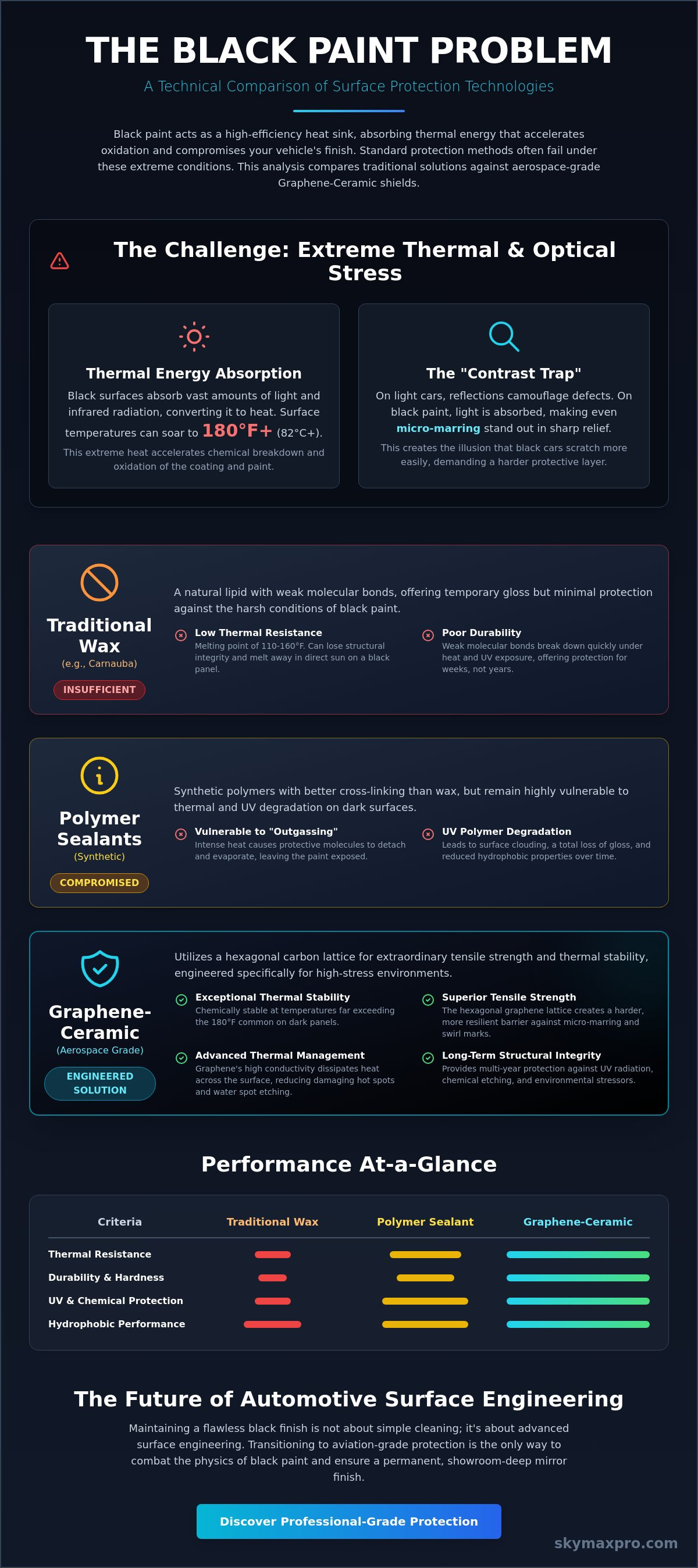
Black pigment functions as a high-efficiency optical sponge. It absorbs the vast majority of visible light and infrared radiation, rather than reflecting it back into the atmosphere. This absorption transforms light energy into intense thermal energy. On a clear day, surface temperatures on black panels can reach up to 180°F in direct sunlight. These extreme temperatures initiate a destructive thermal cycle that compromises the structural integrity of the vehicle's finish. As the metal substrate and the layers of automotive paint composition heat up, they expand. When the vehicle moves into the shade or is exposed to rain, these materials contract rapidly. This constant mechanical stress can lead to microscopic fractures in the clear coat, which is why understanding how to maintain ceramic coating on black car surfaces is a matter of thermal management as much as cleanliness.
The "Contrast Trap" represents the primary optical challenge for dark vehicles. On a silver or white car, light reflects in multiple directions, effectively camouflaging surface defects. On black paint, the pigment absorbs light, meaning any scratch that catches the sun stands out in sharp relief. Even micro-marring as shallow as 1 micron becomes highly visible against the dark background. This creates the illusion that black cars "scratch easier," when in reality, the scratches are simply more visible due to the lack of light diffusion. Maintaining a deep mirror finish requires a protective barrier that offers significantly higher Shore hardness than factory clear coats.
Thermal Oxidation and Clear Coat Failure
Extreme heat serves as a constant catalyst for chemical breakdown. Traditional organic waxes often have melting points between 110°F and 160°F. On a dark hood, these products can lose their structural integrity and melt within minutes of sun exposure. Infrared absorption accelerates the oxidation of the pigment itself, leading to a dull, chalky appearance over time. Standard polymer sealants often suffer from "outgassing," where the heat causes the protective molecules to detach and evaporate. This leaves the paint vulnerable to UV radiation and environmental contaminants that can etch into the surface in hours rather than days.
The Optical Reality of Micro-Marring
Light refraction behaves differently on dark surfaces compared to light ones. Micro-marring is the primary enemy of the "wet look" that owners crave. Because black paint provides such a high-contrast backdrop, any physical abrasion disrupts the uniform reflection of light. To combat this, the surface requires a coating with superior tensile strength and hardness. Engineering a solution for black paint involves creating a sacrificial layer that can withstand the high-energy environment of a heat-absorbing surface. Without a specialized shield, the paint is subject to constant optical degradation from even the most careful maintenance routines.
Comparative Analysis: Graphene-Ceramic Shields vs. Traditional Sealants
The chemical stability of your protective layer determines the longevity of a black finish. Traditional carnauba wax is essentially a natural lipid; its weak molecular bonds fail quickly when black paint reaches the peak thermal absorption levels discussed previously. Synthetic polymer sealants offer slightly better cross-linking but remain highly vulnerable to UV polymer degradation, which leads to surface clouding and a total loss of gloss. In contrast, graphene-ceramic hybrids utilize a hexagonal carbon lattice. This structure provides extraordinary tensile strength and a chemical bond that remains stable at temperatures far exceeding the 180°F threshold common on dark panels.
Graphene's thermal conductivity is a critical engineering advantage for dark pigments. While standard SiO2 (silicon dioxide) coatings provide excellent protection, they can sometimes exhibit high thermal retention, which contributes to water spot etching. Graphene-infused shields mitigate this by dissipating heat across the surface more efficiently. This reduces the surface energy that typically causes mineral deposits to bake into the finish. By lowering the sliding angle of water droplets, these aerospace-grade formulations ensure that contaminants move off the vehicle before they can cause permanent damage.
Why Ceramic Graphene is Superior for Black Paint
Black paint demands more than just a physical barrier; it requires an optical enhancer. Graphene-infused coatings increase the refractive index of the surface, which creates the signature "deep wet" look that characterizes high-end detailing. This deepens the black pigment's appearance while providing a heat-dissipation layer that prevents the rapid oxidation common in dark vehicles. For a deeper dive into the molecular mechanics of these systems, you can read more about the engineering of ceramic coating. Utilizing a professional-grade Ceramic Graphene Shield Coating ensures these technical benefits are realized on the vehicle's surface.
Hardness Ratings: Resisting Swirls at the Molecular Level
Most factory clear coats possess a hardness rating between 2H and 4H on the Pencil Hardness Scale. A professional graphene-ceramic coating elevates this to 9H, providing a significant increase in resistance to micro-marring. This sacrificial layer takes the brunt of environmental friction. Because these coatings are extremely hydrophobic, they enable "self-cleaning" properties where dirt and grit don't bond tightly to the surface. This is a fundamental component of how to maintain ceramic coating on black car finishes; by minimizing the force needed during cleaning, you minimize the opportunity for mechanical abrasion. This results in a finish that remains swirl-free for a significantly longer operational lifespan.
Mechanical Protection: The Science of Contact-Free Maintenance
Maintaining a flawless dark finish requires a fundamental shift from traditional cleaning methods to a contact-free engineering approach. In the context of how to maintain ceramic coating on black car finishes, the "No-Touch" philosophy is the gold standard. Every physical interaction with the paint surface carries a mathematical risk of micro-abrasion. We prioritize chemical decontamination over mechanical scrubbing because chemical agents dissolve organic and inorganic particulates without the need for lateral friction. This scientific approach preserves the coating's structural integrity, which is often tested through accelerated weathering of coatings to ensure long-term durability against environmental stressors.
The drying phase is where 90% of black paint damage occurs. When water evaporates, it leaves behind mineral deposits that can etch into the clear coat if not managed. Many owners rely on standard car soaps that lack the necessary lubricity for coated surfaces. A "Lubricity Gap" exists when the soap doesn't provide enough of a boundary layer between the wash media and the coating. This is why we use high-lubricity surfactants that encapsulate dirt particles, allowing them to slide off the hydrophobic surface safely. This protocol is the definitive answer to how to maintain ceramic coating on black car surfaces without inducing optical defects.
The Three-Stage Wash Protocol
The pre-wash stage utilizes high-foaming surfactants delivered via a foam cannon to lift and suspend surface contaminants. This allows the majority of abrasive grit to be rinsed away before any tool touches the car. For the contact wash, the multi-mitt method is essential; a fresh, high-GSM microfiber mitt is used for every panel to prevent cross-contamination. The final rinse must use deionized or filtered water. Removing mineral content from the rinse cycle is the only way to eliminate the risk of calcium and magnesium etching on a hot black surface.
Drying Without Friction
Forced air blowers are the preferred tool for drying, as they eliminate the need for physical contact. By using high-velocity air, water is driven out of crevices and off flat panels without a single towel swipe. When manual drying is necessary, utilizing professional car detailing supplies like plush, twisted-loop drying towels is mandatory. We recommend applying a drying aid or a ceramic-infused quick detailer during this process. This adds an extra layer of lubrication, ensuring that any remaining particulates don't mar the finish during the final wipe.
The SKY MAXPRO Protocol: Step-by-Step Maintenance and Shielding
Surface protection is only as effective as the preparation of the underlying substrate. Before applying any advanced shield, the paint must be free of the micro-swirls and holograms that dark pigments amplify. Paint correction is a non-negotiable phase of the protocol. It involves leveling the factory clear coat to remove existing defects that would otherwise be locked under the ceramic layer. The SKY MAXPRO Protocol provides a systematic framework for how to maintain ceramic coating on black car finishes by ensuring the initial bond is chemically perfect. This prevents the "clouding" effect often seen when coatings are applied over contaminated or marred surfaces.
Environmental control is the second pillar of this protocol. Because black paint acts as a thermal conductor, application must occur in a temperature-controlled environment away from direct sunlight. High surface temperatures cause the carrier solvents in the coating to evaporate too quickly, leading to uneven bonding or "high spots." During the curing phase, the graphene molecules undergo a chemical cross-linking process. This bonding phase requires a specific window of time where the vehicle remains shielded from moisture and environmental particulates to ensure the lattice structure reaches its full 9H hardness.
Decontamination and Surface Prep
Removing embedded particulates is essential for a naked bonding surface. We utilize detailing clay to extract industrial fallout and rail dust that standard washing cannot reach. Following mechanical decontamination, an Isopropyl Alcohol (IPA) wipe-down is performed to strip any remaining polishing oils or surfactants. Technicians must inspect the panels using high-CRI (Color Rendering Index) lighting. This specific light spectrum reveals hidden marring and ensures the black pigment is optically clear before the shielding begins.
Applying and Maintaining the Ceramic Graphene Shield
The application follows a precise cross-hatch pattern. This method ensures even molecular coverage and eliminates thin spots in the protective layer. Monitoring the "flash time" is critical; this is the moment the coating begins to bond with the paint and the solvents evaporate. On black panels, this window is often shorter due to latent heat. We employ a two-towel leveling technique: the first towel removes the bulk of the excess product, while the second towel buffs the surface to a streak-free finish. This prevents the oily residue that can plague dark vehicles. For the highest level of surface engineering, implementing a professional Ceramic Graphene Shield Coating is the most effective way to secure long-term mirror-finish results.
The Future of Automotive Surface Engineering: Why Aviation Standards Matter
The evolution of paint protection has reached a point where automotive-grade standards are no longer sufficient for the most demanding environments. Transitioning to aviation-grade chemistry represents the next phase of surface engineering. Coatings designed to withstand the aerodynamic friction and extreme atmospheric pressure of flight at 500mph provide a significant margin of safety for road vehicles. For a black car, which faces localized heat-driven oxidation, this superior chemical stability is essential. Learning how to maintain ceramic coating on black car surfaces means adopting these higher standards to combat aggressive environmental factors like road salt, acidic bird droppings, and industrial fallout.
SKY MAXPRO serves as the technical bridge between this high-level aerospace technology and the automotive enthusiast. By utilizing graphene-infused structures originally refined for industrial applications, we provide a level of environmental resistance that traditional detailing products can't match. This isn't just about shine; it's about maintaining a functional shield that prevents chemical etching and UV-induced pigment failure over a multi-year operational lifespan. These advanced materials ensure that the surface energy remains low, making it difficult for contaminants to bond to the substrate.
Long-Term Maintenance of the Shield
Maintaining the structural integrity of an aerospace-grade coating requires the use of specialized car cleaning products. These formulations are engineered to clean without leaving behind surfactants that mask the coating's hydrophobic properties. We recommend a "Top-Up" method, where a ceramic spray is applied every few months to rejuvenate the sacrificial layer. This process reinforces the graphene lattice and ensures the surface remains slick. Consistent maintenance, including annual technical inspections, is required to maintain the 5-year integrity of the professional coating system. This proactive approach is the most efficient way to understand how to maintain ceramic coating on black car finishes for the long term.
The ROI of Premium Protection
Investing in a high-solids graphene system offers a clear financial return. The cost of a full paint correction and respray for a black vehicle significantly exceeds the cost of a premium graphene kit. Beyond the measurable asset preservation, there are psychological benefits to a permanently clean black car. A vehicle that stays cleaner for longer and exhibits a constant mirror finish reduces the labor hours required for upkeep. It's an investment in both time and value. For those seeking the pinnacle of surface engineering, the logical step is to Explore the SKY MAXPRO Professional Kit and secure the future of your vehicle's finish.
Securing the Future of Your Black Finish through Advanced Surface Engineering
Mastering how to maintain ceramic coating on black car surfaces transforms standard detailing into a rigorous technical discipline. By understanding the thermal dynamics of dark pigments and the structural advantages of graphene lattices, you can prevent the oxidation and micro-marring that typical maintenance routines often cause. The transition to a contact-free wash protocol ensures your finish remains optically clear; meanwhile, aerospace-grade chemistry provides the sacrificial layer needed to withstand extreme environmental stress. These protocols move beyond aesthetics, focusing on the long-term structural integrity of the vehicle's substrate.
Reliability and measurable efficiency are the foundations of professional surface protection. Our formulations utilize aviation-grade nanotechnology to offer a 5-year durability guarantee, ensuring your vehicle retains its deep mirror shine. These solutions are VOC-free and biodegradable, aligning technological superiority with environmental responsibility. Upgrade to Aerospace-Grade Protection with SKY MAXPRO Ceramic Graphene Shield and experience the precision of modern surface engineering. Your vehicle deserves a finish that defies the physics of degradation and maintains its showroom-deep reflection for years to come.
Frequently Asked Questions
Is ceramic coating better than wax for a black car?
Ceramic coatings provide significantly better protection than wax due to their permanent molecular bond and superior thermal stability. While carnauba wax melts at temperatures as low as 110°F, graphene-ceramic shields remain stable under the 180°F heat common on dark panels. This durability is the foundation of how to maintain ceramic coating on black car finishes. It ensures the pigment remains protected against UV radiation and chemical etching long after traditional organic sealants have evaporated.
How often should I wash my black car if it has a ceramic coating?
A bi-weekly maintenance wash is the optimal frequency for preserving a coated black finish. Frequent cleaning prevents environmental contaminants from bonding to the surface and masking the coating's hydrophobic properties. This schedule reduces the need for aggressive mechanical scrubbing, which is a primary component of how to maintain ceramic coating on black car surfaces. Consistent rinsing with deionized water also mitigates the risk of mineral buildup on the heat-absorbent substrate.
Can graphene coatings really prevent swirl marks on black paint?
Graphene coatings provide a sacrificial layer with 9H hardness that significantly increases resistance to micro-marring, though they aren't entirely scratch-proof. The hexagonal carbon lattice reduces surface friction, allowing wash media to glide over the paint with minimal resistance. This mechanical advantage is critical for black paint, where even shallow abrasions are highly visible. By lowering the sliding angle of water and debris, the coating minimizes the physical force required during cleaning.
What is the best way to remove water spots from black paint?
Utilizing a dedicated chemical Water Spot Remover is the safest method for eliminating mineral deposits from a coated surface. These acidic yet safe formulations dissolve calcium and magnesium bonds without requiring abrasive polishing that could thin the protective shield. On black paint, identifying and treating spots early is vital to prevent permanent etching into the clear coat. For persistent minerals, a specialized gel cleaner can effectively neutralize deposits on wheels and trim.
Does black paint actually get hotter than other car colors?
Dark pigments function as high-efficiency optical sponges, absorbing nearly all visible light and infrared radiation. This process converts light into thermal energy, raising surface temperatures up to 180°F in direct sun, compared to much lower temperatures for white vehicles. This extreme heat creates a constant cycle of expansion and contraction in the clear coat. This thermal stress is why aerospace-grade coatings with superior heat dissipation are necessary for long-term finish stability.
Can I apply a graphene coating myself or do I need a professional?
You can achieve professional results at home by using a comprehensive Ceramic Coating Kit designed for consumer application. The success of the bond depends entirely on the precision of your surface preparation, including decontamination and an IPA wipe-down. While professional installations provide a controlled environment, modern graphene-ceramic sprays and kits are engineered with manageable flash times. This allows enthusiasts to establish a high-solids protective layer without needing specialized industrial equipment.
What should I do if my black car already has swirl marks?
Mechanical paint correction is the only way to eliminate existing swirl marks before sealing the surface. Applying a ceramic or graphene layer over defects will optically lock those marks under the coating, making them permanent until the shield is removed. You should use a multi-stage polishing process to level the clear coat and restore a mirror finish. Once the surface is optically perfect, a graphene shield can be applied to preserve that clarity.
Why does my black car look dusty only hours after washing?
Black paint provides the highest possible contrast for light-colored dust particulates, making even minimal accumulation visible. Friction during the drying process can also generate a static charge that actively attracts airborne debris to the panels. To mitigate this, use a Quick Detailer Spray with a ceramic finish after washing. This reduces surface tension and neutralizes static, helping the vehicle remain clean for longer periods between maintenance cycles.