

Traditional chrome plating is not a solid, impenetrable barrier; it is a microscopically porous surface that invites sub-surface oxidation from the moment it leaves the factory. With U.S. drivers spending approximately $3 billion annually on corrosion-related repairs, understanding how to prevent rust on chrome rims is a matter of technical necessity rather than mere aesthetics. You've likely seen expensive finishes succumb to pitting and brake dust etching despite frequent applications of traditional wax. It's clear that standard consumer-grade sealants lack the molecular density required to stop the inevitable chemical reaction of oxidation.
This article details the professional engineering protocols and aerospace-grade nanotechnologies required to permanently seal chrome surfaces. We'll explore how modern graphene-ceramic hybrids create a hydrophobic shield that traditional products cannot match. We also examine the impact of 2026 regulations phasing out hexavalent chromium in California and Colorado, which is driving a shift toward more durable PVD alternatives. By following this technical roadmap, you'll achieve a multi-year protection solution that optimizes both surface durability and operational maintenance efficiency.
Key Takeaways
- Understand why the inherent porosity of chrome plating requires a molecular-level sealant to prevent sub-surface galvanic corrosion.
- Learn the exact technical steps for how to prevent rust on chrome rims using specialized gel cleaners and mechanical decontamination tools.
- Compare the thermal stability of aerospace-grade nanotechnologies against traditional waxes to ensure long-term protection from brake dust etching.
- Adopt precise maintenance protocols that avoid high-pH chemicals to preserve the integrity of the protective graphene shield.
- Explore the application of Ceramic Graphene Shield to achieve a high-hardness finish with multi-year durability against environmental oxidation.
The Science of Chrome Oxidation: Why Rims Rust
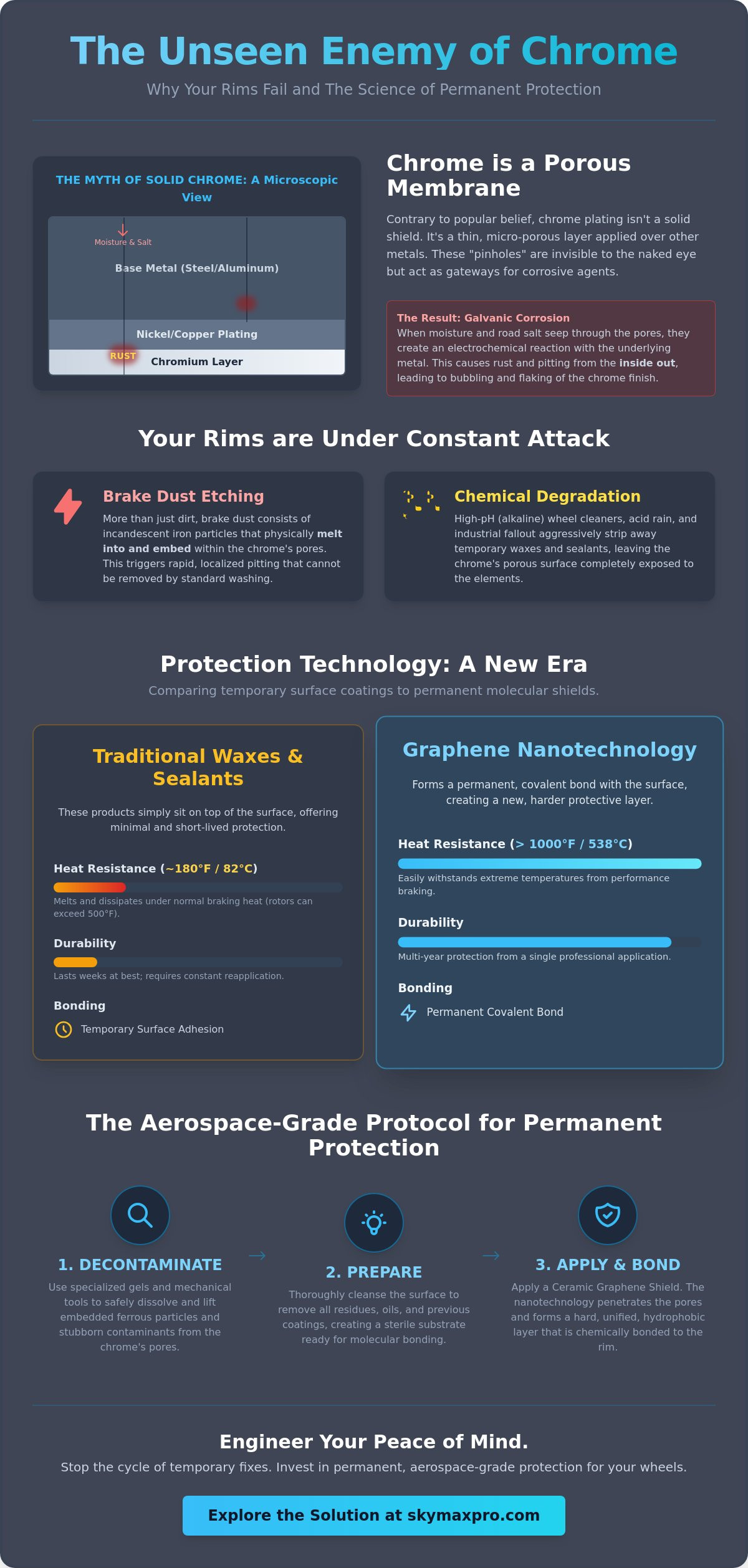
Chrome wheels are often perceived as a solid, impenetrable layer of metal, but this is a fundamental misconception in automotive engineering. Chrome plating is actually a multi-stage composite, typically consisting of nickel and copper layers topped with a thin chromium finish applied via electroplating. Because of the physics of this process, the final chromium layer contains microscopic fissures and pores. These structural imperfections act as conduits for corrosive agents. When you research how to prevent rust on chrome rims, you must first acknowledge that you aren't protecting a solid surface, but rather managing a porous membrane that is under constant chemical attack.
Galvanic corrosion represents the primary threat to these surfaces. It occurs when two dissimilar metals are in electrical contact while exposed to an electrolyte, such as moisture or road salt. In this scenario, the chrome and the underlying steel or aluminum form a battery-like circuit. The moisture bridges the gap through surface pores, initiating an electrochemical reaction that consumes the base metal. This process is accelerated by environmental pH fluctuations, where acid rain or harsh industrial fallout destabilizes the chromium oxide layer that normally provides a passive defense.
Understanding Micro-Porosity in Chrome Plating
The "pinhole effect" is a documented phenomenon in industrial electroplating where the chromium layer fails to form a perfectly continuous seal over the underlying nickel. These microscopic voids reach down to the base metal, creating a direct pathway for moisture. Through capillary action, water and dissolved road salts are drawn into these sub-layers and remain trapped. The Science of Chrome Plating confirms that while chromium itself is highly resistant to oxidation, the underlying substrate is not. Once moisture bridges this gap, corrosion begins, causing the finish to bubble and flake from the inside out. High surface tension on the rim's face complicates this further by holding droplets over these pinholes, ensuring a prolonged electrolytic reaction.
The Impact of Brake Dust and Ferrous Contamination
Brake dust is significantly more dangerous than standard road grime. It consists of high-velocity, incandescent iron particles sheared from brake rotors during deceleration. These shards are hot enough to melt into the chromium surface, becoming physically embedded. Once lodged, a rapid chemical reaction occurs between the ferrous particles and the chromium oxide layer, triggering localized electrochemical attacks known as pitting. Standard washing procedures often fail because these metallic shards are anchored into the finish; they don't simply sit on top. Effectively learning how to prevent rust on chrome rims requires a protocol that neutralizes these ferrous deposits before they can initiate the oxidation cycle.
Nanotechnology vs. Traditional Chrome Protection
Engineering a permanent solution for wheel preservation requires moving beyond the consumer-grade "hacks" often cited in automotive forums. Methods involving aluminum foil or petroleum-based sprays like WD-40 are technically insufficient because they fail to address the structural porosity of the chrome finish. While these lubricants may temporarily displace moisture, they are volatile and evaporate quickly under standard operating conditions. To understand how to prevent rust on chrome rims effectively, one must distinguish between temporary surface coverage and permanent molecular modification.
The Limits of Organic Waxes and Temporary Sealants
The primary failure point of traditional carnauba waxes and polymer sealants is their thermal instability. Wheels are high-heat environments; friction braking can generate rotor temperatures exceeding 500°F, with significant heat radiating directly onto the rim face. Carnauba wax typically melts at approximately 180°F, causing the protective layer to liquefy and dissipate during a single drive. Once the wax fails, the microscopic pinholes in the chrome are again exposed to electrolytes. Additionally, organic coatings offer negligible resistance to the high-pH chemicals found in many commercial wheel cleaners, leading to rapid degradation. Frequent reapplication is not an effective maintenance strategy; it's a symptom of failed surface engineering.
Molecular Bonding: The Graphene Advantage
In contrast to traditional products, ceramic and graphene coatings utilize covalent bonding to integrate with the substrate. SiO2-based ceramics create a hard, quartz-like matrix that physically fills the micro-pores identified in previous sections. However, the introduction of graphene-infused formulations has shifted the benchmark for durability. Graphene's hexagonal honeycomb lattice is one atom thick yet possesses a tensile strength significantly greater than steel. This structure provides a nearly impenetrable seal against oxygen and moisture, effectively neutralizing the risk of sub-surface oxidation. For those seeking the highest level of protection, applying a Ceramic Graphene Shield Coating ensures a barrier that is chemically inert and thermally stable up to extreme temperatures.
This nanotechnology also introduces the "lotus effect," a high-contact-angle hydrophobicity that prevents contaminants from adhering. Because the surface energy is significantly reduced, brake dust and road salts cannot find a mechanical anchor. This results in a self-cleaning property where water droplets encapsulate surface debris and roll off, reducing the need for aggressive agitation during maintenance. By sealing the chrome at a molecular level, you aren't just cleaning the surface; you're fundamentally altering its interaction with the environment to ensure long-term structural integrity.
Professional Protocol for Preventing Chrome Corrosion
Achieving a multi-year barrier against oxidation requires a structured engineering approach that goes beyond basic maintenance. When determining how to prevent rust on chrome rims, the objective is to create a perfectly sterile substrate that allows for covalent molecular bonding. Any residual surfactants, oils, or ferrous particulates trapped under a coating will eventually lead to sub-surface failure. This five-step protocol ensures the rim surface is chemically and mechanically prepared to receive an aerospace-grade shield.
Decontamination: Beyond the Surface Wash
The process begins with deep chemical decontamination. Standard soaps cannot neutralize the corrosive brake dust particles embedded in the chrome's pores. You must utilize a specialized solution like PRO Safe ACID Gel Wheel & Rim Cleaner. The gel formula is engineered for extended dwell time, allowing the active agents to dissolve iron deposits without etching the delicate chromium finish. Once the chemical reaction is complete, the surface requires mechanical decontamination. Utilizing a professional-grade detailing clay is essential for pulling out microscopic shards that chemicals alone cannot reach. You can verify the success of this stage using a water-sheeting test; a truly clean surface will exhibit zero "beading" and instead show a uniform, flat sheet of water, indicating all hydrophobic contaminants have been removed.
Surface Leveling and Polishing
Even a visually clean rim may harbor minor oxidation or surface irregularities that interfere with coating adhesion. Applying a high-quality chrome & metal polish restores the natural chromium oxide layer and maximizes the reflective index of the finish. It's critical to use non-abrasive techniques during this stage. Excessive friction or aggressive compounds can thin the already delicate chromium layer, exposing the nickel substrate to faster corrosion. This step creates the ideal "anchor pattern" at a microscopic level, increasing the surface area for the nano-coating to grip.
The final preparation involves surface sterilization. Use a high-concentration isopropyl alcohol (IPA) wipe to remove any residual oils from the polish. Once the surface is chemically pure, apply a high-solids Ceramic Graphene Shield Coating. This graphene-infused matrix fills the micro-pores we identified as the primary failure points in chrome rims. By following this technical sequence, you transform the wheel from a vulnerable, porous metal into a reinforced composite structure capable of resisting environmental pH fluctuations and extreme thermal cycles for several years.
Long-Term Maintenance: Preserving the Shield
Once the molecular shield is established, the focus shifts to operational maintenance. Improper cleaning is a leading cause of premature coating failure. When considering how to prevent rust on chrome rims over a multi-year lifecycle, you must avoid high-pH "touchless" car washes. These facilities often utilize caustic sodium hydroxide-based detergents designed to strip organic grime. While effective for raw metal, these chemicals aggressively degrade the ceramic and graphene lattices; this eventually thins the protective barrier and exposes the chrome to oxidation.
A rigorous maintenance schedule involves pH-neutral shampoos and the "two-bucket" method. This technique utilizes one bucket for soap and a second for rinsing the wash mitt, preventing the cross-contamination of abrasive metallic shards from the wheels back onto the finish. This is a critical engineering control. By isolating ferrous particles, you ensure that the mechanical action of washing doesn't create micro-abrasions in the coating. Consistency is key to preserving the surface energy required for high-level hydrophobicity.
The Role of pH-Neutral Maintenance
Maintenance frequency depends on environmental exposure. For daily-driven vehicles in regions using road salt, a bi-weekly wash is the minimum technical standard. Between full washes, utilizing a ceramic waterless car wash allows for safe removal of light dust and road film. This specific formulation uses advanced surfactants to encapsulate particles. It provides lubrication that prevents surface marring while simultaneously reinforcing the existing ceramic layer. This approach minimizes water usage while maintaining the chemical integrity of the graphene shield.
Boosting the Barrier
Even the most durable coatings benefit from sacrificial layers. Over time, environmental friction and UV exposure can create microscopic wear on the primary shield. A quarterly application of a PRO Ceramic Graphene Spray Coating fills these minor abrasions, restoring the surface's peak hydrophobicity. This process is known as "reloading." During these applications, you should conduct a visual inspection for surface integrity. If water fails to bead or sheet rapidly, the barrier has been compromised and requires immediate technical intervention. Shop the complete professional maintenance line to ensure your rims remain shielded against the elements throughout the year.
The SKY MAXPRO System: Aerospace Technology for Chrome Rims
SKY MAXPRO provides a vertically integrated system designed to address the specific vulnerabilities of decorative chrome. By combining high-solids nanotechnology with targeted chemical cleaners, the system provides a comprehensive answer for how to prevent rust on chrome rims. Each component is engineered to function as part of a multi-layered defense, moving from initial decontamination to a final, permanent molecular seal. This isn't a collection of standalone products; it's a coordinated engineering solution for surface preservation.
The foundation of this system is the Ceramic Graphene Shield Coating. This flagship formulation provides up to five years of measurable surface hardness, far exceeding the durability of standard ceramic sealants. It's supported by the PRO Safe ACID Gel Wheel & Rim Cleaner, which is chemically calibrated to neutralize iron particulates without compromising the underlying chromium oxide layer. For substrate preparation, our Chrome & Metal Polish ensures the removal of legacy oxidation. Finally, the PRO Ceramic Graphene Spray Coating serves as the essential maintenance tool for periodic surface "reloading," ensuring the hydrophobic properties remain at peak efficiency.
Why Aerospace-Grade Formulations Matter
Aerospace surface protection requires a level of thermal stability and chemical resistance that exceeds standard automotive requirements. SKY MAXPRO formulations are developed to withstand the extreme temperature cycles and atmospheric pressures typical in aviation environments. These standards ensure that your rims remain protected even under the intense heat generated by high-performance braking systems. Beyond performance, our commitment to modern engineering includes the development of VOC-free and biodegradable formulas. This ensures that while the chemical barrier is aggressive toward contaminants, it remains safe for the user and compliant with evolving environmental regulations.
Selecting the Right Kit for Your Rims
For comprehensive surface engineering, the Ceramic Coating Kit offers the most effective solution. This professional-grade package includes the decontamination agents, mechanical tools, and the high-solids graphene coating required to execute the full protocol described in this guide. Selecting a complete kit ensures chemical compatibility across all stages of application, which is vital for achieving a permanent covalent bond. Protecting your investment in high-quality chrome requires more than just frequent cleaning; it demands a technical barrier that fills micro-pores and blocks the path to oxidation. Securing your wheels with the SKY MAXPRO system is the definitive step in how to prevent rust on chrome rims for the long term.
Implementing the 2026 Standard for Chrome Preservation
Effective surface preservation in 2026 requires a shift from superficial cleaning to advanced molecular engineering. We've established that the inherent porosity of decorative chrome demands a high-solids barrier capable of filling microscopic voids. By following a structured protocol of deep chemical decontamination and covalent bonding, you eliminate the risk of sub-surface galvanic corrosion. This systematic approach represents the only verified method for how to prevent rust on chrome rims over a multi-year lifecycle. Relying on traditional waxes in high-heat wheel environments is no longer a viable strategy for long-term maintenance.
SKY MAXPRO provides the technical tools needed to implement this aerospace-grade defense. Our formulations are manufactured in the USA and utilize graphene-infused nanotechnology to deliver an impenetrable surface with 5-year durability. These aerospace-approved solutions ensure your wheels remain impervious to brake dust etching and environmental pH fluctuations. You have the engineering roadmap; now it's time to apply the professional-grade protection your vehicle requires. Secure Your Chrome with the Ceramic Graphene Shield Kit and ensure your investment remains protected against the elements for years to come.
Technical Specifications: Frequently Asked Questions
Is WD-40 effective for preventing rust on chrome rims?
WD-40 is not a viable long-term solution for wheel protection. While it acts as a temporary moisture displacer, it is a volatile petroleum-based lubricant that evaporates rapidly under the high thermal cycles generated by braking. It lacks the molecular density to fill the microscopic pores in chrome plating. For those researching how to prevent rust on chrome rims, relying on volatile lubricants rather than permanent nanotechnological coatings will result in frequent re-exposure to corrosive electrolytes.
Can I use a ceramic coating on rims that already have some rust?
You cannot apply a ceramic coating directly over existing oxidation. Ceramic and graphene shields require a chemically sterile substrate to achieve a covalent bond. Coating over rust traps moisture and oxygen against the base metal, allowing galvanic corrosion to continue beneath the protective layer. You must mechanically remove all pitting and oxidation using a professional chrome polish before beginning the decontamination protocol to ensure the surface is structurally sound.
How often should I polish my chrome wheels if they are coated?
You should avoid using abrasive polishes on wheels once they have been coated. Mechanical polishing uses friction to level the surface, which will strip the ceramic or graphene lattice from the chrome. Instead of polishing, maintain the finish by using a pH-neutral wash and a PRO Ceramic Graphene Spray Coating every three to four months. This "reloading" process fills minor surface abrasions and restores the high-contact-angle hydrophobicity without compromising the primary shield.
What is the best way to remove brake dust without scratching the chrome?
The most effective method is chemical decontamination using a specialized gel. Formulations like PRO Safe ACID Gel Wheel & Rim Cleaner are engineered to dissolve ferrous particles and brake dust at a molecular level. This reduces the need for aggressive mechanical agitation with brushes, which is the primary cause of surface marring. By allowing the gel to dwell and neutralize the metallic shards, you can simply rinse away the contaminants, preserving the mirror-like finish.
Does road salt affect graphene coatings differently than ceramic coatings?
Graphene-infused coatings provide superior resistance to road salt compared to standard SiO2 ceramics. The hexagonal honeycomb lattice of graphene is more chemically inert and provides a denser physical barrier against the electrolytes found in de-icing agents. This enhanced chemical stability is a critical component in how to prevent rust on chrome rims for vehicles operated in winter climates. Graphene's superior heat dissipation also helps the coating maintain its structural integrity during rapid temperature fluctuations.
Can I apply a graphene spray over an existing wax?
No, graphene-based coatings will not bond to organic carnauba waxes or standard polymer sealants. Wax creates an unstable, low-surface-energy layer that prevents graphene molecules from anchoring to the chrome's lattice. If applied over wax, the coating will simply wash away during the next maintenance cycle. You must utilize a Heavy Duty Red Power Degreaser to strip all legacy organic layers before applying a nanotechnological shield to ensure a permanent bond.
How long does a professional chrome coating last under daily driving conditions?
A high-solids Ceramic Graphene Shield Coating typically provides up to five years of measurable protection. However, its actual lifespan depends on mileage and environmental exposure. While high-quality chrome can last 5-15 years with proper care, neglect in harsh environments can reduce this to just 1-3 years. Utilizing a graphene-infused maintenance spray quarterly is the standard engineering protocol to ensure the coating reaches its maximum projected durability under daily driving stresses.
Is it safe to use acid-based cleaners on all types of chrome rims?
It is only safe to use inhibited acid cleaners specifically formulated for automotive wheels. Raw industrial acids can aggressively etch the chromium layer and damage the underlying nickel substrate. Professional products like PRO Safe ACID Gel are engineered with specific inhibitors that target iron and carbon deposits while remaining inert toward the chrome finish. Always verify that the cleaner is labeled as safe for chrome to avoid irreversible chemical staining or surface degradation.