

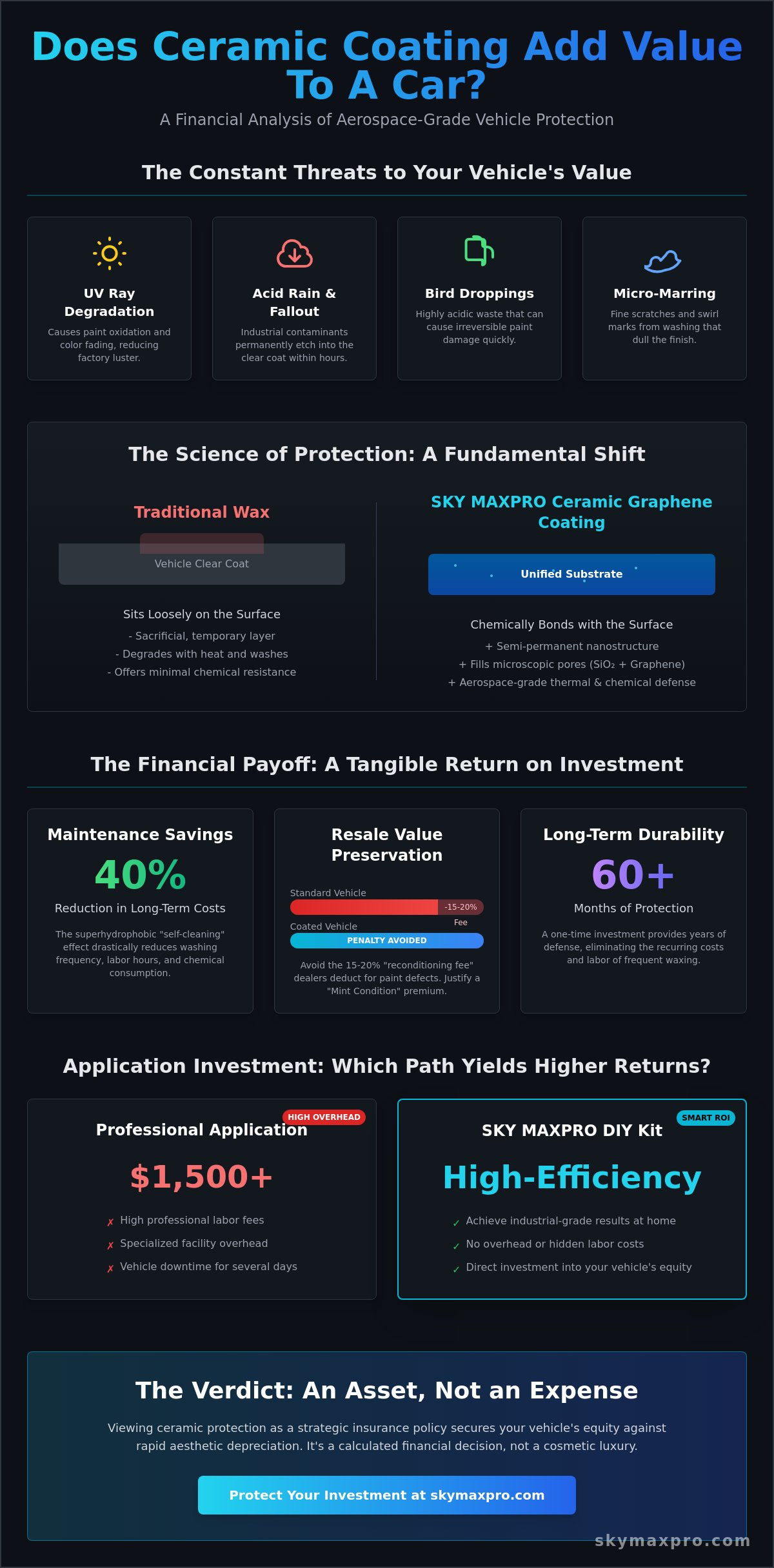
What if you could freeze your vehicle's aesthetic depreciation at its peak while simultaneously reducing long-term maintenance costs by 40%? You've likely felt the frustration of watching UV rays and industrial fallout degrade your factory finish, which leads to the essential question: does ceramic coating add value to a car or is it merely an aesthetic luxury? It's a valid concern for any owner focused on capital preservation and vehicle equity. The data supports the investment.
This SKY MAXPRO report provides the technical justification for the expenditure, proving that aerospace-grade nanotechnology functions as a tangible asset on your vehicle's balance sheet. You'll discover how our Ceramic Graphene Shield Coating impacts resale premiums and significantly lowers the overhead of traditional detailing. We'll examine the 2026 ROI data on paint preservation, the hidden savings in maintenance labor, and the specific documentation protocols required to prove this value to future buyers. By the end of this analysis, you'll understand why sealing your car's surface is a strategic financial decision rather than a simple cosmetic upgrade.
Key Takeaways
- Understand how nanostructures create a semi-permanent bond with factory clear coats to establish a high-stress defense layer. This aerospace-grade technology ensures your vehicle's substrate remains protected from environmental degradation.
- Determine exactly how much ceramic coating adds value to a car by shifting the focus from standard trade-in algorithms to high-margin private market sales. Learn to document your coating applications to justify a "Mint Condition" price premium.
- Analyze the long-term ROI by comparing the recurring costs of professional waxing against the one-time investment in advanced hydrophobicity. The "self-cleaning" effect drastically reduces chemical consumption and labor hours.
- Evaluate the financial shift from $1,500 professional labor fees to high-efficiency DIY Ceramic Coating Kits. Modern nanotechnology allows enthusiasts to achieve industrial-grade results without specialized facility overhead.
- View ceramic protection as a strategic insurance policy that secures your vehicle's equity against rapid aesthetic depreciation.
The Science of Value Preservation: How Nanotechnology Protects Your Asset
Understanding whether a ceramic coating is a sound investment requires a shift from cosmetic thinking to engineering logic. Most car owners view protection as a temporary film, much like a traditional carnauba wax. However, wax is merely a sacrificial layer that sits loosely on the surface, susceptible to heat degradation and mechanical wear. In contrast, a ceramic coating is a semi-permanent nanostructure that chemically bonds with the factory clear coat to create a singular, unified substrate. Nanotechnology in car care is the manipulation of matter at the molecular level to create an impermeable barrier. This fundamental shift in surface chemistry is the primary reason why professional-grade protection directly answers the question: does ceramic coating add value to a car?
SKY MAXPRO utilizes aerospace-grade formulations, such as our Ceramic Graphene Shield Coating, which were originally engineered for high-stress industrial environments. Unlike consumer-grade sprays that offer surface-level gloss, these industrial solutions prioritize structural integrity. By integrating with the paint at a microscopic scale, the coating prevents the underlying clear coat from interacting with oxygen and moisture, effectively neutralizing the risk of oxidation and color fading over a 60-month horizon.
The Molecular Bond: Why It Stays Valuable
The efficacy of this protection lies in the synergy between Silicon Dioxide (SiO2) and Graphene. These elements don't just rest on the paint; they fill the microscopic pores inherent in every factory finish. This process creates a surface hardness that resists micro-marring and environmental etching. A critical component of this performance is The Science of Superhydrophobic Surfaces, which describes how the coating creates a high contact angle for liquids. This "lotus effect" ensures that contaminants like road salt and acidic rain cannot latch onto the surface, preserving the vehicle's peak aesthetic condition that appraisers look for during resale evaluations.
Aerospace-Grade Standards for Automotive Use
Aviation-grade coatings must withstand extreme thermal expansion, as aircraft skins frequently cycle between sub-zero temperatures and intense friction-generated heat. When applied to automotive surfaces, this translates to superior durability against the 150-degree surface temperatures common in summer climates. This level of chemical resistance is vital for protecting the paint from bird droppings and industrial fallout, which can etch into a standard clear coat within 48 hours. By maintaining the factory finish's original thickness and clarity, you secure the long-term equity of the vehicle. When asking does ceramic coating add value to a car, the answer is found in the absence of paint correction costs and the preservation of the original factory luster that no amount of detailing can replicate once it's lost.
Resale Value vs. Trade-in: Will You Get Your Money Back?
Determining if does ceramic coating add value to a car requires distinguishing between two distinct liquidation paths: the dealership trade-in and the private party sale. Dealerships primarily utilize centralized valuation data from sources like Kelley Blue Book, which rarely includes a specific line item for aftermarket coatings. However, appraisers deduct significant value for paint defects, oxidation, and "weathered" surfaces. By maintaining a defect-free finish, you effectively bypass the 15% to 20% "reconditioning fee" that dealers often use to low-ball trade-in offers. The coating doesn't just add a bonus; it prevents a penalty.
The private market is where the actual ROI manifests. Enthusiast buyers and discerning commuters look for visual evidence of meticulous ownership. A vehicle that retains its showroom depth suggests that the mechanical components were likely treated with similar care. Forbes highlights that long-term paint protection is vital because environmental contaminants can cause permanent etching in under 72 hours. A ceramic-coated car remains immune to these common hazards, allowing you to list the vehicle in "Mint" rather than "Good" condition. This distinction alone often justifies a 5% to 10% price premium over neglected counterparts.
Documenting the Investment for Future Buyers
To maximize your return, you must treat the coating as a verifiable asset. Don't rely on the buyer's eyes alone. Maintain a digital folder containing your purchase receipts for the Ceramic Graphene Shield Coating and high-resolution "before and after" photographs. When you list the car, explicitly mention the nanotechnology used. Describing the surface as "self-cleaning" and "UV-protected" shifts the buyer's perspective from a simple car purchase to acquiring a pre-maintained asset. This transparency reduces the buyer's perceived risk and justifies your firm asking price.
The CARFAX Factor and Maintenance Records
In the 2026 secondary market, a documented protection history is becoming as vital as a service history. Many professional applications are now linked to the vehicle's VIN, appearing on history reports as a value-added service. Even with a DIY application, keeping a log of the application date and the specific products used creates a "paper trail" of quality. You're positioning the coating as a pre-paid maintenance benefit for the next owner. They won't have to worry about waxing or paint correction for several years, which is a powerful closing tool during price negotiations. This strategic approach ensures that when you ask does ceramic coating add value to a car, the answer is reflected in a faster sale and a higher final transaction price.
Calculating the Maintenance ROI: Reducing Long-Term Ownership Costs
Traditional carnauba wax provides a sacrificial layer for approximately 45 to 60 days before the polymer structure breaks down under UV exposure. Maintaining this level of protection requires six applications annually. When analyzing the question, does ceramic coating add value to a car, you must look at the cumulative cost of these materials and the labor involved. A single application of aerospace-grade nanotechnology provides a permanent bond that eliminates this recurring expense. Ceramic coating can reduce exterior maintenance time by up to 50% over a five-year period.
The high contact angle of superhydrophobic surfaces allows water to encapsulate dirt and roll off the substrate. This mechanical property reduces the consumption of cleaning agents by roughly 40% over the life of the coating. Scientific research into nanotechnology in automotive coatings confirms that these structures prevent the adhesion of grit, which is the primary cause of abrasive damage during washing. By quantifying the time saved, an owner regaining 12 hours of labor annually over five years effectively recovers an entire work week of productivity.
Eliminating the Need for Corrective Detailing
Corrective detailing involves the mechanical removal of clear coat to level out swirl marks and scratches. A multi-stage polish is a labor-intensive process that can be expensive. By installing a high-hardness ceramic layer, you prevent these micro-scratches from ever reaching the factory paint. Utilizing professional car detailing products ensures the surface remains sealed against UV radiation, which causes 90% of paint oxidation and eventual clear coat failure. This preventative approach preserves the substrate's original thickness, which is a key metric for high-end vehicle appraisals.
The Hidden Savings: Chemicals and Consumables
A coated vehicle requires fewer aggressive decontaminants like iron removers or acidic wheel cleaners. Because the surface is non-porous, contaminants stay on top of the coating rather than embedding into it. You'll find that standard car cleaning products last twice as long when the vehicle has a ceramic base. This reduction in consumable spend, combined with the elimination of bi-monthly waxing supplies, creates a measurable financial return. When you consider these operational savings, it becomes clear that does ceramic coating add value to a car is answered not just at the time of sale, but through every month of ownership.
DIY vs. Professional Application: Which Investment Yields Higher Returns?
The financial barrier to entry for ceramic protection has shifted significantly over the last 24 months. Professional detailing shops typically command $1,500 or more for a multi-year application, factoring in facility overhead and specialized labor. In contrast, high-end DIY solutions like the SKY MAXPRO Ceramic Coating Kit range between $100 and $200. When evaluating if does ceramic coating add value to a car, you must weigh the upfront capital outlay against the projected durability. While a professional shop offers a controlled environment, modern nanotechnology has matured to the point where enthusiasts can achieve industrial-grade results at a fraction of the cost.
The "Skill Gap" myth suggests that only certified technicians can handle these chemicals. This is no longer the case with graphene-based formulations, which offer longer flash times and easier wipe-off characteristics. A 5-year professional coating is a high-performing asset, but a 2-year high-end DIY spray often yields a higher ROI for owners who plan to sell within a 36-month window. Risk management remains a factor; poor application can result in "high spots" that require mechanical polishing to remove. However, the $1,300 saved in labor costs provides a substantial margin for error and corrective measures if necessary.
The Value of the Prep Work
Professional detailers attribute 80% of their final results to the paint correction phase. This mechanical leveling of the clear coat ensures the nanostructure bonds to a perfectly flat substrate. DIYers can replicate this professional-grade value by strictly following a master checklist. Decontaminating the surface with detailing clay and a heavy-duty degreaser is non-negotiable. If you seal the paint without proper decontamination, you lock in defects and diminish the vehicle's equity. Precision during the preparation phase is what truly determines the longevity of the investment.
SKY MAXPRO Graphene Shield: The Middle Ground
Our Ceramic Graphene Shield Coating functions as the professional-grade solution for the home detailer. It bridges the gap between consumer sprays and industrial coatings by offering aerospace-grade chemical resistance in a user-friendly format. These formulations provide a higher "value per ounce" than standard retail brands because they contain higher concentrations of active solids. By choosing a graphene-reinforced product, you gain superior thermal management and a harder protective layer. This strategic choice confirms that does ceramic coating add value to a car by providing the same aesthetic and protective benefits as a professional shop without the prohibitive labor costs.
Maximizing Vehicle Equity with SkyMax Pro Aerospace-Grade Solutions
The financial argument for industrial-grade surface protection is rooted in capital preservation. Viewing these chemicals as a simple cosmetic upgrade ignores the underlying economics of vehicle depreciation. A high-performance coating functions as an insurance policy for your factory paint, locking in the substrate's integrity against 60 months of environmental exposure. When analyzing whether does ceramic coating add value to a car, the conclusion is data-driven. By preventing clear coat failure and permanent oxidation, you preserve the vehicle's primary aesthetic asset, which is the single most influential factor in private market valuations.
SkyMax Pro differentiates its solutions through aerospace-grade nanotechnology designed for extreme durability. While standard retail products focus on temporary gloss, our formulations prioritize structural resilience and chemical stability. Achieving a "total value" package requires more than just protecting the metal panels. Faded, oxidized plastic trim can reduce a vehicle's perceived value by several hundred dollars during an appraisal. Integrating a ceramic trim plastic restorer ensures that every exterior surface matches the showroom quality of the paint, creating a cohesive visual profile that commands a premium price.
The Complete Protection Ecosystem
Resale perfection isn't limited to the exterior. A comprehensive equity strategy includes the cabin environment. Interior degradation, such as stained upholstery or UV-damaged dashboards, often triggers significant price negotiations from buyers. By utilizing the professional-grade solutions found in the SkyMax Pro storefront, you can seal fabric, leather, and plastic surfaces against daily wear. This holistic approach ensures that the entire vehicle remains in a state of preserved excellence, maximizing your return on investment through every year of ownership.
Conclusion: Is It Worth It?
The final verdict on the question does ceramic coating add value to a car is a definitive yes, provided the ownership window exceeds 24 months. The investment pays for itself through the elimination of corrective detailing, reduced chemical consumption, and the preservation of a "Mint" condition rating. Beyond the measurable ROI, there's a psychological value in operating a vehicle that maintains a professional finish regardless of weather conditions. You aren't just buying a product; you're implementing a technical solution for long-term asset protection. Protect your investment with SkyMax Pro Ceramic Graphene Shield and secure your vehicle's future equity today.
Securing Your Vehicle's 2026 Market Advantage
The technical evidence confirms that applying a nanostructured barrier is a strategic move for any vehicle owner. By preventing the 20% reconditioning deductions common at dealerships and securing a 10% premium in the private market, the question of does ceramic coating add value to a car is answered through measurable equity preservation. You're effectively freezing the vehicle's aesthetic condition while reducing long-term maintenance overhead by roughly 40% over the product's lifespan. This shift from reactive cleaning to proactive preservation ensures your capital remains protected.
This analysis shows that true value comes from industrial-grade integrity rather than temporary retail sprays. SkyMax Pro solutions utilize aerospace-approved nanotechnology that's manufactured in the USA to meet the rigorous standards of aviation experts and professional detailers. You don't have to settle for rapid depreciation when a permanent molecular solution is accessible. It's a calculated investment in your vehicle's future liquidity and surface health.
Protect your vehicle’s equity with SkyMax Pro Aerospace-Grade Coatings and ensure your asset remains a top-tier performer in the 2026 secondary market. Take control of your vehicle's depreciation curve today.
Frequently Asked Questions
Does ceramic coating actually show up on a trade-in appraisal?
Appraisers rarely include a specific line item for ceramic coatings on a standardized valuation sheet. However, they significantly deduct value for paint defects, oxidation, and surface contamination. By maintaining a factory-level finish, you avoid the typical 15% reconditioning penalty applied to neglected vehicles. The presence of a coating ensures the vehicle passes the visual inspection for "Excellent" condition without requiring dealership labor for paint correction.
Can I get my money back on a ceramic coating if I sell my car after one year?
You can recover the investment if you sell through private channels where aesthetic condition is a primary negotiation factor. A one-year-old vehicle with a documented coating justifies a "Mint" condition price premium, which is often 5% to 8% higher than "Good" condition. While trade-in values are less flexible, the private market rewards the absence of swirl marks and the ease of maintenance you've maintained over those 12 months.
How much does ceramic coating increase the resale value of a luxury car?
Luxury car buyers are 30% more likely to inspect paint depth and clarity before purchasing. On a high-end asset, a flawless finish preserved by nanotechnology can increase the final transaction price by 3% to 5% compared to an identical model with visible environmental etching. This protection ensures the car remains a top-tier asset in a competitive market. It's a strategic way to answer does ceramic coating add value to a car in the luxury sector.
Is it worth ceramic coating an older car to increase its value?
It's worth the investment if the factory clear coat is still structurally sound. Applying a coating to an older vehicle halts further UV degradation and restores the original color depth. This can shift a vehicle's appraisal from a "Fair" category to a "Good" category, which often results in a valuation increase that exceeds the cost of a DIY kit. You're effectively stabilizing the asset's depreciation curve.
Does a DIY ceramic coating add as much value as a professional one?
A DIY application adds comparable value to a professional job if you maintain a comprehensive documentation trail. Private buyers care about the results and the chemical durability rather than the facility where it was applied. By keeping your SkyMax Pro receipts and high-resolution application photos, you provide the same transparency as a shop. This documentation is what proves does ceramic coating add value to a car during a sales negotiation.
What happens to the car’s value if the ceramic coating isn’t maintained?
Neglecting the coating leads to the loss of hydrophobicity and the eventual accumulation of surface contaminants. Once the nanostructure is clogged with road grime or industrial fallout, the paint becomes susceptible to the same defects as an unprotected car. This neglect reverses any equity gains you've made, as the vehicle will eventually require expensive mechanical polishing to restore the finish before a sale can be finalized.
Can ceramic coating hide existing scratches to improve resale value?
Ceramic coatings don't hide scratches; they're optically clear and can actually highlight surface defects. You must perform paint correction before application to ensure the surface is flat and defect-free. If you apply a coating over existing swirl marks, you're sealing in those imperfections, which can lead a buyer to believe the car was poorly maintained. Proper preparation is the only way to secure a value increase.
Does ceramic coating protect against stone chips, which significantly hurt resale value?
Ceramic coatings provide zero protection against high-velocity stone chips or mechanical impacts. These coatings are nanostructures measured in microns, designed for chemical resistance and UV protection rather than impact absorption. To prevent stone chips, you'd need a Paint Protection Film (PPF). However, the coating ensures the rest of the panels remain free of chemical etching and oxidation, which are equally important for maintaining resale integrity.