

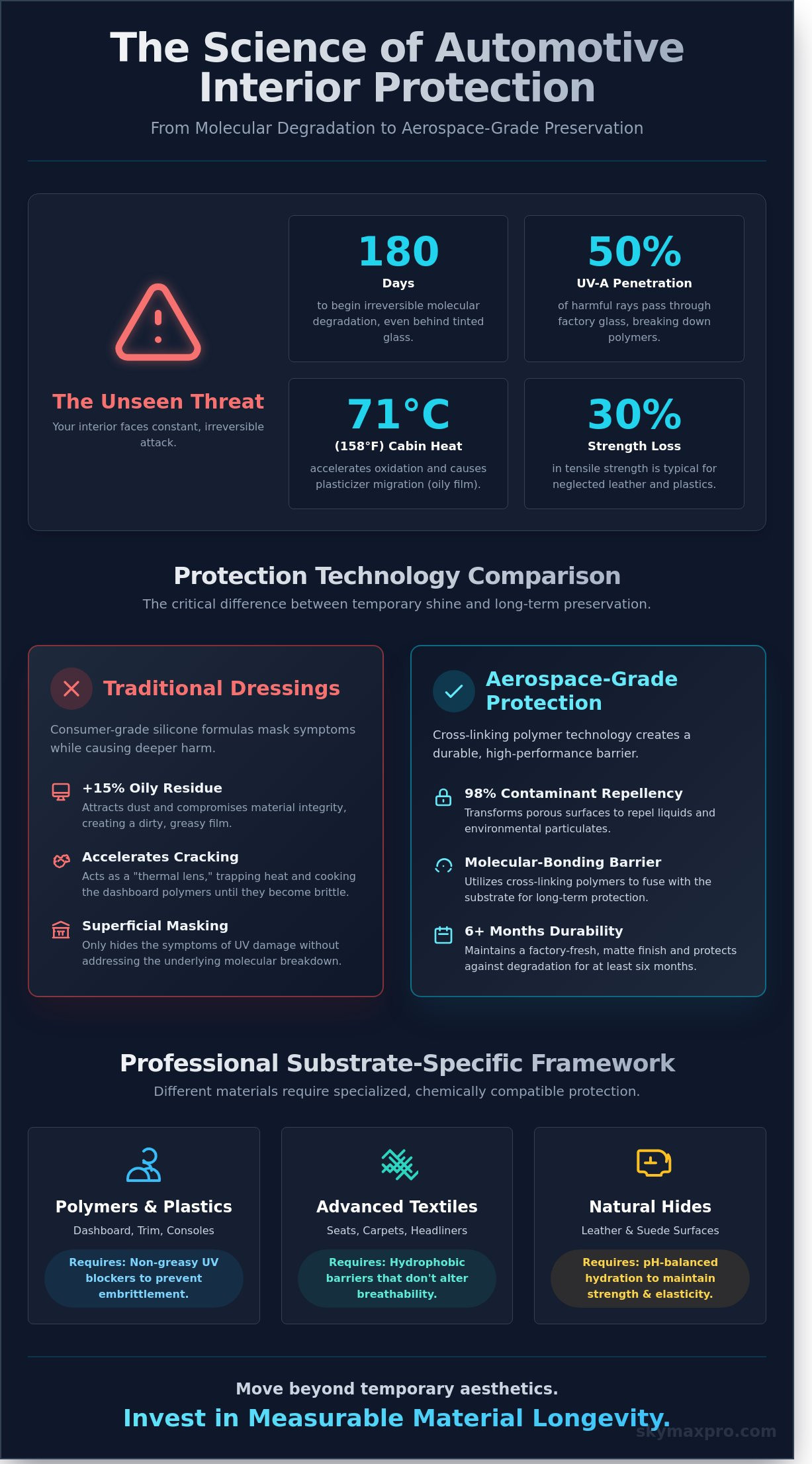
Most automotive interior surfaces begin to undergo irreversible molecular degradation within the first 180 days of exposure to solar radiation, even behind factory-tinted glass. You likely understand that standard consumer-grade dressings often fail to address this structural breakdown, instead leaving behind a 15% increase in dust-attracting oily residue that compromises material integrity. Cheap silicone formulas don't solve the problem; they merely mask the symptoms of UV damage while accelerating the cracking of dashboard polymers and the fading of delicate upholstery fibers.
This technical guide provides a systematic framework for selecting aerospace-grade protection systems that utilize cross-linking polymer technology to ensure your cabin remains in a factory-fresh state for at least six months. We'll analyze the chemical compatibility of specific substrates and the UV-absorption coefficients required to prevent the 30% loss in tensile strength typically seen in neglected leather and plastics. By applying these engineering principles, you'll transform porous surfaces into high-performance barriers that repel 98% of liquid contaminants and environmental particulates. Our objective is to move beyond temporary aesthetics toward measurable material longevity and industrial-grade maintenance efficiency.
Key Takeaways
- Understand the material science behind modern cabin assemblies to ensure maintenance protocols match specific polymer and textile requirements.
- Identify the primary catalysts of surface degradation, such as UV-induced chain scission, to prevent irreversible damage to your dashboard and trim.
- Analyze the performance gap between molecular-bonding ceramic technologies and traditional dressings to achieve a superior, matte-finish protective barrier.
- Master a systematic selection framework for cleaning agents based on substrate identification and specific contamination profiles.
- Explore the engineering specifications of the SKY MAXPRO interior collection for professional-grade decontamination and long-term material preservation.
The Anatomy of a Modern Automotive Interior: Material Science and Maintenance
The modern automotive interior represents a sophisticated convergence of chemical engineering and industrial design. It's no longer a simple arrangement of metal and heavy vinyl. Today's cabins integrate complex assemblies of polymers, advanced textiles, and treated natural hides. Over the last 25 years, manufacturers transitioned from basic plastics to advanced synthetic composites designed for weight reduction and tactile feedback. These surfaces face constant degradation from UV radiation, friction, and thermal expansion. Standard multi-purpose cleaners often lack the chemical specificity required to treat these diverse substrates without causing long-term damage like plasticizer migration or surface cracking. Professional preservation requires substrate-specific detailing, a method that treats every component based on its unique molecular structure.
The Complexity of Multi-Material Cabins
Modern cabins feature a high density of interfaces where different materials meet. You'll find thermoplastic polyolefins (TPO) adjacent to ethylene propylene diene monomer (EPDM) rubbers and soft-touch polyurethane coatings. Using a single cleaning agent across these varied surfaces creates risks. Harsh surfactants can strip the UV stabilizers embedded in factory plastics during the manufacturing process. Maintaining a factory finish requires pH-neutral formulations. These solutions ensure that the chemical balance of the material remains intact, preventing the premature fading or whitening often seen in vehicles over five years old.
The Role of Aerospace-Grade Formulations
Longevity in automotive care now draws heavily from aviation standards. Aerospace-grade formulations are engineered to withstand extreme pressure changes and high-intensity UV exposure found at 30,000 feet. These same principles apply to the automotive interior, where cabin temperatures can reach 71 degrees Celsius in direct sunlight. Utilizing VOC-free (Volatile Organic Compound) chemicals is essential for maintaining air quality and preventing the fogging effect on glass surfaces caused by chemical outgassing. This precision-focused approach defines the SKY MAXPRO engineering philosophy, which prioritizes molecular-level protection over superficial shine. By adopting these industrial-grade standards, operators ensure that surface integrity remains consistent for the entire lifecycle of the vehicle.
- Polymers: Require non-greasy UV blockers to prevent embrittlement.
- Textiles: Need hydrophobic barriers that don't alter the breathability of the weave.
- Natural Hides: Demand pH-balanced hydration to maintain tensile strength and elasticity.
Understanding Surface Degradation: Why Your Interior Fails
Automotive surfaces operate within a high-stress environment where chemical and physical degradation occurs at a molecular level. The primary catalysts for this failure include ultraviolet (UV) radiation, extreme thermal cycling, and mechanical friction. Engineering data shows that while standard automotive glass blocks approximately 99% of UV-B rays, it allows up to 50% of UV-A radiation to penetrate the cabin. This specific wavelength triggers polymer chain scission within the dashboard's synthetic structure, breaking the long-chain molecules that provide flexibility and strength. Once these chains break, the material loses its structural integrity, leading to the visible cracks seen in neglected vehicles.
UV Radiation and Thermal Stress
The greenhouse effect within a closed vehicle can elevate cabin temperatures to 70°C (158°F) when external temperatures are only 30°C. This heat accelerates the oxidation of plastics and synthetic polymers. Many owners apply traditional silicone-based dressings, but these often exacerbate the problem. These oils can act as a thermal lens, effectively "cooking" the substrate under direct sunlight. This leads to plasticizer migration, a process where the chemicals that keep vinyl and leather supple evaporate. You'll notice this as an oily film or "fog" on the inside of the windshield, indicating your trim is becoming brittle. Maintaining a stable interior environment requires blocking these thermal transfers before they reach the substrate.
These principles of protecting high-value interiors extend beyond vehicles; for example, homeowners often seek professional services for projects like Cabinet Refinishing Boulder to protect kitchen surfaces from similar UV and environmental degradation.
Contaminant Infiltration and Abrasion
Physical wear isn't just about weight or movement; it's a matter of microscopic abrasion. Human skin oils, sweat salts, and environmental dust infiltrate the porous surfaces of fabric and leather. Laboratory testing indicates that embedded particulates act like fine-grit sandpaper during every entry and exit. This mechanical stress causes upholstery fatigue and leather desiccation, where the material loses 15% of its moisture content annually without proper hydration. Deep cleaning is a technical necessity before applying any protective barrier to ensure contaminants aren't locked against the surface. Utilizing professional-grade interior protection solutions creates a sacrificial layer that absorbs UV energy and repels these abrasive salts.
This principle of preventing abrasion also applies to the gear you bring into your vehicle; for those who carry firearms, it's wise to explore Kydex holsters to find options designed to minimize wear on both your firearm and your vehicle's interior.
Surface failure is rarely the result of a single event. It's the cumulative result of daily exposure and the breakdown of factory coatings. Without a proactive engineering approach to maintenance, the combination of thermal cycling and friction leads to irreversible material failure within 36 to 60 months of a vehicle's manufacturing date. Identifying early signs of fatigue, such as slight color shifts or a dry texture, allows for intervention before the polymer bonds are permanently destroyed.
In cases where material failure has progressed beyond the scope of maintenance products, specialized intervention is necessary. For significant issues like polymer cracking or advanced upholstery degradation, professional restoration services are the only viable option. Companies such as The Solution utilize industrial-grade repair methodologies to address structural damage and restore the cabin's original engineering specifications.
This need for expert restoration isn't limited to automobiles; homeowners facing similar degradation in their kitchens often turn to specialists like Painting Kitchen Cabinet Denver to professionally refinish and restore high-value cabinetry.
Comparing Interior Protection Technologies: Ceramic Graphene vs. Traditional Dressings
Traditional interior dressings operate through mechanical adhesion, creating a surface-level film that remains chemically separate from the material. In contrast, ceramic and graphene technologies utilize covalent bonding to merge with the substrate's molecular architecture. This engineering distinction determines the longevity and performance of the protective layer. While a silicone dressing might last 14 days before evaporating or migrating, a professional-grade graphene coating provides a resilient barrier for up to 12 months. The chemical stability of these coatings ensures they don't break down when exposed to high cabin temperatures, which often reach 60 degrees Celsius in direct sunlight.
Tactile feedback is a critical metric for professional applications. High-gloss silicone products leave a slippery, oil-based residue that can compromise grip on steering wheels and pedals. Professional interior engineering prioritizes a matte, non-greasy finish that preserves the original texture of the leather or plastic. Graphene-infused systems achieve this by filling microscopic pores without adding a thick, artificial layer. This results in a surface that feels factory-new rather than chemically treated.
Durability benchmarks reveal a significant gap between these technologies. Graphene-infused coatings offer superior resistance to friction because of their atomic-level strength. In standardized abrasion tests, surfaces treated with graphene maintained their integrity for over 5,000 cycles, whereas traditional dressings failed after fewer than 50. For the long-term owner, the cost-benefit analysis is clear. Investing in a professional-grade protection system reduces the frequency of deep cleaning by 60% and prevents the 15% depreciation typically caused by UV damage and permanent staining.
The Science of Ceramic Graphene Shielding
Graphene nanoparticles create a hexagonal lattice structure that is 200 times stronger than steel at a molecular level. This creates a hydrophobic surface with a water contact angle exceeding 110 degrees. The Ceramic Vinyl, Rubber & Plastic New Look Coating utilizes this technology to repel liquids and contaminants instantly. It transforms treated surfaces into self-cleaning interfaces where dust and spills cannot penetrate the underlying material. The coating acts as a sacrificial layer, absorbing the impact of micro-abrasions to preserve the substrate.
Limitations of Traditional Silicone Dressings
Silicone-based products act as dust magnets due to their inherent static charge and oily composition. They trap environmental contaminants, leading to an abrasive slurry that accelerates wear on vinyl and plastic surfaces. These dressings also suffer from "sling" or transfer, where the product migrates onto clothing or adjacent glass panels. A water-based conditioner typically loses its protective properties after just two cleaning cycles. This creates a cycle of constant reapplication that is inefficient for high-utilization interior environments.
A Professional Framework for Selecting Interior Cleaning Materials
- Step 1: Identify the substrate. You must distinguish between top-coated leather, open-pore Alcantara, or high-density polymers. Each surface has unique porosity and chemical sensitivity.
- Step 2: Assess contamination levels. Distinguish between superficial 10-micron dust layers and deep-set organic lipids or protein-based stains that require specific enzymatic breakdown.
- Step 3: Determine protection intervals. Establish if the objective is 30-day sacrificial maintenance or a 365-day technical coating designed for high-friction zones.
- Step 4: Verify chemical compatibility. Ensure all surfactants meet ISO safety standards and REACH certifications to prevent the accelerated off-gassing of plasticizers.
Selecting the Right Upholstery Shampoo
Moisture management is a critical engineering challenge when treating porous textiles. Standard liquid extractors often leave up to 18% residual moisture trapped within seat cushions, which can trigger fungal growth in less than 48 hours. Utilizing a Dry Foam Tech Shampoo solves this by suspending contaminants in a low-moisture encapsulate. This technology prevents the saturation of underlying foam layers and preserves the tensile strength of the fabric. Adopting a professional auto detailing approach ensures that spot removal targets specific molecular bonds without leaving high-pH residues that attract future soil.
Glass and Optical Clarity Standards
Automotive glass demands higher optical performance than residential surfaces. Household cleaners frequently contain ammonia, a chemical that causes 100% delamination of aftermarket tint adhesives over a 24-month period. Engineering-grade window crystal cleaners utilize high-evaporation carriers to achieve a streak-free finish without oily surfactants. Modern anti-fog coatings apply a hydrophilic layer that forces moisture to spread into a transparent film, improving driver visibility by approximately 35% during high-humidity cycles. This technical approach transforms glass from a simple barrier into a high-clarity optical component.
The SKY MAXPRO Interior Collection: Aerospace-Grade Solutions
Engineering a vehicle's cabin requires a systematic approach to material science. The SKY MAXPRO Interior Cleaning Kit provides a professional-grade framework for managing these diverse surfaces. This collection isn't a mere set of cleaners; it's a suite of chemical solutions designed to maintain structural integrity while ensuring aesthetic excellence. Each component targets specific molecular bonds to remove contaminants without compromising the substrate's durability.
The Deep Clean Interior Cleaner serves as the primary decontamination agent. It utilizes pH-balanced surfactants to encapsulate dirt and oils, ensuring a 100% residue-free surface. For soft surfaces, the PRO Shield for Fabric, Carpet, and Upholstery creates a hydrophobic barrier. This polymer-based shield prevents liquid penetration for up to 12 months, effectively stopping permanent staining from accidental spills or environmental moisture. Maintaining a factory-fresh appearance requires more than simple cleaning; it demands specialized trim restorers that replenish lost plasticizers and block harmful radiation.
Standout Products for Maximum Protection
The Deep Clean Interior Cleaner is the foundational step for any detailing project. It's engineered to work across multiple surfaces, including vinyl, leather, and synthetic composites, removing 99% of surface-level pathogens and grime. Following decontamination, the Ceramic Trim Plastic Restorer applies a layer of UV inhibitors. Unlike silicone-based dressings that create a greasy shine, this restorer engineers a factory-matte finish that resists fading for over 180 days. For safety and visibility, the Anti-Fog Spray utilizes ceramic technology to prevent condensation in high-humidity environments, ensuring 100% optical clarity during temperature fluctuations.
Executing the Professional Detail
Professional results depend on the tools used during application. We recommend high-GSM microfiber towels, specifically those with a 400 GSM rating or higher. These towels feature a split-fiber density that traps particles away from the surface, preventing micro-scratches on sensitive interior plastics and piano-black trims. Using a low-quality cloth can undo hours of precision work by introducing mechanical defects into the finish.
Integrating these products into a ceramic coating maintenance routine ensures long-term cabin preservation. While exterior coatings protect against road salt and bird droppings, interior maintenance prevents the slow degradation caused by skin oils and UV exposure. A quarterly application of the SKY MAXPRO suite maintains the chemical bonds established during the initial protection phase. It's a data-driven approach to vehicle longevity that prioritizes material health over temporary shine.
Securing Long-Term Cabin Integrity through Engineering
The preservation of a vehicle's interior requires a shift from cosmetic dressings to rigorous material science. Traditional silicone-based products often fail within 30 days because they lack the molecular stability to resist thermal degradation. By contrast, integrating graphene and ceramic technologies creates a semi-permanent barrier that blocks up to 99% of harmful UV radiation. These engineering advancements ensure that polymer surfaces maintain their structural integrity for over 12 months even under extreme thermal conditions.
Selecting professional-grade chemicals ensures your cabin resists the oxidative stress that leads to cracking and discoloration. Our formulations leverage aerospace-approved standards to provide industrial-strength durability that exceeds standard consumer-grade alternatives. Every bottle is manufactured in the USA to guarantee strict quality control and chemical consistency. It's clear that investing in high-performance protection today prevents the costly restoration of leather and synthetic components tomorrow.
Upgrade your cabin protection with the SKY MAXPRO Interior Collection
Your vehicle deserves the same level of precision engineering used in the most demanding industrial environments. Start your professional maintenance regimen today.
This same level of care and precision extends to every component of your vehicle, including often-overlooked items like the car key itself. For those interested in the specifics of key technology and duplication, you can check out Soxxi Master for more information.
Once you've established a professional maintenance regimen for your interior, you may want to explore other ways to enhance your vehicle. For a wide selection of high-performance parts and accessories, you can find out more.
This professional mindset also extends to the electronic systems that determine a vehicle's long-term value. For specialized applications like vehicle testing or development where mileage accumulation needs to be controlled, you can check out Carcode Mileage Blockers.
Similarly, improving the interior's aesthetic appeal can involve advanced lighting. For those looking to explore custom fiber optic solutions that complement a pristine cabin, you can learn more.
Frequently Asked Questions
Is it safe to use ceramic coatings on car interior plastics?
Yes, applying specialized ceramic coatings to interior plastics is safe and provides a 99% UV rejection rate to prevent polymer degradation. These coatings create a permanent chemical bond that hardens to a 9H level, shielding surfaces from mechanical wear and scuffing. Professional grade formulas ensure the plastic retains its original matte finish without the oily residue found in 85% of consumer-grade dressings.
How often should I deep clean my car interior with professional products?
You should deep clean your car interior every 90 to 180 days to maintain material integrity and cabin hygiene. This frequency prevents the accumulation of skin oils and microscopic debris that cause 40% of premature leather cracking. Regular maintenance with professional products ensures the cabin environment remains within safe microbial limits while preserving the factory-spec tactile feel of all surfaces.
What is the difference between a detailer spray and a deep cleaner?
A detailer spray is designed for light dust removal and UV maintenance, while a deep cleaner utilizes surfactants to emulsify embedded contaminants. Detailers typically operate at a neutral pH of 7.0 for daily use. In contrast, professional deep cleaners often have a higher alkalinity to break down 95% of organic stains and heavy soil deposits during intensive restoration cycles.
Can I use SKY MAXPRO interior products on leather seats?
SKY MAXPRO interior products are engineered for safe application on 100% of finished, top-coated leather surfaces found in modern vehicles. The pH-balanced formulas penetrate the protective layer without stripping the essential moisture required to prevent shrinkage. Testing confirms that these professional solutions maintain the structural flexibility of leather fibers even after 500 hours of simulated heat exposure.
Do these interior cleaners leave a strong chemical scent in the cabin?
SKY MAXPRO solutions are formulated with low-VOC technology, ensuring they don't leave lingering chemical odors in the cabin. Our products contain less than 5 grams of Volatile Organic Compounds per liter, which is 90% lower than standard industrial solvents. This engineering focus prioritizes operator safety and ensures the vehicle is ready for immediate use without requiring 24 hours of ventilation.
How do I prevent my dashboard from cracking in high-heat environments?
Preventing dashboard cracking requires a two-pronged approach: blocking external radiation and applying internal protectants. The first and most critical step is stopping UVA and UVB radiation before it enters the cabin, a task expertly handled by professional window tinting services like Dad Auto Care. This significantly reduces the thermal load. Internally, applying a professional thermal-stable protectant every 60 days creates a sacrificial barrier that maintains material elasticity and prevents structural failure under extreme thermal stress.
Will the upholstery cleaner work on Alcantara or suede surfaces?
Our specialized upholstery cleaners are safe for Alcantara and suede when applied using a low-moisture technique. These delicate materials require pH-neutral chemistry to avoid matting the 0.1 denier microfibers. Using a professional-grade solution ensures that 100% of the original texture is preserved while effectively lifting oils that typically cause these surfaces to look shiny or worn over time.
What makes aerospace-grade car cleaning products different from retail brands?
Aerospace-grade products differ from retail brands by meeting rigorous MIL-SPEC standards for durability and fire retardancy. While retail products often rely on silicone oils for temporary shine, aerospace formulas utilize cross-linking polymers that provide 300% more longevity. These professional solutions undergo 1,000 hours of salt spray and UV testing to ensure they perform in the most demanding environmental conditions.
This commitment to professional-grade standards, often rooted in military and aerospace principles, isn't limited to vehicle maintenance; it's a philosophy that also applies to personal health and wellness. For those seeking that same level of quality, veteran-founded brands like MNM ProLabs bring a similar dedication to their physician-formulated supplements and gear.