

Most vehicle owners view interior damage as an inevitable byproduct of age, yet the Society of Automotive Engineers (SAE) J2412 standard proves that polymer degradation is a predictable, preventable chemical reaction. Learning how to protect dashboard from sun cracking requires moving beyond superficial retail sprays and understanding the molecular impact of photo-oxidation. You've likely experienced the frustration of choosing between a brittle, fading interior and the distracting, greasy glare caused by low-grade, silicone-based protectants that attract dust and compromise visibility.
We understand that maintaining a factory-fresh appearance is a matter of long-term asset protection and operational safety. This guide provides an engineering-focused protocol to mitigate thermal expansion and stop UV-induced bond cleavage before it starts. You'll learn the science of nanotechnology-based chemical bonding and how professional-grade coatings create a stable, non-greasy matte finish. We will examine the dual-phase strategy of combining physical thermal barriers with advanced ceramic vinyl and plastic coatings to ensure your dashboard maintains its structural integrity for the life of the vehicle.
Key Takeaways
- Identify the molecular mechanics of photo-oxidation and how the migration of plasticizers causes dashboard polymers to become brittle over time.
- Evaluate the technical efficacy of custom-fit reflective sunshades and ceramic window films as the primary physical defense against UV radiation.
- Discover how to protect dashboard from sun cracking by transitioning from high-shine, oil-based dressings to nanotechnology-based UV inhibitors.
- Implement professional maintenance protocols, including the 'Two-Microfiber' application method, to ensure streak-free decontamination and protection.
- Learn how aerospace-grade solutions like Ceramic Vinyl, Rubber & Plastic New Look Coating provide long-term resilience for modern soft-touch materials.
The Science of Solar Degradation: Why Dashboards Crack
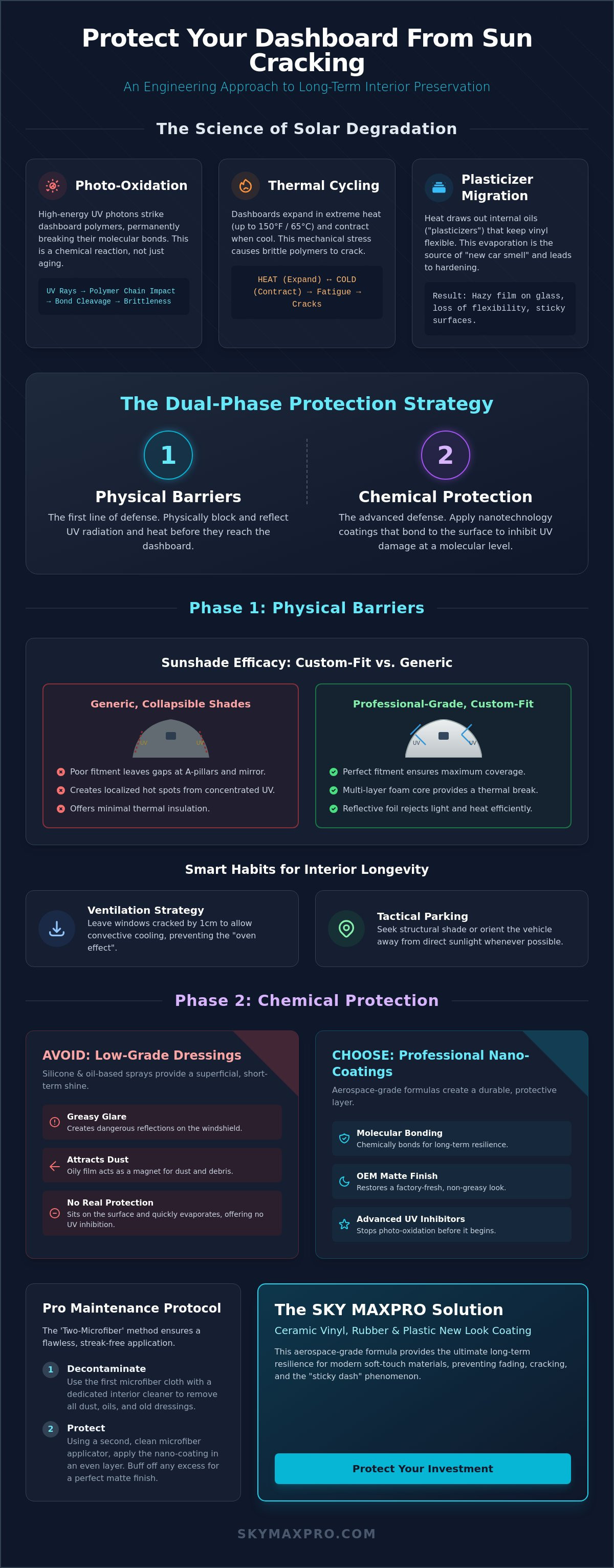
The automotive dashboard serves as a high-exposure structural component subjected to relentless solar radiation and extreme thermal loads. This environment triggers a chemical process known as photo-oxidation, where high-energy UV photons strike the polymer chains of the vinyl or plastic. This results in Polymer degradation, a state where the material's molecular bonds are permanently cleaved. It's not merely a cosmetic issue; it's a fundamental loss of structural integrity. Once these polymer chains break, the material cannot be "healed" by retail-grade dressings, as the damage occurs at a molecular level.
Mechanical fatigue through thermal cycling compounds this chemical breakdown. Materials expand during peak solar exposure and contract as temperatures drop overnight. When the material becomes brittle, it loses the elasticity required to withstand these dimensional changes. This is why understanding how to protect dashboard from sun cracking is an essential part of professional vehicle preservation. Modern soft-touch surfaces are particularly susceptible to these forces. These materials often utilize specialized top-coats that, when compromised by UV radiation, undergo a chemical reversal. This manifests as a tacky or "sticky" surface that attracts dust and is nearly impossible to clean without further damaging the underlying substrate. Professional intervention focuses on stabilizing these polymers before they reach this fracture point.
Understanding UV-A and UV-B Impact
UV-A radiation possesses a longer wavelength, allowing it to penetrate standard automotive glass with minimal attenuation. While the windshield filters some UV-B, the cabin remains a heat trap. This greenhouse effect pushes dashboard temperatures toward 150 degrees Fahrenheit. Damage is strictly cumulative; every hour of exposure contributes to a radiation dose that will eventually exceed the material's engineered tolerance. Since glass doesn't block the aging rays of UV-A, the interior continues to degrade even while you're driving.
The Role of Plasticizer Migration
Plasticizer migration is the process where heat draws out internal lubricants, causing them to evaporate from the polymer matrix. That familiar "new car smell" is the olfactory evidence of these critical oils leaving the material. As they vanish, the vinyl loses its flexibility. Early signs include a hazy film on the interior glass or a subtle change in surface texture before visible cracks form. It's vital to learn how to protect dashboard from sun cracking before these internal lubricants are permanently lost to evaporation.
Physical Barriers: The First Line of Defense Against UV
Effective prevention begins with the physical rejection of electromagnetic radiation before it interacts with the dashboard substrate. While the chemical processes discussed previously are the root cause of damage, managing the thermal load is the first engineering priority. Understanding how to protect dashboard from sun cracking involves more than just applying top-coats; it requires a robust physical defense strategy to lower the total photon energy striking the surface. This multi-layered approach ensures that the energy reaching your interior never reaches the threshold required to initiate bond cleavage.
Evaluating Sunshade Materials
Generic, collapsible sunshades often fail due to poor fitment, leaving significant gaps at the A-pillars and around the rearview mirror. These gaps create localized hot spots where UV radiation remains concentrated. Professional-grade, custom-fit barriers utilize a multi-layered foam core insulation sandwiched between reflective aluminum foil. This structure doesn't just reflect light; it provides a thermal break that prevents heat from conducting through the shade itself. Research into the science of solar degradation confirms that reducing the total photon energy reaching the surface is the most effective way to preserve polymer stability.
Professional Window Films and UV Rejection
Modern ceramic window films represent a significant technological leap over traditional dyed tints. These films utilize nano-ceramic particles to filter up to 99% of UV radiation and a substantial portion of infrared heat without requiring dark pigmentation. This allows for the application of 'clear' UV films on front windshields, which is often the only legal way to protect the most exposed part of the interior while driving. For those interested in professional installation, you can find out more about how these solutions integrate into a total vehicle protection plan. Filtering these wavelengths significantly extends the chemical lifespan of your dashboard by slowing the rate of molecular bond cleavage.
Ensuring your glass remains free of contaminants is vital for the performance of these films and the overall visibility of the cabin. Using a professional Window Crystal Multi Cleaner helps maintain the clarity and integrity of your glass surfaces, ensuring your physical barriers perform at peak efficiency throughout the year.
Chemical Protection: Conditioners vs. Ceramic Nano-Coatings
Physical barriers manage the external environment, but chemical protection addresses the stability of the substrate itself. When considering how to protect dashboard from sun cracking, the distinction between a temporary dressing and a semi-permanent coating is critical. Most retail products are surface-level dressings designed for immediate visual impact rather than long-term polymer stabilization. These products fail to address the underlying bond cleavage and often introduce new risks to the material's longevity. A professional engineering approach prioritizes the restoration of the material's chemical balance over artificial aesthetics.
Professional-grade protection focuses on replacing lost plasticizers with water-based UV inhibitors. Unlike oil-based alternatives, these formulas penetrate the porous structure of vinyl and soft-touch plastics. This process helps restore the material's natural elasticity, allowing it to withstand the thermal expansion cycles mentioned in previous sections. A matte finish is the hallmark of a high-performance protectant. Beyond the aesthetic preference, a non-reflective surface is a safety requirement that prevents dashboard glare from obstructing the driver's field of vision during high-noon sun exposure. Ensuring the finish remains non-greasy also prevents the accumulation of dust and debris that can lead to abrasive wear.
The Problem with Silicone and Petroleum Distillates
Cheap, high-shine dressings often rely on heavy silicone oils and petroleum distillates. These substances don't bond with the dashboard; they create a greasy film that acts as a magnifying glass for solar radiation. This concentrated heat accelerates the very degradation you're trying to prevent. Additionally, these oily residues serve as a dust magnet. Airborne particulates become trapped in the film, creating an abrasive paste that causes micro-scratches during cleaning. Professional detailers avoid high-gloss "cockpit sprays" because they compromise both the material's chemistry and the driver's safety. The resulting glare on the windshield can significantly reduce visibility in critical driving situations.
Nanotechnology in Interior Care
The rise of interior ceramic coatings represents an engineering shift toward molecular-level protection. These coatings utilize nano-sized ceramic particles that fill the microscopic pores of the dashboard surface. Once cured, they form a cross-linked bond that is far more durable than any traditional conditioner. This creates a hydrophobic and anti-static barrier that rejects spills and prevents dust from adhering to the surface. Integrating a high-quality ceramic trim plastic restorer into your maintenance cycle ensures that even older, slightly faded components receive the molecular reinforcement needed to stop further UV damage. This transition from temporary shine to permanent resilience is the most effective way to learn how to protect dashboard from sun cracking for the life of the vehicle.
Maintenance Protocols: How to Clean and Protect Without Damage
Professional preservation of automotive interiors requires a disciplined approach to surface preparation. Many vehicle owners attempt to learn how to protect dashboard from sun cracking by simply layering new protectants over old, degraded residues. This is a fundamental error in maintenance logic. Residual silicone and accumulated oils create a barrier that prevents modern UV inhibitors from establishing a molecular bond with the substrate. Effective maintenance begins with total decontamination; you must strip away previous dressings to expose the clean polymer surface. This ensures that the active ingredients in your chosen protectant can penetrate and stabilize the material rather than just sitting on top of it.
The choice of cleaning agents is equally critical. High-alkaline All-Purpose Cleaners (APCs) are often too aggressive for modern soft-touch plastics and can strip away the remaining internal plasticizers. A professional protocol utilizes pH-neutral cleaners that emulsify dirt without compromising the material's chemical integrity. Frequency of application should be dictated by your local UV index and vehicle usage. In high-intensity climates, a quarterly deep-cleaning and protection cycle is the baseline for preventing cumulative solar damage. Maintaining this schedule is the most reliable way to ensure the material remains flexible and resilient against thermal stress.
Step-by-Step Deep Cleaning
Deep cleaning requires specialized car cleaning products that utilize advanced surfactants to lift embedded contaminants from the dashboard grain. For textured surfaces, use a soft-bristled detailing brush to agitate the cleaner in a controlled, circular motion. This mechanical action ensures that dirt is lifted from the microscopic valleys of the surface. Once the contaminants are emulsified, wipe the area with a clean, damp microfiber towel. It's imperative that the surface is completely dry and free of any cleaning residue before you proceed to the protection phase.
Applying the Protective Layer
The application phase utilizes the 'Two-Microfiber' method to ensure a uniform, streak-free finish. Apply the protectant to a dedicated applicator or the first microfiber towel; never spray directly onto the dashboard to avoid overspray on electronics. Work in small, overlapping sections to ensure 100% coverage. Immediately follow up with a second, clean microfiber to buff off any excess product. This leveling process is essential to achieve a factory-matte look and prevent the formation of high spots. Understanding how to protect dashboard from sun cracking also involves respecting curing times. Allow the dashboard to stabilize in a shaded environment for at least 60 minutes to ensure the UV inhibitors have fully bonded before exposure to direct sunlight.
For those seeking to implement this professional protocol, the Interior Cleaning Kit provides the engineered solutions required for precise decontamination and long-term protection.
The SKY MAXPRO Solution: Engineering Long-Term Interior Resilience
SKY MAXPRO views interior preservation as a rigorous engineering discipline. Our protocol for how to protect dashboard from sun cracking is built on the foundation of materials science rather than temporary aesthetics. We provide professional-grade solutions that address the chemical root causes of degradation. This process begins with the Deep Clean Interior Cleaner, an essential precursor designed to emulsify embedded contaminants without stripping the dashboard's internal lubricants. Once the surface is decontaminated, the Ceramic Vinyl, Rubber & Plastic New Look Coating provides the final layer of molecular reinforcement. This combination ensures a non-greasy, matte finish that maintains its structural integrity against solar radiation for months.
Maintaining a vehicle's value is a matter of consistent technical application. Learning how to protect dashboard from sun cracking through the SKY MAXPRO system means moving away from reactive repairs and toward proactive molecular preservation. We don't just offer surface dressings; we provide a comprehensive barrier against the photo-oxidation processes that lead to brittle, fractured surfaces. It's the most effective way to ensure your interior remains in factory-fresh condition for the life of the vehicle.
Aerospace-Grade Formulations for the Road
Nanotechnology derived from aviation protects against extreme thermal shifts by reinforcing the material's internal structure. These VOC-free and eco-friendly interior chemicals preserve cabin air quality by eliminating the outgassing common in petroleum-based products. SKY MAXPRO products utilize advanced cross-linking agents to establish a permanent covalent bond with the polymer matrix rather than creating a temporary, superficial film.
Your Complete Interior Protection Kit
The synergy between our cleaners, coatings, and microfiber accessories ensures that every stage of the maintenance cycle is chemically compatible. Professional-grade concentrates offer significantly higher cost-efficiency than retail-grade sprays by providing a higher density of active UV inhibitors per application. This reduces the total cost of ownership while ensuring your vehicle's interior remains in showroom condition. To explore our full range of engineered solutions, browse the full car detailing products collection and secure the longevity of your vehicle's interior today.
Engineering a Resilient Automotive Interior
Interior longevity is achieved through a precise dual-phase approach involving physical radiation rejection and molecular stabilization. We've established that photo-oxidation and plasticizer migration are the primary drivers of material failure. By implementing rigorous maintenance protocols and utilizing high-performance ceramic coatings, you can effectively stop the cycle of degradation. Understanding how to protect dashboard from sun cracking isn't just about aesthetics; it's a technical investment in your vehicle's long-term asset value and structural integrity.
Our aerospace-approved nanotechnology is manufactured in the USA, providing VOC-free and eco-friendly formulations that prioritize both surface resilience and cabin air quality. These professional-grade solutions ensure a stable, factory-matte finish that resists thermal stress and abrasive wear. You don't have to settle for brittle plastics or greasy glares. With the right engineering strategy, your dashboard will remain in showroom condition for years to come.
Secure Your Interior with SKY MAXPRO Aerospace-Grade Coatings
Frequently Asked Questions
Can a cracked dashboard be repaired, or only replaced?
Structural cracks usually necessitate a full dashboard replacement to restore original safety standards and aesthetics. While vinyl repair kits and fillers can mask small fissures, they don't restore the material's lost structural integrity. Because the dashboard undergoes constant thermal expansion and contraction, cosmetic patches often fail or become visible over time as the substrate shifts.
Is 303 Aerospace Protectant the same as a ceramic coating?
No, these products represent different tiers of chemical engineering. 303 Aerospace Protectant is a water-based surface dressing that provides temporary UV screening. In contrast, a ceramic coating establishes a semi-permanent molecular bond with the surface. Coatings provide superior durability and anti-static properties that last significantly longer than traditional surface-level conditioners.
How often should I apply a dashboard protectant in high-heat climates?
You should apply a professional protectant every 4 to 12 weeks in high-heat climates to maintain optimal UV resistance. Frequent application is a core part of how to protect dashboard from sun cracking in regions with high solar zenith angles. This ensures that the surface is always saturated with active UV inhibitors to counteract the constant migration of internal plasticizers.
Will using a sunshade alone prevent my dashboard from cracking?
A sunshade is an effective physical defense, but it's not a complete solution for interior longevity. While it reflects direct solar radiation, it doesn't stop ambient heat from rising within the cabin. This heat still causes plasticizer evaporation. A comprehensive strategy must combine physical barriers with chemical stabilizers to protect the material at a molecular level.
Can I use household cleaners like Windex or dish soap on my dashboard?
Avoid household cleaners, as they're often too aggressive for delicate automotive polymers. Ammonia-based glass cleaners can cause immediate discoloration and accelerate the embrittlement of vinyl and soft-touch plastics. Professional-grade, pH-neutral cleaners are engineered to emulsify surface contaminants without stripping the essential oils that keep the dashboard flexible and resilient.
Why does my dashboard feel sticky or tacky in the sun?
Stickiness is a symptom of severe photo-oxidation where the polymer chains have broken down into a liquid-like state. This chemical reversal, often seen in modern soft-touch materials, occurs when the material's engineered top-coat fails due to prolonged UV exposure. Once this state is reached, the surface becomes difficult to clean and requires specialized chemical stabilization to prevent further failure.
Does leather require different sun protection than vinyl or plastic?
Leather requires specialized maintenance because it's an organic substrate prone to desiccation. While vinyl and plastic need plasticizer replacement, leather requires pH-balanced hydration to keep the fibers from shrinking and cracking. Both materials benefit from UV blockers, but the delivery systems must be specifically formulated for the unique porosity of the material being treated.
Can window tint really stop 99% of UV damage?
High-performance ceramic window films are technically capable of rejecting up to 99% of UV radiation. By filtering these high-energy wavelengths, you significantly reduce the radiation dose the interior receives. Integrating ceramic film is a vital technical step in learning how to protect dashboard from sun cracking while the vehicle is in motion and cannot utilize a reflective sunshade.