

A clean engine bay isn't just about aesthetics; it's a critical diagnostic requirement for maintaining modern high-performance vehicles. Most drivers treat this as a cosmetic chore, but finding the best way to clean engine bay components in 2026 is actually a high-stakes engineering procedure. You're likely hesitant to spray water near sensitive ECUs or worried that harsh chemicals might degrade your rubber seals. It's a valid concern. Modern sensors are more delicate than ever, and cheap, sticky degreasers often cause more long-term damage than the grime they remove.
You'll master a professional, aerospace-grade methodology to remove heavy buildup without risking electrical failure. This guide provides a structured framework for achieving a factory-fresh appearance while ensuring long-term protection against salt and corrosion. We'll analyze the technical shift toward water-based formulas and outline the precise steps to secure your vehicle's most sensitive electronic systems.
Key Takeaways
- Identify why engine bay detailing serves as a critical maintenance protocol for thermal efficiency and prevents the degradation of rubberized components.
- Implement essential pre-cleaning safety measures, such as managing thermal shock and isolating the battery, to safeguard your vehicle's electronic control units.
- Discover why applying high-grade surfactants is the best way to clean engine bay surfaces without leaving the sticky residues characteristic of lower-quality cleaners.
- Execute the low-moisture "Mist Method" to ensure thorough rinsing while eliminating the risks associated with high-pressure water intrusion into sensitive sensors.
- Apply thermal-stable, aerospace-grade coatings like Ceramic Graphene Shield to create a long-term barrier against salt, corrosion, and oil polymerization.
The Engineering Logic Behind Engine Bay Detailing
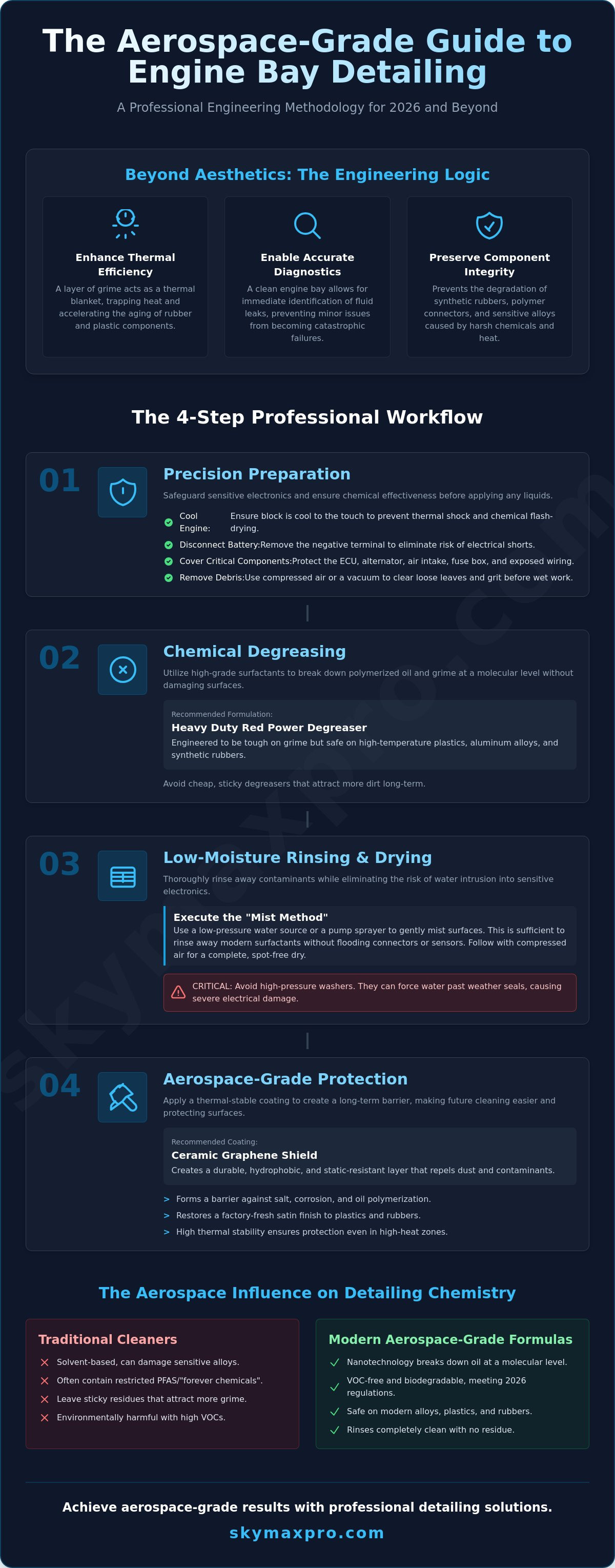
Engine detailing is often mischaracterized as a purely aesthetic pursuit. In reality, maintaining a sterile engine environment is a fundamental application of automotive engineering principles. A layer of grime acts as an unwanted thermal insulator. This thermal blanket traps heat around critical components, which accelerates the aging of synthetic rubbers and polymer connectors. The best way to clean engine bay surfaces involves understanding how these different materials react to thermal stress and chemical exposure.
Modern engine bays are complex assemblies of high-temperature plastics, aluminum alloys, and synthetic rubbers. Each substrate requires a specific chemical approach. A professional-grade methodology isn't a single action but a multi-stage technical process. This sequence includes precision preparation, chemical degreasing with Heavy Duty Red Power Degreaser, mechanical agitation, and long-term shielding using Ceramic Graphene Shield. By following this structured workflow, you ensure that the cleaning process enhances mechanical integrity rather than compromising it. Utilizing an engineering-first mindset is the best way to clean engine bay areas while maintaining the tight tolerances of modern sensors and ECUs.
Mechanical Benefits of a Clean Engine
Clean surfaces are essential for diagnostic accuracy. When an engine is free of accumulated sludge, identifying the precise origin of a fluid leak becomes instantaneous. Whether it's oil, coolant, or hydraulic fluid, early detection prevents minor weeping from escalating into catastrophic component failure. There are also safety implications to consider. Removing organic debris like leaves or oil-soaked dust eliminates potential fire hazards in high-heat zones near the exhaust manifold. From a financial perspective, a pristine engine bay serves as tangible evidence of meticulous mechanical stewardship. This level of care directly correlates to higher resale valuations, as it signals a well-maintained vehicle to prospective buyers or inspectors.
The Aerospace Influence on Detailing Chemistry
The evolution of automotive detailing has been heavily influenced by aerospace standards. Traditional solvent-based cleaners can be corrosive to sensitive alloys and damaging to the environment. With new 2026 regulations restricting PFAS and other "forever chemicals" in cleaning products, the shift toward VOC-free and biodegradable formulas is no longer optional. Modern solutions focus on nanotechnology to break down polymerized oil at a molecular level without attacking the underlying material. SKY MAXPRO utilizes these high-performance formulations, originally engineered for the rigorous demands of aircraft maintenance. This ensures a level of safety and efficiency that standard consumer products cannot match, protecting both the vehicle and the technician.
Precision Preparation: Safeguarding Engine Electronics
Preparation determines the success of any technical maintenance procedure. The best way to clean engine bay surfaces starts with achieving thermal stability. Never initiate a cleaning cycle on a hot engine. Thermal shock can warp aluminum components or cause high-performance degreasers to flash-dry, leading to chemical spotting on high-temp plastics. Wait until the block is cool to the touch. This window of stability ensures that surfactants remain active on the surface rather than evaporating prematurely.
Safety protocols require disconnecting the negative battery terminal as a primary step. This simple action eliminates the risk of electrical shorts if moisture inadvertently reaches a connector. While modern automotive connectors are weather-sealed, the age of the vehicle and the condition of the seals introduce variables that are best managed through isolation. During this phase, you must also consider environmental compliance. As you prepare to rinse away years of grime, remember to properly recycle and dispose of automotive chemicals to prevent heavy metals and oils from entering local water systems.
A final dry inspection is mandatory. Use compressed air or a soft-bristled vacuum to remove loose organic debris, such as leaves or grit, from the cowl and recessed areas. This prevents the formation of abrasive mud during the wet stage. If you're following a professional auto detailing checklist, you'll know that removing dry contaminants first is the most efficient way to protect the integrity of intake seals and electrical housings.
The 'Critical Five' Components to Cover
Isolation is the best way to clean engine bay areas without causing mechanical failure. Use professional-grade masking tape and plastic sheeting to protect these five zones:
- Alternator: Moisture ingress can corrode internal copper windings and damage the voltage regulator.
- ECU and Fuse Box: These represent the vehicle's central processing units. Even minor moisture intrusion can trigger intermittent faults or permanent hardware failure.
- Exposed Air Intakes: Use a dedicated plug or plastic covering. Water entering the combustion chamber can lead to hydro-locking, a condition that often results in total engine replacement.
- Sensors and Connectors: Protect Mass Air Flow (MAF) and O2 sensor leads. These components rely on precise electrical resistance values that moisture can easily disrupt.
- Spark Plug Wells: On many modern engines, these recessed areas can collect water, leading to ignition coils failing or misfires once the engine is restarted.
Dry Cleaning vs. Wet Preparation
Manual agitation during the dry phase is a hallmark of engineering-grade detailing. Use specialized detailing brushes to reach into recessed spark plug wells and around fuel injectors. This mechanical removal of grit ensures that when the degreaser is applied, it can focus on breaking down polymerized oils rather than being absorbed by surface dust. For a truly professional finish across the entire vehicle, pairing this engine prep with a high-quality Exterior Detailing Kit ensures that every substrate is treated with the correct chemical profile.
The Degreasing Phase: Utilizing Heavy-Duty Formulations
Determining the best way to clean engine bay surfaces requires a deep understanding of surfactant chemistry. Degreasing is not a simple rinsing task; it is a chemical reaction designed to break the molecular bonds of polymerized oil and road grime. Surfactants work by lowering the surface tension of the water, allowing the cleaning solution to encapsulate hydrophobic contaminants like grease and lift them from the substrate. This process is essential because engine bays accumulate high-density lipids that standard soaps cannot emulsify. Without the correct chemical profile, you're merely moving dirt around rather than removing it.
The application of Heavy Duty Red Power Degreaser represents a strategic shift in maintenance efficiency. This formula is specifically engineered to remain stable during automotive heat cycles, ensuring it doesn't flash-dry or lose potency when it contacts metal components. For maximum effectiveness, implement a bottom-up spraying strategy. Starting at the lowest points of the engine block and working upward prevents the degreaser from creating "run-down" streaks on vertical surfaces. This method ensures uniform dwell time across all components, which is critical for achieving a consistent, professional-grade finish.
Managing dwell time is the most technical aspect of this phase. While the chemical must stay on the surface long enough to penetrate thick sludge, allowing it to dry on sensitive high-temp plastics or rubber hoses can lead to permanent staining or material embrittlement. You generally have a window of three to five minutes depending on ambient humidity. If the solution begins to evaporate, mist the area lightly with water to reactivate the surfactants. This careful monitoring is the best way to clean engine bay areas without causing the chemical etching often seen with amateur detailing attempts.
Solvent-Based vs. Water-Based Degreasers
The detailing industry has shifted toward water-based, biodegradable formulations due to the 2026 PFAS regulations and the need for material safety. Solvent-based cleaners are often too aggressive for modern synthetic rubber gaskets and can cause them to swell or crack over time. A pH-balanced, water-based solution like "Red Power" provides the aggressive lifting power needed for heavy oil sludge while remaining safe for aluminum alloys. Unlike high-pH "oven cleaners" or certain dish soaps, professional formulations won't cause the white oxidation spots that plague bare aluminum blocks and timing covers.
Agitation Techniques for Stubborn Grime
Chemicals alone rarely achieve a 100% clean in a neglected engine bay. Mechanical agitation is non-negotiable. Use a "divide and conquer" approach by working in small 12x12 sections to ensure no area is overlooked. Selecting the correct tool is vital for substrate integrity. Use soft boar's hair brushes for plastic covers and electrical conduit, but switch to stiff nylon brushes for the cast iron or aluminum engine block. When addressing the underside of the hood, be cautious with the heat insulation pad. These porous materials shouldn't be saturated; instead, lightly agitate the surface with a damp microfiber cloth to remove dust and oil vapors without compromising the adhesive backing.
Rinsing and Drying: The Low-Moisture Approach
Rinsing is the phase where most detailing errors occur. While it's tempting to use high-volume water to flush away degreaser, the best way to clean engine bay components involves a low-moisture "Mist Method." Excessive water volume increases the probability of fluid ingress into sensitive electrical housings or intake tracts. Instead of a direct stream, use a nozzle set to a fine mist or a low-pressure setting. This ensures that the chemical surfactants and encapsulated grime are emulsified and carried away without the force required to bypass weather-sealed connectors.
Systematic rinsing is essential to prevent chemical residue from drying in hard-to-reach crevices. Start from the highest point of the engine bay and work downward. This prevents clean areas from being contaminated by runoff from upper sections. Pay close attention to the firewall and the areas around the strut towers where degreaser tends to pool. Once the visible grime is removed, a secondary pass with a low-pressure mist ensures that the pH level of the surface returns to neutral, preparing the substrates for the final shielding stage.
Why Pressure Matters (And Why Less is More)
High-pressure washers can generate upwards of 2000 PSI, which is sufficient to "drive" water past the rubber gaskets in sealed bearings or weather-stripping. This leads to internal corrosion that may not manifest as a fault for several weeks. If you must use a pressure washer, follow strict engineering safety margins. Utilize a wide 40-degree fan tip and maintain a minimum distance of three feet from all engine components. For high-precision areas, bypassing the pressure washer entirely and using professional car detailing products for spot-cleaning is the most responsible choice for modern vehicle architecture.
Eliminating Hidden Moisture
Drying is a functional requirement, not a cosmetic one. Standing water in spark plug wells or coil packs can lead to immediate ignition failure or intermittent misfires. Forced air is the most effective tool for this task. Use a leaf blower or compressed air to evacuate moisture from deep recesses and electrical plugs. After the initial air-dry, use high-GSM microfiber towels for a final wipe-down. These towels have a high absorption capacity, which is necessary for a streak-free finish on chrome and polished metal components. To ensure total moisture evacuation, start the engine and allow it to reach operating temperature. The resulting heat will steam off any residual moisture trapped in areas inaccessible to air tools. For the most comprehensive results, equip yourself with a professional Exterior Detailing Kit to maintain the integrity of your vehicle's finish beyond the engine bay.
Aerospace-Grade Protection: Sealing the Result
The final stage of the engineering process is the application of a thermal-stable protective barrier. Cleaning removes the contamination, but it also leaves the underlying substrates vulnerable to oxidation and heat-induced fading. The best way to clean engine bay surfaces is to conclude the procedure with a molecular sealant that can withstand the extreme temperature fluctuations of the compartment. Without this protective layer, high-temp plastics and aluminum reservoirs will quickly lose their structural integrity and visual clarity. Utilizing Ceramic Graphene Shield ensures that the surface is not just clean, but technically fortified against the environment.
Graphene-based protection offers specific advantages for automotive engine bays. Unlike traditional sealants, graphene-infused coatings possess exceptional heat dissipation properties and an anti-static surface tension. This anti-static nature is a functional requirement; it repels road dust and prevents oil vapors from bonding to the engine shrouds. By establishing this barrier, you shift from reactive cleaning to proactive maintenance. Future detailing sessions become significantly more efficient, as 90% of surface contaminants can be removed with a simple low-pressure rinse or a light wipe-down, eliminating the need for harsh chemicals in every cycle.
Ceramic vs. Traditional Dressings
Traditional automotive dressings frequently utilize silicone or mineral oils to achieve a temporary aesthetic shine. These formulations are fundamentally flawed for engine use because they remain "tacky" after application. This stickiness acts as a magnet for road grit and carbon soot, creating a thick, abrasive sludge that is difficult to remove. In contrast, a ceramic coating provides a "dry-touch" finish that is chemically bonded to the material. This technology preserves the structural integrity of engine plastics by preventing the plasticizer migration that causes components to become brittle and crack under thermal stress.
Application of Graphene Spray Coatings
For complex geometries like intake manifolds and air boxes, PRO Ceramic Graphene Spray Coating provides a high-precision application method. The surface must be chemically neutral and completely dry before you begin. Apply the spray to a specialized applicator and work it into the substrate using overlapping strokes. Leveling the coating with a clean, high-GSM microfiber towel is a critical step to prevent high spots and ensure a uniform, "new look" finish. In the high-ambient heat environment of an engine compartment, the cross-linking of the graphene lattice occurs rapidly. However, you should allow the vehicle to remain stationary for at least four hours to ensure the coating cures properly. Adopting this rigorous standard is the best way to clean engine bay areas while providing long-term resistance to salt, corrosion, and fluid staining.
Advancing Your Maintenance Protocol to Aerospace Standards
Mastering the best way to clean engine bay environments requires a transition from basic scrubbing to a structured engineering protocol. By prioritizing thermal stability and precise component isolation, you eliminate the risks traditionally associated with engine detailing. Using targeted surfactants instead of aggressive solvents ensures that every high-temp plastic and synthetic gasket remains structurally sound while achieving a factory-fresh appearance. This methodology shifts the focus from purely cosmetic results to long-term mechanical stewardship.
The final application of a graphene-based shield completes this technical workflow. This provides a thermal-stable barrier that repels dust and simplifies future maintenance by preventing the polymerization of road oils on engine surfaces. To achieve these results with professional-grade precision, Shop the Aerospace-Grade Engine Detailing Kit at SKY MAXPRO. These aerospace-approved formulations are manufactured in the USA and are available in professional-grade 1-gallon concentrate options for high-volume users. Implementing these advanced standards ensures that your vehicle's most critical systems remain protected; efficient; and ready for the road ahead.
Frequently Asked Questions
Is it safe to pressure wash my car's engine bay?
High-pressure washing is generally discouraged for modern engine bays due to the risk of moisture intrusion. Excessive water pressure can bypass the weather-seals on electrical connectors or force grit into sealed bearings. If you must use a pressure washer, keep a minimum distance of three feet and utilize a wide 40-degree fan tip to disperse the impact force. The best way to clean engine bay components is through a low-pressure "Mist Method" that prioritizes material safety over rinsing speed.
What should I cover before cleaning my engine?
You must isolate the alternator, the ECU/fuse box, and any exposed air intakes using professional-grade masking materials. These components are highly sensitive to moisture and represent the highest risk for electrical failure. Additionally, ensure spark plug wells and sensitive sensors like the Mass Air Flow (MAF) sensor are protected. A thorough preparation phase is a fundamental requirement for maintaining the mechanical integrity of your vehicle during the detailing process.
Can I clean my engine while it is still hot?
You should never apply cleaning chemicals or water to an engine that is at operating temperature. Rapid cooling from water application can cause thermal shock, which may warp aluminum components or crack plastic housings. High-performance surfactants will flash-dry on hot surfaces, leading to permanent chemical spotting and streaks. Always wait until the engine block is cool to the touch before starting the procedure.
What is the best degreaser for heavy engine oil buildup?
Heavy Duty Red Power Degreaser is specifically engineered with the aggressive surfactants needed to break down polymerized oil and road grime. This water-based formula provides the necessary dwell time to emulsify thick sludge without the corrosive side effects of solvent-based alternatives. It's the most efficient solution for maintaining the balance between aggressive cleaning and substrate safety in 2026 automotive environments.
Will cleaning my engine bay cause electrical problems?
Electrical issues are avoidable if you follow a structured safety protocol. Disconnecting the negative battery terminal and properly masking sensitive electronics eliminates most risks. Problems typically occur when moisture is allowed to pool in recessed areas like spark plug wells or when high-pressure water is driven into connectors. Using forced air to dry the compartment before restarting the engine is the best way to clean engine bay surfaces while ensuring electrical reliability.
How often should I detail my engine compartment?
A comprehensive detail is recommended once or twice per year for standard vehicles. If you operate in environments with high road salt concentration or off-road conditions, more frequent cleaning may be necessary to prevent corrosion. Once a protective layer like Ceramic Graphene Shield is applied, routine maintenance becomes significantly easier. The coating repels dust and oil, often requiring only a light wipe-down to maintain a factory-fresh appearance.
Do I need to dry the engine before applying a protector or ceramic coating?
Total moisture evacuation is a technical requirement for the successful bonding of any protective coating. Any residual water trapped on the surface or in the pores of the material will interfere with the chemical cross-linking of the sealant. Use a leaf blower or compressed air to ensure every crevice is dry. For the best results, run the engine to operating temperature to steam off any hidden moisture before applying products like PRO Ceramic Graphene Spray Coating.
Can I use dish soap to degrease my engine?
Dish soap is not an acceptable substitute for professional automotive degreasers. Many household soaps contain high pH levels that can cause white oxidation spots on bare aluminum and accelerate the drying of rubber hoses. They also lack the specific surfactants required to break down heavy automotive lubricants. Using a dedicated, pH-balanced formula ensures that you remove contaminants without compromising the structural integrity of your engine's various substrates.