

Did you know that the automotive sector is projected to command 25% of the $14.20 billion high-performance ceramic coatings market by 2026? This rapid growth isn't just about exterior paint; it's driven by a fundamental shift toward sophisticated surface engineering for cabin environments. Most vehicle owners recognize the frustration of watching a pristine dashboard succumb to UV-induced cracking or becoming a dust magnet after applying traditional, oily dressings. You've likely found that these topical treatments offer little more than a temporary, greasy shine that actually attracts contaminants and complicates long-term maintenance.
By opting for a specialized ceramic coating for interior plastic trim, you're moving beyond simple aesthetics into the realm of molecular-level protection. You'll discover the technical science behind how these advanced polymers create a cross-linked barrier that filters harmful radiation and repels liquid spills while maintaining a factory-fresh matte finish. This guide examines the engineering principles of surface bonding, discusses the impact of current EPA VOC regulations, and provides a structured methodology for achieving an aerospace-grade finish. We'll preview the specific ASTM standards used to measure coating durability and outline the precise steps required to ensure your interior surfaces remain protected and easy to clean.
Key Takeaways
- Analyze the molecular mechanics of photodegradation and how SiO2-based barriers neutralize the impact of UV radiation on automotive polymer chains.
- Compare the technical performance of a professional ceramic coating for interior plastic trim against traditional dressings to achieve up to 12 months of sustained protection.
- Learn the precise decontamination protocols required to ensure optimal surface energy for long-lasting coating adhesion and a flawless molecular bond.
- Transition from high-gloss, dust-attracting oils to a sophisticated satin finish that provides aerospace-grade hydrophobicity and superior stain rejection.
- Explore how integrating graphene-infused technology creates a sacrificial layer that preserves factory-fresh aesthetics even under extreme cabin thermal conditions.
The Science of Interior Plastic Degradation and Ceramic Protection
Automotive interior components are primarily composed of complex polymers designed for durability, yet they remain highly susceptible to environmental stressors. Photodegradation represents the most significant threat to these surfaces. When UV-A and UV-B rays penetrate vehicle glass, they deliver high-energy radiation that strikes the carbon-carbon bonds within the plastic's molecular structure. This energy is sufficient to break these polymer chains, leading to a loss of structural integrity. At a macroscopic level, you observe this as fading, "chalking," or the eventual cracking of the dashboard and door trim. The cabin environment also acts as a thermal trap, creating a greenhouse effect where internal temperatures frequently exceed 140°F. This heat accelerates the migration of plasticizers to the surface, a process known as outgassing. A specialized polymer coating serves as a functional barrier against these forces. Unlike exterior clear coats, which are relatively non-porous, interior plastics possess a microscopic texture and higher porosity. A professional ceramic coating for interior plastic trim is engineered to penetrate these pores, creating a semi-permanent SiO2 or Graphene-based shield that remains stable even under extreme thermal loads.Why Traditional Dressings Fail
Most consumer-grade interior protectants rely on silicone oils to provide a temporary aesthetic improvement. These dressings are fundamentally flawed from an engineering perspective because they are volatile and evaporative. As the cabin heats up, the silicone carrier evaporates, leaving the surface unprotected within days or weeks. These oily residues carry a high electrostatic charge, which actively attracts airborne dust and particulates. This creates a cycle of constant reapplication and chemical buildup that can eventually lead to a "sticky" surface texture that is difficult to remediate without aggressive degreasing.The Molecular Bond of Interior Ceramics
Ceramic Coating vs. Traditional Plastic Dressings: A Technical Comparison
Traditional interior protectants and modern ceramic coatings serve vastly different functional purposes. Most consumer dressings are formulated with silicone oils and emulsifiers that sit topically on the plastic surface. These products provide a temporary, high-gloss aesthetic that quickly degrades. In contrast, a ceramic coating for interior plastic trim utilizes advanced polymer technology to create a semi-permanent bond. While a standard dressing might lose its efficacy within two weeks due to heat evaporation and physical contact, a professional ceramic layer typically maintains its integrity for 6 to 12 months. The disparity in maintenance requirements is equally significant. Because ceramic coatings create a low-energy surface, contaminants cannot easily adhere to the substrate. Engineering data suggests that coated surfaces require approximately 70% less physical agitation during the cleaning process. Spilled liquids, such as coffee or soda, bead on the surface rather than penetrating the textured grain of the plastic. This chemical stability is essential to counter photooxidative degradation, which can compromise the mechanical properties of polymers over time. For those seeking to implement this level of protection, utilizing a dedicated Ceramic Vinyl, Rubber & Plastic New Look Coating ensures the surface remains shielded without the oily residue of traditional alternatives.Performance Metrics and Durability
Ceramic coatings offer superior resistance to high-pH all-purpose cleaners (APCs) that would instantly strip a traditional dressing. This chemical resilience is critical for high-touch areas like door handles, armrests, and center consoles where skin oils and friction are constant. Unlike dressings, which often act as a dust magnet due to their high electrostatic charge, ceramic coatings are engineered with anti-static properties. This reduces the accumulation of airborne particulates, keeping the cabin environment cleaner for longer intervals. The coating acts as a sacrificial layer, absorbing the micro-abrasions that occur during daily vehicle operation.Aesthetic Impact on Different Plastic Textures
Engineering the Application: Prepping and Coating Interior Trim
The effectiveness of a ceramic coating for interior plastic trim depends entirely on the precision of the substrate preparation. Unlike exterior paint, interior plastics are often saturated with silicone-based oils from previous detailing products. These contaminants create a low-energy surface that prevents the ceramic polymers from anchoring to the plastic pores. To achieve a successful molecular bond, you must follow a rigid five-step engineering protocol. The process begins with deep decontamination. Use a specialized deep clean interior cleaner to strip away all surface volatiles and embedded oils. Once the surface is chemically neutral, it must be thoroughly dried and inspected for any remaining residue. Following this, the coating is applied using a microfiber applicator pad, followed by a leveling phase to eliminate high spots. Finally, the surface requires a controlled environment to cure, typically requiring 12 to 24 hours of zero contact with moisture to ensure the bond reaches maximum structural stability.The Critical Role of Decontamination
Existing dressings are the primary cause of coating failure. You must remove 100% of these products to expose the raw polymer substrate. We recommend using a soft-bristled detailing brush to agitate the cleaner into the textured grain of the plastic. This mechanical action reaches deep into the pebble-grain pores where oils often hide. You can verify the success of your decontamination using a water drop test. If water beads on the clean plastic, silicone residues are still present. A truly clean, high-energy surface will allow water to "sheet" or flatten, indicating it's ready for the ceramic bond.Precision Leveling Techniques
Applying the coating requires a cross-hatch method. This involves moving the applicator in overlapping vertical and horizontal passes to ensure every microscopic pore is filled. Advanced Polymer film and coating technologies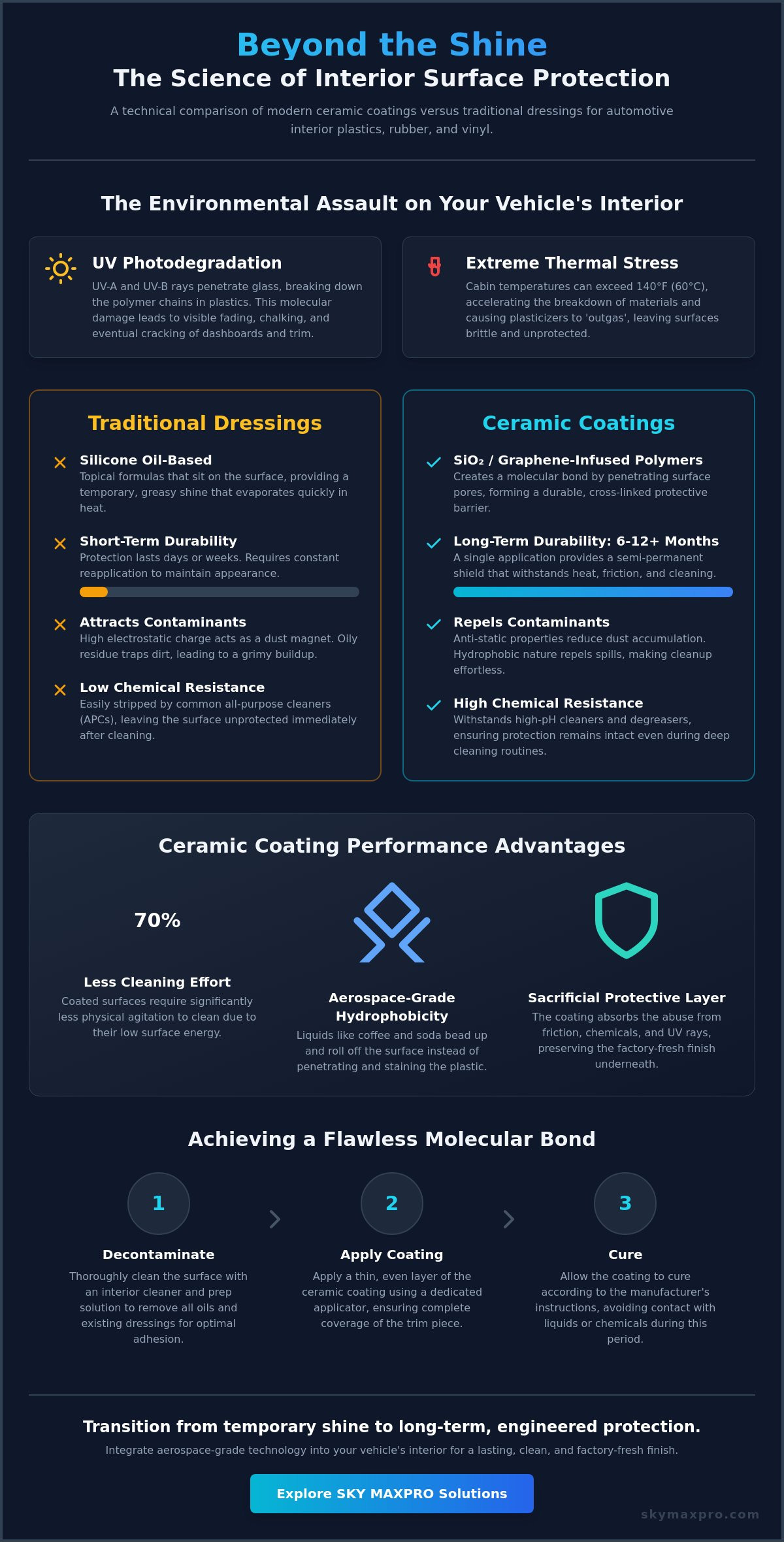
Performance Metrics: UV Resistance, Hydrophobicity, and Longevity
Evaluating the success of a ceramic coating for interior plastic trim requires analyzing specific performance metrics that go beyond simple visual enhancements. A primary metric is the coating's ability to function as a sacrificial layer. While section one detailed how UV radiation breaks polymer chains, the applied ceramic shield quantifies protection by absorbing and neutralizing this energy before it reaches the plastic substrate. This prevents the cumulative damage that leads to structural failure in dashboards and door panels, especially in vehicles frequently exposed to high solar loads.
Low surface energy is the engineering principle behind the coating's hydrophobicity. By reducing the surface's ability to bond with external molecules, the coating creates a high contact angle for liquids. This technical property is what causes contaminants to bead rather than soak into the plastic's grain. When you apply a ceramic coating for interior plastic trim, you are essentially re-engineering the surface's chemical behavior to repel polar and non-polar substances alike.
Stain and Spill Management
Liquid contaminants like coffee, soda, or protein shakes pose a significant threat to textured interior plastics because they often contain dyes and acids that can permanently stain porous surfaces. On a ceramic-treated surface, these liquids remain in a suspended state, allowing for simple removal with a dry microfiber cloth. This "easy-to-clean" characteristic significantly reduces the need for aggressive scrubbing or high-pH professional car detailing supplies during routine maintenance. By minimizing mechanical friction and chemical exposure, the underlying plastic maintains its original texture and color depth for years.
Longevity is not a static value; it is influenced by cabin thermal cycles and mechanical wear. In high-touch areas like center consoles or door pull handles, the coating may require more frequent inspection compared to the top of a dashboard. However, the cross-linked bond ensures that even under heavy usage, the protection remains significantly more durable than any non-bonding dressing. Most professional applications sustain their hydrophobic and UV-resistant properties for up to 12 months in standard operating conditions.
Long-Term Structural Integrity
The high-density SiO2 matrix functions as an impermeable barrier that effectively halts the migration of phthalate-based plasticizers toward the surface, thereby preserving the polymer's internal elasticity and preventing the brittle failure common in aged dashboards. Maintaining the flexibility of vinyl and rubber components is critical for preventing the "dry rot" appearance. Because the coating is breathable at a molecular level, it doesn't trap harmful gases, yet it remains robust enough to prevent the leaching of the essential oils that keep plastics supple.
Concerns regarding the tactile or acoustic impact of these coatings are common among enthusiasts. Engineering tests show that a correctly leveled ceramic layer does not alter the acoustic properties of the cabin or create a "plastic-like" sound when touched. The finish remains dry to the hand and preserves the original tactile feedback of the material, avoiding the greasy or slippery feel associated with silicone-based alternatives.
Equip your maintenance kit with Ceramic Vinyl, Rubber & Plastic New Look Coating to achieve these verified performance standards.
Integrating SKY MAXPRO Aerospace-Grade Technology into Your Interior
The transition from aviation surface protection to automotive interior care represents a significant leap in chemical engineering. SKY MAXPRO isn't just another consumer brand; it's rooted in the high-stakes world of aerospace maintenance. In aviation, coatings must withstand extreme thermal fluctuations and high UV exposure at high altitudes where the atmosphere is thinner. These rigorous engineering requirements have been translated into the automotive sector to provide a superior ceramic coating for interior plastic trim. This legacy ensures that your vehicle cabin receives the same level of protection originally designed for high-stress aerospace components.
Enclosed vehicle cabins present a unique challenge for any chemical application due to limited airflow. Traditional interior protectants often release high levels of volatile organic compounds (VOCs) that can linger in the air and compromise cabin safety. SKY MAXPRO prioritizes eco-friendly, VOC-free formulations to ensure that the air quality inside the vehicle remains safe for all occupants. This focus on safety and sustainability is a critical engineering consideration that separates professional-grade solutions from standard retail products. By choosing these advanced polymers, you're investing in a system that protects both the substrate and the environment.
The SKY MAXPRO Interior Solution
Utilizing the Ceramic Vinyl, Rubber & Plastic New Look Coating allows users to achieve professional results through highly concentrated formulas. Unlike diluted retail versions, these professional-grade solutions provide a higher density of SiO2 particles. This results in a more robust cross-linked bond that lasts longer and resists chemical degradation more effectively. For vehicles with older or neglected surfaces, the Ceramic Trim Plastic Restorer works to replenish lost oils within the polymer structure before the final ceramic layer is applied to seal the finish.
The Interior Cleaning Kit provides the necessary decontamination agents discussed in the previous chapters of this guide. This ensures that the substrate is perfectly prepared for the final ceramic coating for interior plastic trim. Every product in the lineup is manufactured in the United States, adhering to strict quality control and aerospace-approved standards. This domestic manufacturing allows for precise monitoring of chemical purity, ensuring that every bottle delivers consistent performance in the field.
Next Steps for Your Detailing Strategy
Selecting the correct protection strategy depends on your vehicle's age and usage frequency. New vehicles benefit from immediate ceramic application to lock in factory-fresh aesthetics, while older vehicles may require more intensive decontamination. Professional detailing businesses can access these solutions in wholesale quantities to improve operational efficiency and provide their customers with measurable protection metrics. Integrating these advanced polymers into your maintenance workflow reduces the need for frequent reapplications and lowers long-term cabin maintenance costs.
Upgrade your interior protection with SKY MAXPRO Ceramic Coatings to ensure your cabin surfaces meet the highest standards of durability and aesthetic precision.
Standardizing Your Interior Protection Protocol
Transitioning to a professional ceramic coating for interior plastic trim represents a shift from reactive maintenance to proactive surface engineering. By replacing volatile silicone dressings with high-concentration SiO2 barriers, you're effectively neutralizing the photooxidative forces that compromise cabin materials. This guide has detailed the critical necessity of deep decontamination and the precise application methods required to achieve a cross-linked bond that withstands daily thermal cycles.
SKY MAXPRO delivers these results through aerospace-grade formulations that are proudly manufactured in the USA. Our professional-grade SiO2 concentrations ensure that your dashboard, door panels, and center consoles remain shielded against liquid penetration and UV-induced degradation. These systems provide a measurable advantage in both durability and cabin safety, maintaining a factory-fresh finish without the use of harmful VOCs.
Shop SKY MAXPRO Ceramic Interior Coatings to integrate these advanced technologies into your detailing workflow. Secure the structural integrity and aesthetic precision of your vehicle's cabin today.
Frequently Asked Questions
Does ceramic coating make interior plastic look too shiny?
No, a professional ceramic coating for interior plastic trim is engineered to maintain a factory-fresh matte or satin finish. Unlike silicone-based dressings that leave an artificial high gloss, these coatings use SiO2 polymers that bond within the texture of the material. This avoids the greasy sheen that causes distracting glare on the dashboard. The result is a deep, rich OEM appearance that preserves the original tactile feel of the cabin.
How long does a ceramic coating last on interior plastic trim?
A high-quality ceramic coating for interior plastic trim typically provides protection for 6 to 12 months. The actual longevity depends on surface usage frequency and cabin thermal exposure. Areas like the dashboard, which face high UV loads, may require inspection sooner than door panels. Because the coating creates a semi-permanent cross-linked bond, it significantly outlasts traditional dressings which often evaporate within two weeks of application.
Is it safe to breathe in the cabin after applying ceramic coating?
Yes, once the coating has reached its initial cure state, it's completely safe for cabin occupants. SKY MAXPRO formulations are designed to be VOC-free and eco-friendly, addressing the specific safety requirements of enclosed vehicle environments. It's recommended to allow the vehicle to ventilate for 12 to 24 hours during the curing process. Once the solvents have flashed off, the remaining ceramic shield is inert and odorless.
Can I apply ceramic coating to my car’s touchscreen or clear plastics?
Standard trim coatings shouldn't be applied to touchscreens, but they are effective on non-functional clear plastics like gauge clusters. Applying a trim coating to a capacitive touchscreen can interfere with tactile sensitivity and cause optical distortion. For clear instrument covers, the coating provides a sacrificial layer against micro-scratches. Always use a dedicated glass or screen protector for functional displays to ensure long-term operational accuracy.
Will ceramic coating prevent my dashboard from cracking?
Ceramic coatings provide the molecular-level UV filtration necessary to significantly delay the onset of plastic cracking. Cracking occurs due to photodegradation and the leaching of plasticizers. By blocking UV-A and UV-B radiation and sealing the surface pores, the coating maintains the internal flexibility of the polymer. While no product can reverse existing structural damage, a ceramic layer acts as a critical preventive measure for long-term material integrity.
How do I clean my interior once it has been ceramic coated?
Maintenance of a coated interior requires only a damp microfiber cloth or a pH-neutral cleaner. Because the coating creates a low-energy surface, dust and contaminants can't bond strongly to the plastic substrate. You'll find that 70% less physical agitation is needed to remove surface dirt during routine detailing. Avoid using high-alkaline degreasers or abrasive tools, as these can prematurely wear down the protective ceramic layer over time.
Can ceramic coating be removed if I don’t like the finish?
Ceramic coatings are semi-permanent but can be removed through mechanical agitation or specialized chemical strippers. If you wish to revert to the original surface, a high-pH degreaser combined with a soft detailing brush can break the polymer bond. Unlike paint coatings that require machine polishing, interior plastics allow for chemical remediation. However, the matte finish of professional coatings is designed to be nearly invisible, making removal unnecessary for most users.
Is ceramic coating better than 303 Aerospace Protectant?
Ceramic coatings offer a more durable, semi-permanent solution compared to the topical protection provided by 303 Aerospace Protectant. 303 is an industry-standard UV blocker, but it requires reapplication every 30 to 45 days because it doesn't cross-link with the surface. Ceramic coatings provide similar UV protection but last up to 12 months. For those seeking a "set and forget" engineering solution with superior hydrophobicity, ceramics are the technically superior choice.