

Effective carpet restoration is a matter of precise chemical engineering, not just aggressive scrubbing. Most vehicle owners treat spills as a surface level problem, yet the reality of deep-set contaminants requires a more sophisticated approach. You've likely experienced the frustration of using consumer-grade cleaners that leave behind phantom odors or, worse, cause permanent fiber discoloration. It's understandable to worry that a single mistake might compromise your interior's factory-look texture forever.
We're here to provide a professional methodology for how to remove tough stains from car carpet using high-performance, engineering-grade solutions. By understanding how to match solvent polarity to a stain's specific molecular structure, you can achieve complete extraction without damaging the underlying material. This guide outlines the technical steps for identifying contaminants, executing precise extraction cycles, and utilizing modern barriers that align with the latest industrial safety standards. You'll learn how to transition from basic cleaning to a systematic restoration process that ensures long-term protection and measurable efficiency.
Key Takeaways
- Understand the molecular interaction between synthetic automotive fibers and contaminants to prevent permanent capillary migration into the carpet backing.
- Master the T.A.C.T. principle to learn how to remove tough stains from car carpet through precise chemical dissolution rather than damaging mechanical force.
- Implement a high-lift dry extraction phase to eliminate abrasive particulate matter before introducing liquid surfactants and foaming agents.
- Utilize modern Dry Foam Tech Shampoo to break complex molecular bonds while maintaining the structural integrity and factory texture of the fibers.
- Apply advanced hydrophobic barriers to reduce surface energy, effectively preventing future liquid penetration and deep-set saturation.
The Chemistry of Contamination: Why Car Carpet Stains Persist
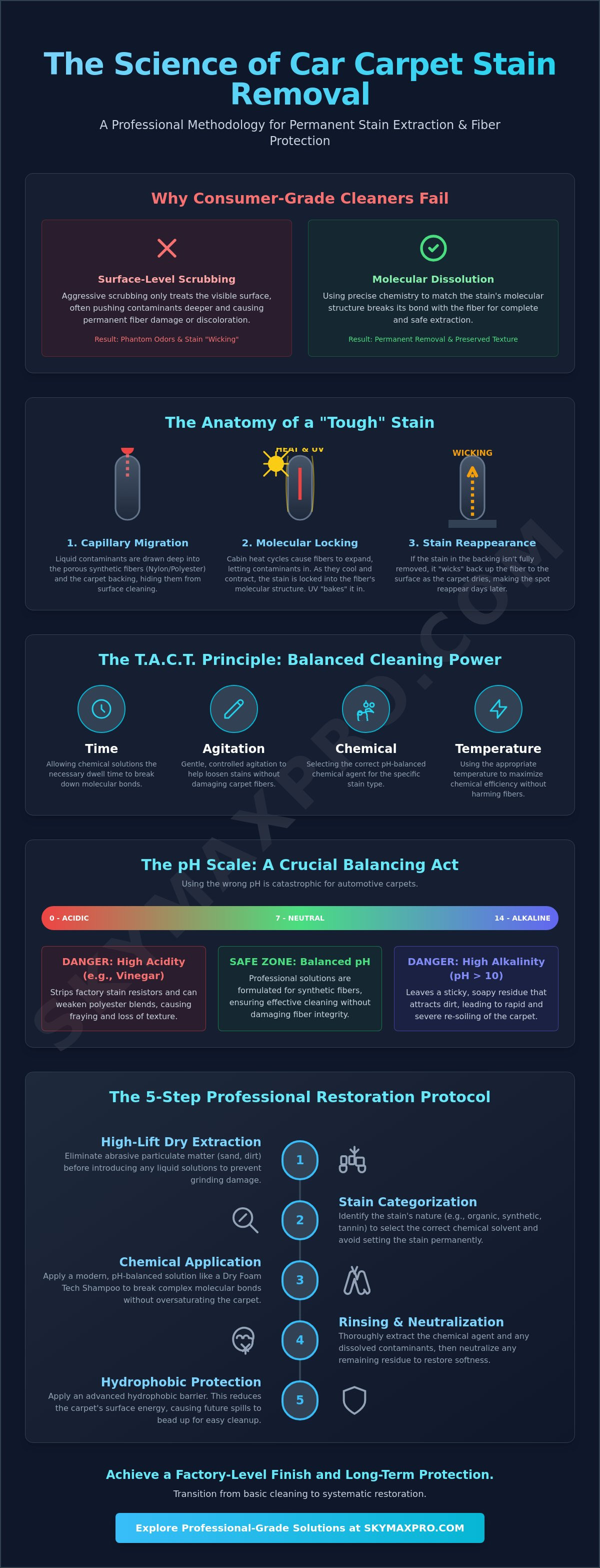
Most vehicle interiors utilize a dense blend of nylon and polyester. These synthetic polymers provide high tensile strength and abrasion resistance, but their physical structure is inherently porous at a microscopic level. When a contaminant like coffee, oil, or protein-based fluids hits the surface, capillary action immediately begins drawing the liquid downward through the fiber shaft and into the primary backing. This vertical migration is why surface-level wiping fails; the bulk of the contaminant is sequestered where standard friction cannot reach it.
Understanding The Chemistry of Carpet Cleaning is essential for anyone attempting to learn how to remove tough stains from car carpet. "Tough" stains aren't just about the substance itself, but the environmental variables of the cabin. Automotive interiors are subject to extreme thermal cycles, where cabin temperatures can fluctuate significantly during the day. These heat cycles cause synthetic fibers to expand, allowing foreign molecules to penetrate deep into the polymer chain. As the vehicle cools, the fiber contracts, effectively locking the dye or grease into the fiber's molecular structure. UV exposure further accelerates this process by "baking" the stain, making it a permanent part of the carpet's visual profile.
Synthetic Fibers and Molecular Bonding
Standard household cleaners are designed for natural fibers or low-traffic environments. They often lack the specific surfactants needed to break the ionic bonds between synthetic car carpet and industrial contaminants. If the cleaner only addresses the surface, you'll likely encounter "wicking." This phenomenon occurs when the stain, still present in the carpet backing, travels back up the fiber through evaporation, causing the spot to reappear days after cleaning. Professional-grade restoration requires breaking these bonds at the root to ensure the extraction is permanent.
The Impact of pH on Automotive Textiles
Precision in chemical selection is mandatory for maintaining the structural integrity of your vehicle. Automotive carpets generally respond best to solutions within a balanced pH range. DIY solutions involving high-acidity vinegar or high-alkaline laundry detergents can strip factory-applied stain resistors and lead to fiber embrittleness. Successful extraction depends on three key pH factors:
- Residue Management: High-alkaline residues (pH > 10) leave a sticky film that attracts dirt, leading to rapid re-soiling.
- Fiber Integrity: Excessive acidity can weaken the structural integrity of polyester blends, causing them to fray or lose their factory texture.
- Chemical Neutralization: Neutralizing chemical residues after cleaning is the only way to ensure the carpet remains soft and resistant to future spills.
Effective restoration isn't about scrubbing harder. It's about using the right chemistry to de-bond contaminants from the synthetic lattice of the carpet. By prioritizing molecular dissolution over mechanical force, you protect the carpet's lifespan while achieving a factory-level finish.
Categorizing the Threat: Identifying Organic vs. Synthetic Stains
Effective decontamination requires a systematic diagnostic approach rather than trial-and-error cleaning. Before applying any surfactant, you must determine the chemical nature of the contaminant to avoid permanent fiber bonding. The 'Blot and Sniff' test is a foundational diagnostic tool; by pressing a clean, white microfiber towel into the affected area, you can observe the transfer color and identify specific odors. This step is vital for understanding the chemical composition of stains, as different substances interact uniquely with the synthetic polymers of automotive carpets.
Visual indicators provide immediate data. Tannin-based stains like coffee or tea often present as yellowish-brown discolorations with defined edges. Petroleum-based contaminants, such as motor oil or asphalt, appear darker and more viscous, often lacking a clear perimeter. Treatment order is critical; applying a high-pH cleaner to an unidentified tannin stain can cause the pigments to oxidize, making them nearly impossible to extract later. Learning how to remove tough stains from car carpet begins with a precise identification of the contaminant's molecular profile.
Water-Based and Protein Stains
Water-based contaminants like mud or soda are generally easier to suspend, but protein-based biologicals like milk or sweat present a thermal risk. While heat helps dissolve crystallized sugars in soda, it denatures the proteins in biological fluids, effectively curdling them inside the fiber. This process creates a permanent bond that resists standard extraction. Cold-water pre-treatment is essential for proteins to prevent this thermal locking. For organic spills that have already begun to emit odors, a specialized enzymatic approach is required to break down the biological matter at the source.
Oil-Based and Petroleum Contaminants
Oil-based contaminants require a different engineering logic. Grease, motor oil, and road grime are non-polar, meaning they repel water-based detergents. These substances demand solvent-based emulsifiers that can surround the oil molecules and lift them from the fiber surface. Mystery black spots, often caused by shoe rubber or asphalt tracking, are particularly stubborn and require a high-performance Deep Clean Interior Cleaner to break the high-viscosity bonds. When analyzing how to remove tough stains from car carpet, we distinguish between these polar and non-polar substances to ensure the extraction process is both efficient and safe for the textile backing.
Professional Extraction Methods: Chemical Dissolution vs. Mechanical Agitation
Decontamination is a matter of physics and kinetic energy. Professional detailers utilize the T.A.C.T. principle to ensure consistent results. This acronym stands for Time, Agitation, Chemical, and Temperature. By adjusting these four variables, you can optimize the extraction process for specific contaminants. Time refers to dwell time, allowing the chemical to penetrate the fiber. Agitation provides the physical force to break bonds. The chemical choice determines the molecular reaction, while temperature influences the speed of that reaction. Implementing a rigorous strategy for professional car carpet cleaning involves balancing these variables to avoid damaging the synthetic lattice.
Surfactants are the primary tools in chemical dissolution. These molecules possess a dual nature: a hydrophilic head that attaches to water and a lipophilic tail that bonds with oils. When you apply a solution to learn how to remove tough stains from car carpet, these surfactants surround the dirt particles, reducing surface tension and lifting them into a suspended state. For contaminants that have migrated to the hard plastic perimeters or metal seat rails, a specialized Heavy Duty Red Power Degreaser is necessary to emulsify high-viscosity petroleum products that standard fabric cleaners cannot touch.
Dry Foam Technology vs. Steam Cleaning
Modern restoration favors low-moisture protocols. While steam cleaning is effective for sanitization, the excessive water often saturates the under-carpet padding, leading to mold and mildew. Using a specialized Carpet, Fabric & Upholstery Dry Foam Tech Shampoo Cleaner offers a superior alternative. This technology utilizes encapsulation, where the foam surrounds the dirt and crystallizes as it dries. This allows for easy removal via vacuuming without the risk of delaminating the carpet adhesives or creating a humid environment that traps odors.
The Role of Mechanical Agitation
Agitation must be measured and precise. Selecting the correct brush stiffness is essential; a brush that is too stiff can fray the carpet pile, while one that is too soft fails to reach the backing. For loop pile carpets common in many vehicles, a medium-stiff nylon brush is the industrial standard. We recommend a cross-hatch agitation pattern. By scrubbing in overlapping horizontal and vertical lines, you ensure 360-degree contact with every fiber. Once the contaminant is suspended, use a clean microfiber towel to perform a 'pull' extraction, lifting the moisture and dirt away from the textile surface.
Step-by-Step Protocol for Eliminating Deep-Set Carpet Stains
Executing a successful restoration requires a disciplined sequence of technical operations. The process begins with dry extraction. Before any liquid touches the surface, you must remove as much loose particulate matter as possible. Introducing moisture to dry soil creates a slurry that migrates deeper into the carpet backing, complicating the restoration. A high-lift vacuum is the primary tool here; it uses air velocity to pull debris from the base of the synthetic fibers. Skipping this step is the most common reason DIY attempts fail.
Once the surface is clear, the chemical pre-treatment phase begins. This is where you apply the engineering principles of dwell time. Surfactants need time to encapsulate contaminants and break the ionic bonds holding them to the nylon or polyester lattice. If you're researching how to remove tough stains from car carpet, remember that the chemical does the heavy lifting. Rushing this stage leads to incomplete extraction and the inevitable return of the stain via wicking. Patience during the dwell phase ensures the contaminant is fully suspended in the solution.
Pre-Treating for Maximum Efficiency
Target high-traffic areas with a professional-grade Deep Clean Interior Cleaner. Dwell time is a critical variable; for most automotive textiles, a window of three to five minutes allows for maximum penetration without risking complete evaporation. Evaporation rates vary based on cabin temperature and humidity, so monitor the surface to ensure it remains damp. Always perform a spot-test on an inconspicuous area to verify colorfastness, especially on aftermarket or custom-dyed carpets. This precaution prevents irreversible pigment loss during the agitation phase.
The Extraction and Blotting Technique
Aggressive scrubbing is the primary cause of fiber fraying and permanent texture damage. Instead, utilize the 'Roll and Lift' method. Using a high-GSM microfiber towel, press into the carpet and roll the towel away from the center of the stain. This uses the towel's capillary action to pull the chemical-dirt suspension upward into the microfiber. For multi-layered stains, such as old coffee with cream, you'll likely need to repeat this cycle. Each pass should use a clean section of the towel to prevent cross-contamination. This systematic approach is the most effective way to learn how to remove tough stains from car carpet without compromising the material's integrity.
The final stage involves neutralization and grooming. After extraction, the carpet must be neutralized to a stable pH to prevent the fibers from becoming brittle or attracting new dirt. Use a clean, damp towel for a final rinse-wipe, then set the nap using a soft-bristled brush. This ensures the carpet dries with a factory-fresh appearance and uniform texture. For the most effective results, integrate these steps using a specialized Interior Cleaning Kit to ensure chemical compatibility across the entire process.
Strategic Surface Protection: Preventing Future Fiber Saturation
Restoration is incomplete without a proactive defense strategy. Once you've successfully executed the protocols for how to remove tough stains from car carpet, the fibers are left open and vulnerable to immediate re-contamination. The logic of preventative maintenance centers on reducing the surface energy of the textile. By applying a molecular barrier, you create a surface where the energy is lower than the surface tension of the liquid itself. This physical disparity prevents the liquid from wetting the fiber, keeping contaminants suspended on the surface for effortless removal.
Utilizing a specialized formulation like PRO Shield for Fabric, Carpet, Upholstery & Floor Mats creates a transparent, hydrophobic barrier at the microscopic level. This isn't a simple surface coating; it's a molecular shield that bonds to individual fibers without altering their breathability or texture. This engineering approach ensures that spills remain in a beaded state, significantly reducing the time and chemical force required for future maintenance. For vehicles subject to heavy daily use, re-application every four to six months is the industrial standard to maintain peak performance.
Nanotechnology in Fabric Protection
Advanced protection relies on the 'Lotus Effect,' a biomimetic principle where nanostructures force liquids to bead and roll off. Aerospace-approved formulations provide superior UV resistance, which is critical for preventing the heat-locking of stains discussed in previous sections. Integrating this level of protection into a professional car detailing routine transforms the carpet from a high-maintenance liability into an easy-clean surface. This technological superiority ensures that even aggressive dyes or oils fail to find a foothold in the synthetic lattice.
Maintenance Between Deep Cleans
Long-term value retention depends on consistent, data-driven maintenance. Using a Quick Detailer Spray with Ceramic High Gloss Finish for immediate spot-cleaning prevents minor spills from becoming deep-set issues. Regular high-lift vacuuming is equally vital; it removes abrasive grit that creates a sandpaper effect, physically wearing down the protective barrier and the carpet fibers themselves. By investing in high-performance professional car detailing products, you ensure that your interior remains in a state of constant restoration. This systematic approach is the only way to truly master how to remove tough stains from car carpet and keep the factory-fresh appearance indefinitely.
Master the Science of Automotive Restoration
Achieving a factory-fresh interior is no longer a matter of manual effort; it's a result of precise chemical application and molecular defense. By moving beyond surface-level scrubbing and adopting a diagnostic approach, you've learned the technical fundamentals of fiber interaction and surfactant dwell times. Mastering how to remove tough stains from car carpet requires this systematic transition from basic cleaning to advanced chemical extraction followed by high-performance shielding. Protecting your investment ensures that the structural integrity and aesthetic value of your vehicle remain intact for years to come.
For those seeking the highest level of efficiency, our systems provide the necessary technological edge. Our solutions feature aerospace-approved formulations that are manufactured in the USA. These eco-friendly, VOC-free interior solutions are engineered to deliver measurable results without compromising safety or environmental standards. Shop the Professional Interior Cleaning Kit for Engineering-Grade Results and experience the difference that precision chemistry makes. You now have the methodology and the tools to maintain a pristine cabin environment with total confidence.
Frequently Asked Questions
Can I use a pressure washer on my car's carpet for tough stains?
Avoid using a pressure washer inside a vehicle. The high-pressure stream forces liquid through the fiber backing and into the acoustic insulation or floorboards. This leads to moisture entrapment, which facilitates mold growth and can cause electrical shorts in under-seat wiring harnesses. Professional methods prioritize controlled moisture and high-lift vacuum extraction to achieve results safely. This engineering-first approach prevents structural damage to the vehicle's interior components.
How do I remove old, dried coffee stains that have been there for months?
Old coffee stains require a two-stage chemical rehydration process. First, apply a surfactant to break the crystallized sugars and tannins that have bonded to the synthetic polymers. This is a critical step in learning how to remove tough stains from car carpet that have been baked in by UV exposure. Follow this with a 'Roll and Lift' blotting technique to extract the re-liquefied contaminant without fraying the fiber pile.
Is it safe to use bleach-based cleaners on black car carpets?
Bleach is never recommended for automotive textiles. Sodium hypochlorite is a strong oxidizing agent that will strip the synthetic dyes from nylon and polyester blends, resulting in permanent white or orange spots. To maintain the factory appearance, use pH-balanced cleaners like Deep Clean Interior Cleaner, which targets contaminants without compromising the chemical stability of the fiber dyes or the structural integrity of the carpet backing.
How long does it take for car carpet to dry after a deep clean?
Drying times vary based on the cleaning methodology and ambient humidity levels. Traditional wet extraction typically requires 12 to 24 hours of airflow to ensure the padding is completely dry. In contrast, utilizing Carpet, Fabric & Upholstery Dry Foam Tech Shampoo Cleaner reduces this window to 1 to 4 hours. Adequate ventilation is mandatory to prevent the accumulation of moisture in the cabin, which can lead to secondary odor issues.
What is the best way to get rid of the 'sour' smell from wet carpet?
A 'sour' odor indicates bacterial proliferation within the carpet padding. The most effective solution is a deep extraction cycle followed by an antimicrobial treatment. You must remove the organic matter that serves as a food source for the bacteria. Simply masking the odor with fragrances is a temporary measure; permanent remediation requires the complete removal of the moisture and contaminants trapped in the backing through high-performance suction.
Can I use Heavy Duty Red Power Degreaser on my floor mats?
Yes, Heavy Duty Red Power Degreaser is highly effective for rubberized or heavy-duty all-weather mats. It is engineered to emulsify petroleum-based road grime, motor oils, and asphalt tracking that standard detergents cannot break down. For textile floor mats, ensure the product is thoroughly rinsed or extracted to prevent chemical residue from attracting new dirt through high-alkaline surface tension, which can lead to rapid re-soiling of the fibers.
How often should I apply a fabric protector like PRO Shield?
Apply a molecular barrier like PRO Shield for Fabric, Carpet, Upholstery & Floor Mats every 4 to 6 months. High-traffic areas, such as the driver's footwell, may require more frequent applications to maintain the hydrophobic barrier against liquid penetration. Re-applying the shield after every deep extraction is essential, as the cleaning process removes the protective layer along with the contaminants. This ensures consistent surface energy reduction and long-term fiber protection.
Does dry foam cleaning work better than a traditional carpet extractor?
Dry foam technology is superior for maintenance and moisture-sensitive areas, while extractors excel at deep-set vertical migration. Dry foam encapsulates dirt at the surface and prevents padding saturation, making it an efficient choice for how to remove tough stains from car carpet without long downtime. However, for stains that have reached the primary backing, a traditional extractor provides the flushing force and high-lift suction necessary for total decontamination of the textile layers.