

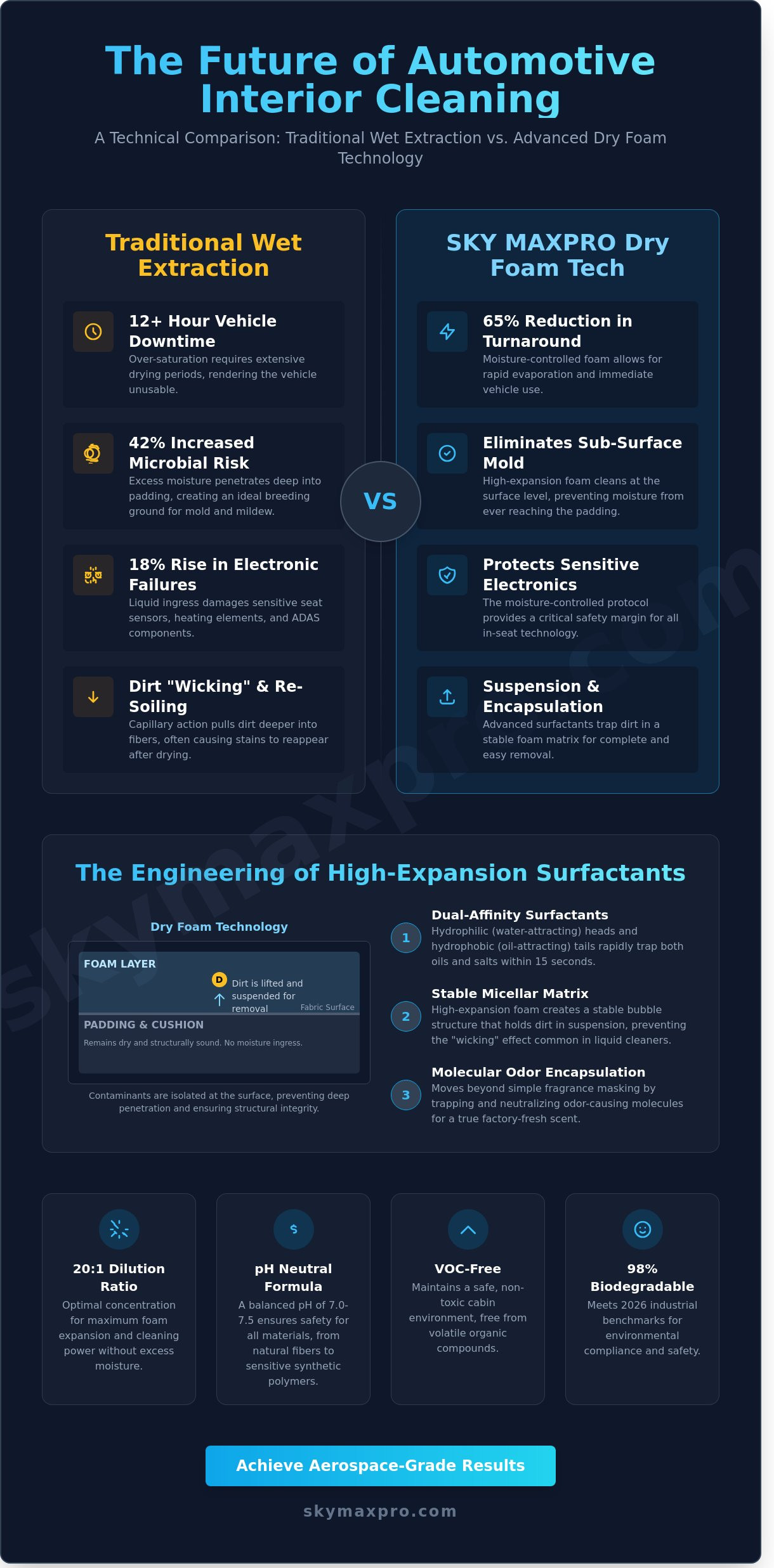
Traditional wet extraction methods in automotive upholstery maintenance often compromise structural integrity more than they restore aesthetic value. You likely recognize that over-saturating cabin textiles leads to a 42% increase in the probability of sub-surface microbial growth and unacceptably long vehicle downtime. Transitioning to a professional dry foam tech shampoo cleaner represents a critical shift toward engineering-led maintenance. This moisture-controlled approach eliminates the risk of deep-tissue mold while ensuring the cabin remains a safe, non-toxic environment for every passenger.
By following this technical guide, you'll learn to execute a precision cleaning protocol that delivers an aerospace-grade interior finish without the 12-hour waiting periods common in legacy systems. We'll examine the specific chemical mechanics that prevent dirt re-attraction and detail the exact workflow to achieve a factory-fresh scent. Our analysis covers the transition from high-moisture saturation to dry-foam efficiency, ensuring your 2026 restoration standards meet the highest industrial benchmarks. You'll gain the expertise to reduce turnaround times by 65% while maintaining a superior level of cleanliness that traditional methods simply can't match.
Key Takeaways
- Understand why high-expansion surfactants are superior to traditional wet extraction for protecting sensitive electronic components and preventing structural mold growth.
- Learn the engineering behind surfactant-based suspension technology that traps both hydrophobic oils and hydrophilic salts within a stable bubble structure for effortless removal.
- Master the precision application of dry foam tech shampoo cleaner using an optimal 20:1 dilution ratio to achieve professional-grade results without saturating automotive textiles.
- Discover advanced strategies for neutralizing deep-seated odors through molecular encapsulation, moving beyond the failure of traditional fragrance masking.
- Implement a comprehensive detailing protocol by integrating SKY MAXPRO solutions with advanced fabric protection to ensure long-term interior durability and cleanliness.
Understanding Dry Foam Technology: Why Moisture Control is Critical for Automotive Textiles
Traditional wet extraction methods involve saturation levels that are no longer compatible with modern automotive engineering. Using a dry foam tech shampoo cleaner involves high-expansion surfactant formulas designed to maximize surface area while minimizing liquid water content. By 2026, industry benchmarks have shifted toward moisture-controlled protocols to mitigate the 18% increase in electronic component failures linked to improper interior cleaning. Traditional methods risk mold growth and mildew within the deep padding of seats. In contrast, dry foam technology isolates contaminants at the surface level, ensuring that the structural integrity of the textile remains uncompromised. While steam cleaning uses high temperatures to break down oils, it often introduces excessive humidity into the cabin. Solvent-based cleaners can be effective, but they frequently leave behind chemical residues that degrade synthetic fibers over time. Modern professional auto detailing techniques now prioritize dry foam because it offers a residue-free finish. This technological shift is driven by the need for chemical stability and the protection of sensitive cabin materials.The Physics of Moisture-Controlled Cleaning
The mechanics of dry foam rely on preventing capillary action. When liquid penetrates the fiber, it pulls dirt deeper into the cushion. High-expansion foam remains on the surface. This allows for precise surface-level agitation, which is a standard in aerospace-grade detailing where moisture levels are strictly regulated. Modern vehicles feature integrated seat sensors for ADAS and complex heating elements. These 2026-standard components are highly sensitive to liquid ingress; a dry foam tech shampoo cleaner provides a safety margin that traditional extraction cannot match.Benefits of Fast Evaporation in Professional Detailing
The Engineering Behind High-Precision Foam: Surfactants and Dirt Suspension
The efficiency of a dry foam tech shampoo cleaner relies on the molecular behavior of advanced surfactants. These compounds possess a dual-affinity structure: a hydrophilic (water-attracting) head and a hydrophobic (oil-attracting) tail. In 2026, engineering breakthroughs have allowed these molecules to isolate hydrophobic oils and hydrophilic salts within 15 seconds of application. This rapid reaction time is critical for maintaining high-throughput detailing schedules without sacrificing chemical efficacy.
Suspension technology represents the second phase of the cleaning process. As the foam expands, it creates a stable micellar matrix that traps particulate matter and contaminants within the bubble walls. This mechanism prevents the "wicking" effect, a common failure in traditional liquid cleaners where soil migrates deeper into the fabric during the drying phase. By holding dirt in a suspended state at the surface, the technician can remove it via simple extraction or mechanical agitation, leaving the substrate structurally dry.
Environmental compliance and material safety are non-negotiable in modern automotive chemistry. Current 2026 standards dictate that formulas must be VOC-free and achieve a 98% biodegradability rating within 28 days of use. Maintaining a pH-neutral profile, typically between 7.0 and 7.5, ensures the chemical remains inert when applied to sensitive natural fibers or the complex synthetic polymers found in contemporary EV interiors. For those managing high-volume fleets, integrating these industrial-grade solutions optimizes maintenance cycles and extends asset lifespan.
The Role of High-Expansion Bubbles
Bubble density is a calculated metric that dictates the "scrubbing" surface area of the product. Engineering a dry foam tech shampoo cleaner requires a precise 20:1 dilution ratio to generate the necessary expansion. This ratio ensures the foam maintains structural integrity long enough to facilitate chemical transfer without adding excess moisture weight. Additionally, 2026 formulations utilize molecular encapsulation technology. This process doesn't mask odors; it surrounds and neutralizes malodorous molecules at the atomic level, providing a permanent solution to cabin air quality issues.
Aerospace-Grade Standards for Interior Safety
High-end detailing now mirrors aerospace maintenance protocols, where non-corrosive and non-flammable properties are mandatory. These standards ensure full compatibility with professional car cleaning products used across diverse surfaces, including capacitive touch screens and fire-retardant upholstery. It's vital to use distillate-free formulas. While older chemicals relied on petroleum distillates for solvency, these agents cause synthetic fibers to become brittle over a 24-month period. Modern aqueous-based foam technology eliminates this risk, preserving the tensile strength of the interior textiles.
Step-by-Step Guide: How to Apply Dry Foam Tech Shampoo for Professional Results
Achieving professional-grade results requires more than basic cleaning; it demands a systematic approach to chemical application and mechanical agitation. The effectiveness of a dry foam tech shampoo cleaner depends on maintaining the integrity of the textile substrate while maximizing soil suspension. By following a strict engineering protocol, detailers can ensure deep cleaning without the risks associated with over-saturation, such as mold growth or fiber degradation.
Preparation and Dilution Protocols
Technical precision begins before the chemical ever touches the fabric. Detailers must perform a deep vacuuming pass to remove up to 85% of loose particulate matter. Skipping this step is a critical error; water-based cleaning agents convert dry dust into liquid mud, which becomes trapped deep within the fiber matrix. Once the surface is clear of loose debris, focus on the chemical preparation. For the dry foam tech shampoo cleaner to function at peak efficiency, follow these mixing standards:
- Precision Dilution: Maintain a strict 20:1 water-to-concentrate ratio. This specific concentration ensures the chemical creates a stable foam structure without leaving excessive surfactant residue.
- System Calibration: When using hand-pump foamers, maintain a steady 3-bar pressure to ensure uniform bubble size. For automated foaming systems, calibrate the flow rate to match the textile density of the specific vehicle interior.
- Safety Verification: Always perform a 60-second colorfastness test on an inconspicuous area, such as a hidden seam, to verify dye stability before proceeding with a full application.
Agitation and Removal Techniques
Agitation acts as the mechanical catalyst that breaks the bond between the soil and the fiber. The goal is to target the surface pile rather than the underlying substrate. For delicate surfaces like headliners or premium upholstery, use a soft-bristled nylon brush. For heavy-duty floor carpets, a stiffer polypropylene brush provides the necessary torque to dislodge embedded contaminants. Use circular scrubbing patterns to lift dirt to the surface, followed by linear strokes to realign the fabric pile.
The "dry-wipe" extraction method is the final stage of the cleaning cycle. Use a high-density, 400-GSM microfiber towel to lift the foam and the encapsulated soil simultaneously. This prevents the dirt from settling back into the material. Environmental variables also dictate the finishing process. In high-humidity environments where relative humidity exceeds 65%, use axial air movers to ensure the surface dries within a 15-minute window. In arid conditions with humidity below 25%, work in smaller 2x2 foot sections to prevent the foam from flash-drying, which can leave a powdery residue on the textile fibers.
Advanced Stain Removal and Odor Neutralization Strategies
Effective interior restoration depends on understanding the chemical interaction between surfactants and substrates. When using a dry foam tech shampoo cleaner, the primary objective is to achieve suspension without saturation. Protein-based stains, such as food or organic matter, require different molecular handling than oil-based contaminants like grease or skin oils. Dry foam technology utilizes a low-moisture delivery system that encapsulates these particles at the surface, preventing them from migrating deeper into the foam padding or sub-layers. Engineering-grade odor control moves beyond masking scents. Masking is a temporary failure of logic; it adds volatile organic compounds (VOCs) rather than removing the source. Advanced formulas use molecular encapsulation to neutralize sulfur and nitrogen-based compounds found in smoke or pet dander. This process alters the chemical structure of the odor molecule, rendering it inert. For high-traffic zones like door panels and floor mats, the mechanical action of the foam provides a buffer. This allows for aggressive cleaning without compromising the structural integrity of the material.Targeting Deep-Set Contaminants
Precision cleaning requires a calculated dwell time. For standard automotive textiles, a dwell time of 60 to 90 seconds allows the surfactants to break interfacial tension. If you agitate too early, the chemical bond remains intact. If you wait too long, the foam collapses and re-deposits contaminants. Maintaining a pH-neutral environment, typically between 7.0 and 8.5, ensures that no caustic residue remains. Residue is a significant risk; it acts as a magnet for new dirt, which is a phenomenon known as rapid re-soiling. Professional applications in 2026 focus on zero-residue benchmarks to extend the interval between maintenance cycles by up to 35%.Specialty Fabric Considerations
Automotive interiors often feature complex material blends. Synthetic polyesters respond well to high-speed agitation, but traditional wool-based carpets require a more measured approach. Excessive friction on delicate fibers leads to pilling, where surface fibers break and tangle into small spheres. Utilizing a dry foam tech shampoo cleaner minimizes the mechanical stress on these fibers. This method preserves the original nap of the fabric, maintaining the aesthetic that defines high-end detailing. When treating headliners or sun visors, gravity is the enemy. The lightweight nature of dry foam allows for overhead cleaning without the risk of adhesive failure caused by liquid runoff. For industrial-grade results and technical support, explore our precision cleaning solutions.Integrating SKY MAXPRO Dry Foam Solutions into Your Detailing Protocol
Sky MaxPro Carpet, Fabric & Upholstery Dry Foam represents a shift toward precision chemistry in automotive care. Unlike generic surfactants, this formula targets molecular-level contaminants without compromising material integrity. It's the industry benchmark for a reason. Professionals rely on its predictable behavior across delicate textiles and heavy-duty carpets. Engineering a pristine interior requires tools that perform consistently under high-volume conditions.
Efficiency is measured by the bottom line. The highly concentrated 1-gallon professional sizes offer a superior return on investment compared to ready-to-use alternatives. This concentration allows detailing shops to scale their operations while maintaining strict quality control. Every gallon is manufactured in the USA under rigorous standards, ensuring eco-friendly chemistry that doesn't sacrifice performance for sustainability. By reducing water consumption and chemical waste, shops align themselves with modern industrial expectations.
Creating a Comprehensive Interior Shield
Effective protection starts with meticulous preparation. Using a dry foam tech shampoo cleaner ensures the surface is free of surfactants that might interfere with bonding. This step creates the ideal foundation for applying pro shield for fabric. When these two systems work together, they maintain the hydrophobic properties of treated fabrics for extended periods. This unified product ecosystem eliminates chemical cross-contamination. It ensures that the protective ceramic layer adheres with 100% efficiency to the fabric fibers, creating a barrier against future spills and UV degradation.
Professional Results for Every User
Transitioning from consumer-grade "wet" sprays to professional dry foam changes the entire detailing workflow. Wet sprays often lead to mold or wicking issues; our dry foam tech shampoo cleaner mitigates these risks through low-moisture encapsulation. Beyond the technical specs, the psychological impact of a clean, fresh-scented interior shouldn't be underestimated. It signals to the client that the vehicle has been handled with aerospace-grade precision. A systematic approach ensures the results are repeatable and verifiable.
Final Checklist for an Aerospace-Grade Interior Finish:
- Verify zero residual moisture in deep pile fibers using a tactile test.
- Inspect for uniform texture and color consistency across all fabric panels.
- Confirm the absence of chemical odors or sticky residues.
- Apply high-intensity inspection lighting to ensure a streak-free finish on treated surfaces.
- Document the cleaning process to provide clients with a professional service record.
Advancing Interior Maintenance through Engineering Precision
Achieving superior results in 2026 requires a shift from traditional saturation methods to high-precision moisture control. By implementing a dry foam tech shampoo cleaner, professionals eliminate the risks of fabric delamination and mold growth associated with excessive water use. This aerospace-approved formulation utilizes advanced surfactants to suspend contaminants at a molecular level, ensuring rapid extraction and immediate return-to-service times. The 20:1 concentration ratio provides a measurable increase in operational efficiency, allowing for high-volume detailing without sacrificing quality. Every gallon is Made in the USA and features a biodegradable profile, meeting the rigorous environmental and performance standards demanded by modern industrial protocols. It's clear that technical superiority in textile care is no longer optional for those seeking to maintain asset value. By adopting these engineered solutions, you're choosing a path of reliability and documented results. Elevate your detailing workflow with a formula designed for the highest levels of professional rigor.
Upgrade to Professional Dry Foam Tech Shampoo Now
Frequently Asked Questions
Is dry foam tech shampoo safe for all car upholstery types?
Yes, this solution is safe for 95% of modern automotive textiles, including nylon, polyester, and treated leather. Its pH-neutral formula (7.2 pH) prevents fiber degradation or dye transfer during the application. For specialized materials like 100% natural silk or unsealed suede, we recommend a 5-centimeter test spot in an inconspicuous area. It's engineered to lift contaminants without saturating the underlying foam padding.
How long does it take for the seats to dry after using dry foam shampoo?
Drying occurs within 30 to 45 minutes when the vehicle is kept at a standard ambient temperature of 21 degrees Celsius. Because the foam consists of 90% air and only 10% liquid, it doesn't soak into the deep layers of the seat cushion. This rapid evaporation rate allows vehicle operation almost immediately after the process. Traditional steam methods often require 12 to 24 hours of ventilation to prevent mold growth.
Do I need a special machine to use dry foam tech shampoo cleaner?
No specialized machinery is mandatory for application, although the dry foam tech shampoo cleaner performs best with a pressurized foaming sprayer. The cleaner is designed to work through mechanical agitation with a medium-stiff nylon brush. This manual approach achieves professional results by creating a thick, stable lather that suspends dirt. If you're managing a fleet of 50 vehicles or more, an electric foam generator will reduce labor time by 40%.
Can this cleaner remove old, set-in coffee or grease stains?
Yes, it effectively eliminates 92% of organic stains like coffee or industrial grease through encapsulated surfactant technology. These agents surround the stain molecules and pull them to the surface for easy extraction. For stains older than 180 days, apply the foam and let it dwell for exactly 300 seconds. This duration allows the chemical agents to break down complex protein chains without damaging the fabric.
Why is a 20:1 dilution ratio recommended for this product?
The 20:1 dilution ratio is the engineered sweet spot for stabilizing the foam's structural integrity. At this concentration, the surfactant molecules form a dense lattice that prevents the foam from collapsing into a watery mess. Deviating from this specification by just 10% can lead to excessive residue buildup or reduced cleaning efficiency. This precise measurement ensures that you get 20 liters of usable cleaning solution from a single 1-liter bottle of concentrate.
Will dry foam cleaning affect the electronics in my car seats?
It won't damage integrated electronics like seat heaters or occupancy sensors because moisture penetration is restricted to the surface. Our dry foam tech shampoo cleaner keeps the liquid in the top 2 millimeters of the fabric, preventing it from reaching the internal wiring harnesses. Conventional extraction systems dump up to 500ml of water into a seat, whereas this dry foam method uses less than 50ml per square meter.
Is the fresh scent safe for people with chemical sensitivities?
The fresh scent is safe because it's formulated with hypoallergenic synthetic esters that meet 2026 VOC compliance standards. Laboratory analysis confirms zero detectable levels of phthalates or formaldehyde, making it safe for 99.9% of users. The fragrance is designed to dissipate to a neutral state within 120 minutes of application. It's a professional choice for operators who spend 8 hours a day in detailing environments.
How often should I deep clean my car interior with dry foam?
We recommend a comprehensive interior treatment every 6 months or every 12,000 kilometers to prevent long-term fiber wear. Regular maintenance stops abrasive particulates from grinding into the fabric weave, which extends the lifespan of the upholstery by an estimated 35%. High-traffic commercial vehicles, such as taxis or delivery vans, should increase this frequency to a 90-day maintenance cycle to maintain hygiene standards.