

A visual inspection under 5000K LED lighting reveals that what most enthusiasts call a perfect finish is actually a map of micro-abrasions and chemical etching. Achieving a concours-level result isn't about effort alone; it's about reducing variables in the paint's molecular profile. You've likely felt the anxiety of choosing between traditional waxes and modern synthetics, or feared that the drive to the event will undo hours of labor. Preparing a car for a car show in 2026 demands a shift from aesthetic cleaning to a rigid engineering protocol.
We understand that surface integrity is non-negotiable when facing professional judging. This article provides a technical masterclass on the multi-phase decontamination and protection process required to stabilize your vehicle's substrate. You'll learn how to deploy advanced solutions like Ceramic Graphene Shield Coating to ensure a swirl-free, high-gloss finish that withstands environmental stressors. We'll outline the exact sequence from heavy-duty degreasing to final shielding, giving you the technological edge needed to dominate the show floor.
Key Takeaways
- Establish a strategic seven-day preparation timeline to ensure optimal chemical bonding and curing of high-performance surface treatments.
- Implement a rigorous multi-phase decontamination protocol when preparing a car for a car show, utilizing mechanical clay methods to achieve a glass-smooth substrate.
- Leverage aerospace-grade graphene formulations to create a high-durability hydrophobic barrier that repels environmental contaminants and show-day dust.
- Apply advanced dry foam technology to restore delicate interior upholstery and engine bay components without the risks of moisture over-saturation.
- Develop a precise arrival protocol and mobile maintenance kit to safely neutralize road grime and maintain surface integrity after transit to the venue.
Phase 1: Strategic Planning and Chemical Decontamination
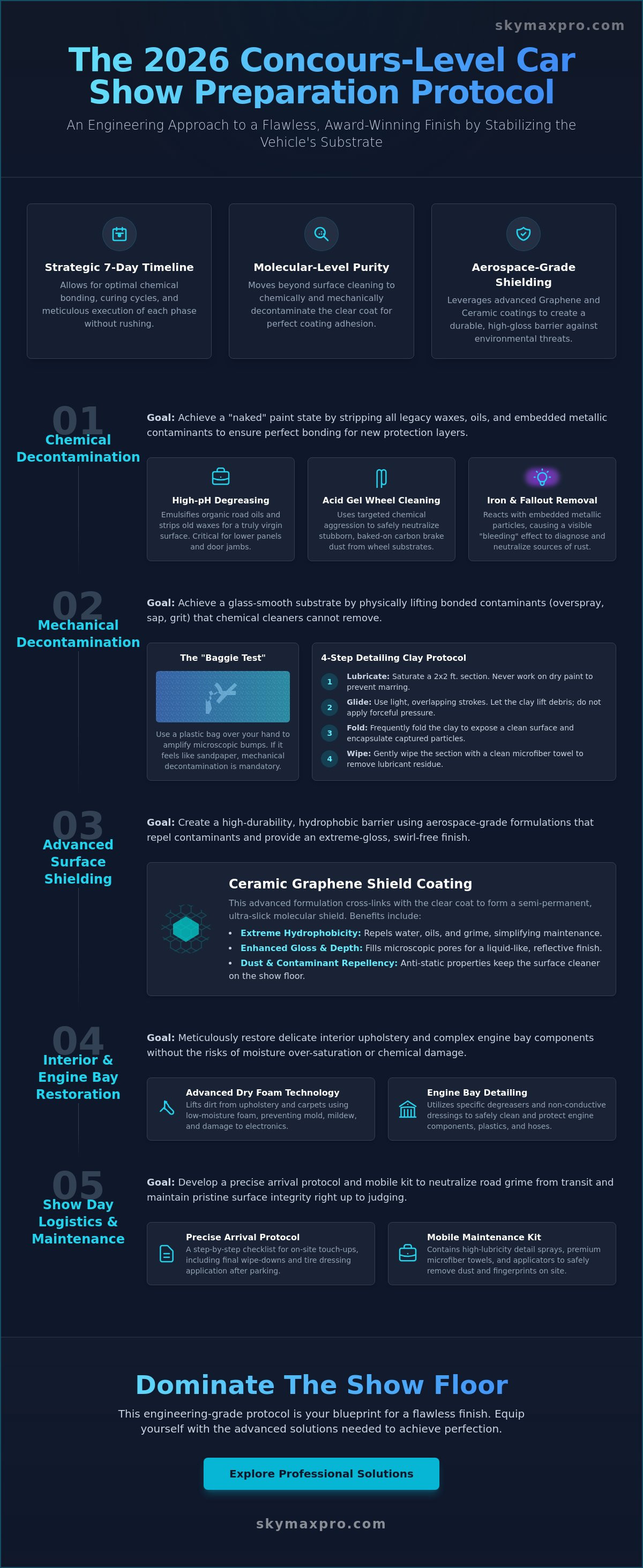
Successful show preparation begins with a calculated timeline. Establishing a seven-day preparation window is the first step in preparing a car for a car show to the highest standard, as it allows for the necessary chemical bonding and curing cycles of advanced protection layers. Standard shampoos often fail to address the complex layers of legacy waxes, road oils, and industrial pollutants that compromise surface integrity. Establishing a controlled environment is the first technical requirement. Direct sunlight or high ambient temperatures cause premature product evaporation, which leads to chemical spotting rather than true decontamination. Precision is the priority.
The Science of Chemical Stripping
To achieve a "naked" paint state, you must remove all previous protection layers. This is where high-pH formulations are essential. Using a product like Heavy Duty Red Power Degreaser allows you to emulsify organic contaminants on lower panels and door jambs that standard soaps leave behind. This stage is a critical component of the professional auto detailing process. Without this total stripping, new coatings will bond to old wax rather than the clear coat, resulting in premature failure. For wheels, a specialized approach is required. The PRO Safe ACID Gel Wheel & Rim Cleaner provides the necessary chemical aggression to neutralize carbon dust while remaining safe for the underlying substrate. Don't settle for surface-level cleanliness when molecular-level purity is required.
Iron and Fallout Removal Protocols
Industrial fallout consists of microscopic metallic particles that embed themselves into the porous structure of the clear coat. These particles oxidize, creating tiny points of rust that destroy gloss and depth. Identifying these contaminants requires a dedicated iron remover. The chemical reaction is visible; as the product interacts with iron oxide, it produces a deep purple "bleeding" effect. This is a diagnostic step as much as a cleaning one. When preparing a car for a car show, you can't skip this phase. Even a brand-new vehicle often carries rail dust from transport. Safety protocols are vital here. Ensure delicate trim and plastics are protected or rinsed immediately to prevent staining from these aggressive chelating agents. By neutralizing these metallic bonds, you stabilize the surface for the mechanical decontamination that follows in Phase 2.
Phase 2: Surface Correction and the Detailing Clay Protocol
Mechanical decontamination is the bridge between a clean car and a concours finish. While chemical agents neutralize iron and oils, they cannot remove bonded contaminants like overspray, tree sap, or industrial grit. These particles remain physically wedged in the paint's pores. Judges often perform tactile inspections; a rough texture under a fingertip immediately disqualifies a vehicle from top honors. This is an essential step when preparing a car for a car show to ensure a glass-like finish that meets professional standards.
To verify surface purity, perform the "Baggie Test." Place your hand inside a thin plastic sandwich bag and slide it across the dry, washed paint. The plastic amplifies microscopic bumps that your bare skin would miss. If the surface feels like sandpaper, mechanical intervention is mandatory. Professional standards, as defined by the International Detailing Association, emphasize that skipping this step leads to poor coating adhesion and reduced gloss. Selecting the correct clay grade is a technical decision based on paint hardness. Soft, modern clear coats require a fine-grade bar to minimize marring, while neglected vintage paints may necessitate a medium-grade compound. Lubricant integrity is the most critical variable. Without a constant film of lubrication, the clay will drag, creating micro-scratches that require extensive polishing to correct.
The Mechanical Decontamination Process
Execution must be methodical to avoid surface damage. Follow this four-step protocol using detailing clay for optimal results:
- Step 1: Thoroughly lubricate a 2x2 foot section of the panel. Never work on dry paint.
- Step 2: Use light pressure to glide the clay across the surface. Let the material lift the debris rather than forcing it into the clear coat.
- Step 3: Fold the clay frequently to encapsulate captured particles and expose a fresh, clean surface.
- Step 4: Wipe the section clean with a high-GSM microfiber towel to verify the absence of texture.
Addressing Water Spots and Etching
Not all surface defects are bonded particles. Mineral deposits from hard water create "water spots" that require chemical neutralization. You must distinguish between topical mineral buildup and permanent paint etching, where the minerals have eaten into the clear coat. If a specialized Water Spot Remover does not resolve the issue, mechanical polishing is the only remaining path. Neutralizing all chemical residues after this phase ensures that the paint is ready for the shielding phase. Preparing a car for a car show is a game of millimeters; every imperfection removed now prevents a visual failure under the intense lighting of the judging arena.
Phase 3: Implementing Advanced Graphene and Ceramic Shielding
The evolution of surface protection has moved past the organic limitations of carnauba wax. While traditional waxes provide a temporary oily glow, they lack the chemical stability required for the 2026 concours circuit. Preparing a car for a car show now requires the integration of graphene nanotechnology. This material creates a lattice structure on the clear coat that's significantly more durable than SiO2 alone. Graphene's primary advantage is its ability to reduce surface temperature, which actively prevents water spotting and environmental etching during outdoor exhibitions. It creates an ultra-slick, hydrophobic barrier that makes show-day dust removal a contactless process.
Graphene vs. Traditional Ceramic Coatings
Graphene coatings represent a major advancement over standard ceramic formulations. By incorporating a carbon-based allotrope, these coatings offer superior thermal reduction properties. This is critical because standard ceramic coatings can occasionally suffer from "spotting" when exposed to high heat and mineral-heavy water. Using a high-solid-content ceramic coating infused with graphene enhances the Depth of Image (DOI). This metric determines how clearly a surface reflects an object; a higher DOI translates to the "wet look" that judges prioritize. Graphene is the 2026 benchmark for durability and light refraction, ensuring your vehicle stands out under the harsh spectrum of arena lighting.
The Art of the Final Sealant Application
Precision during the application phase dictates the final visual outcome. You must identify the "flash point," which is the exact moment the coating's solvents evaporate and the product begins to bond. Leveling the coating too early results in insufficient protection, while waiting too long creates "high spots" that require abrasive correction. Use a cross-hatch application method, consisting of horizontal passes followed by vertical overlaps, to ensure 100% coverage of the substrate. This geometric approach prevents thin spots that could be caught by a judge's flashlight.
To maximize slickness, apply a secondary layer of PRO Ceramic Graphene Spray Coating after the initial bond. This adds a sacrificial layer and increases the surface's refractive index. Moisture control is the final technical hurdle. The coating requires a minimum of 24 hours to cure in a humidity-controlled environment. Any exposure to water or high humidity during this window will compromise the chemical cross-linking. When you're preparing a car for a car show, this curing phase is the most vulnerable point in the engineering protocol. Adhering to these rigid curing requirements ensures the shield remains impenetrable and the gloss remains consistent across every panel.
Phase 4: Comprehensive Interior and Engine Bay Restoration
Judging standards in the 2026 concours circuit extend far beyond the exterior clear coat. High-intensity LED flashlights allow judges to inspect the cabin and mechanical compartments for even the slightest evidence of residue or neglect. Preparing a car for a car show requires a shift in focus toward these high-traffic zones. Achieving a "Show Ready" standard means every surface must appear in an OEM-plus state. This involves restoring materials to their original factory texture rather than covering them in greasy, high-gloss dressings that attract dust and obscure detail.
Clarity and visibility are non-negotiable. Streak-free glass is essential for optimal transparency under stadium lighting, where even minor hazing becomes a glaring distraction. Using a specialized Window Crystal Multi Cleaner ensures that both the interior and exterior glass surfaces are free of oils and suction cup marks. This level of precision ensures that the judge's eye remains on the vehicle's design and condition rather than on distracting smudges.
Aerospace-Grade Interior Protection
Modern interiors utilize a complex mix of textiles, leather, and synthetic polymers. Utilizing dry foam technology is the most efficient method for cleaning delicate upholstery. The Carpet, Fabric & Upholstery Dry Foam Tech Shampoo Cleaner lifts contaminants to the surface without over-saturating the underlying foam. This prevents the risk of mold growth or the "damp car" scent that can ruin a show presentation. Once the surfaces are decontaminated, apply PRO Shield for Fabric, Carpet, Upholstery & Floor Mats to create a hydrophobic barrier. This protection is vital for preventing accidental stains during the event. Focus on the often-overlooked "touch points," such as the pedals, door sills, and the steering column, to ensure a comprehensive restoration.
Engine Bay Engineering
The engine compartment is frequently the differentiator between a podium finish and a standard entry. Safe degreasing protocols are mandatory, especially with the prevalence of sensitive electronic components in modern vehicles. Use Heavy Duty Red Power Degreaser to emulsify road grime and oil on metallic surfaces and heat shields. For intake manifolds and polished components, Chrome & Metal Polish restores the original luster and removes heat-induced oxidation. The final dressing should utilize a Ceramic Trim Plastic Restorer to provide a non-greasy, dust-repellent finish on rubber hoses and plastic shrouds. This technical approach ensures the engine bay looks maintained rather than merely "sprayed down."
To ensure your cabin remains pristine throughout the competition, integrate the Interior Cleaning Kit into your final preparation protocol.
Phase 5: Show Day Logistics and Maintenance Kits
The transition from a controlled garage environment to the show field represents a high-risk phase for any vehicle's finish. Road oils, brake dust, and environmental particulate matter accumulate rapidly during transit. Preparing a car for a car show requires more than just initial work; it demands a rigid arrival protocol to neutralize these new contaminants without inducing surface marring. Success on the show floor depends on your ability to maintain surface integrity under fluctuating outdoor conditions.
The Essential Show Day Kit
A professional-grade "Concours Kit" is a portable extension of your detailing laboratory. This mobile system must prioritize chemical compatibility with the coatings applied in Phase 3. Your kit should include:
- Quick Detailer Spray with Ceramic High Gloss Finish: This provides the necessary lubricity to safely lift dust while reinforcing the existing ceramic or graphene shield.
- Six edgeless microfiber towels: These must be color-coded by task. Use one color for glass, one for paint, and another for wheels to prevent cross-contamination of metallic dust.
- Soft-bristle brush: Essential for removing dust from intricate grilles and spoke intersections where towels cannot reach.
- Window Crystal Multi Cleaner: Paired with a waffle-weave towel, this ensures final transparency after the drive.
Safe On-Site Cleaning Techniques
When you arrive at the venue, the surface temperature of the panels will likely be elevated. Standard wiping is prohibited as it drags grit across the substrate. Use a Ceramic Waterless Car wash formulation to encapsulate road grime at the molecular level. This chemical encapsulation creates a barrier between the dirt and the clear coat. Employ the "One-Way Wipe" method; never move the towel in a circular motion. Instead, use a single, linear pass, then fold the towel to expose a clean face for the next section. This linear protocol minimizes the risk of creating micro-swirls under high-intensity event lighting.
Final adjustments include tire dressing and a high-lumen light inspection. Apply tire coatings with a dedicated applicator to ensure no "sling" occurs on the freshly cleaned fenders. Perform a final sweep of the vehicle using a 1000-lumen LED light to identify hidden smudges or product hazing that isn't visible in ambient sunlight. This data-driven inspection ensures the finish is flawless before the judges begin their evaluation. For enthusiasts seeking a pre-configured solution, the Exterior Detailing Kit serves as a robust foundation for building your show-day mobile unit.
Dominating the 2026 Concours Circuit with Technical Superiority
Precision in preparing a car for a car show separates the enthusiast from the professional. By following a structured protocol, from chemical decontamination to the application of nanotechnology-based shields, you ensure surface stability and maximum Depth of Image. The transition to graphene-based coatings represents the 2026 industry standard for durability and thermal regulation. Success isn't just about the initial application; it's about maintaining that integrity through arrival protocols and rigorous final inspections. You've seen how every phase, from the engine bay to the interior textiles, contributes to the final score.
To achieve these measurable results, you need a partner that understands industrial standards. Equip your show car with SKY MAXPRO Aerospace-Grade Detailing Supplies to leverage advanced graphene nanotechnology manufactured in the USA. Our aerospace-approved formulations provide the chemical security required for high-stakes competition. Your commitment to the engineering process will be visible the moment the arena lights hit the paintwork. You're now ready to take the podium with confidence.
Frequently Asked Questions
How many days before a show should I start detailing?
You should begin the detailing protocol exactly seven days before the event. This timeline provides the necessary window for multi-phase chemical decontamination and ensures that advanced coatings have at least 24 to 48 hours to achieve full chemical cross-linking. Starting early also allows for a buffer to address unexpected surface defects identified during the diagnostic phases.
Is it better to use a ceramic coating or a high-end wax for a car show?
Graphene-infused ceramic coatings are superior to traditional waxes for modern show standards. While wax provides a temporary oily sheen, a product like Ceramic Graphene Shield Coating offers a higher refractive index and superior Depth of Image (DOI). These advanced polymers create a harder, more permanent substrate that resists environmental etching and repels show-day dust more effectively than organic carnauba.
How do I safely remove bugs and road grime after driving to a car show?
Safely removing transit debris requires a high-lubricity encapsulation product like Ceramic Waterless Car wash. Spray the solution generously over the affected panels to surround abrasive particles before they contact the paint. Use a single-direction wipe with a clean microfiber towel to lift the contaminants. This method prevents the micro-marring often associated with dry wiping or using improper lubricants when preparing a car for a car show.
What is the best way to clean an engine bay without damaging electronics?
Protect sensitive electronic connections with poly-sheeting before applying a targeted degreaser like Heavy Duty Red Power Degreaser. Avoid high-pressure water streams; instead, use localized agitation with soft brushes and wipe clean with microfiber towels. For plastic and rubber components, a Ceramic Trim Plastic Restorer provides an OEM-plus finish that repels dust without the greasy residue that can trap heat or attract particulate matter.
Can I use a clay bar on a car that already has a ceramic coating?
You should only use a clay bar on a coated surface if chemical decontamination fails to remove bonded particulate. Mechanical claying is abrasive and will likely degrade the sacrificial layer of the coating. If the "Baggie Test" confirms contamination, use a fine-grade Final Touch I PRO Detailing Clay with heavy lubrication. Be prepared to apply a maintenance spray like PRO Ceramic Graphene Spray Coating to restore the hydrophobic properties.
How do I prevent 'dust magnets' after polishing my car?
Preventing dust accumulation requires reducing the static charge on the vehicle's surface. Advanced graphene formulations are naturally conductive; this helps dissipate the static electricity that traditionally makes polished paint a dust magnet. Applying a Quick Detailer Spray with Ceramic High Gloss Finish after polishing creates an ultra-slick, anti-static barrier. This technological approach keeps the surface cleaner for longer durations in high-traffic event environments.
What should be in a professional car show detailing kit?
A professional kit must include task-specific tools to maintain the results of preparing a car for a car show. Essential components include a high-lubricity quick detailer, Window Crystal Multi Cleaner, and at least six task-specific microfiber towels. You should also include a soft-bristle brush for intricate areas and a waterless wash formulation for on-site grime removal. Organizing these into an Exterior Detailing Kit ensures all necessary chemicals are available for immediate surface stabilization.
How do I achieve a streak-free finish on car show glass?
Achieving optical clarity requires a two-towel system and a residue-free cleaner like Window Crystal Multi Cleaner. Apply the cleaner to a low-pile microfiber towel to remove oils, then immediately follow with a dry waffle-weave towel to buff the surface. This secondary buffing step removes the microscopic film that causes hazing under intense arena lighting. For exterior glass, applying Anti-Fog Spray Ceramic Protection further enhances visibility and repels environmental moisture.