

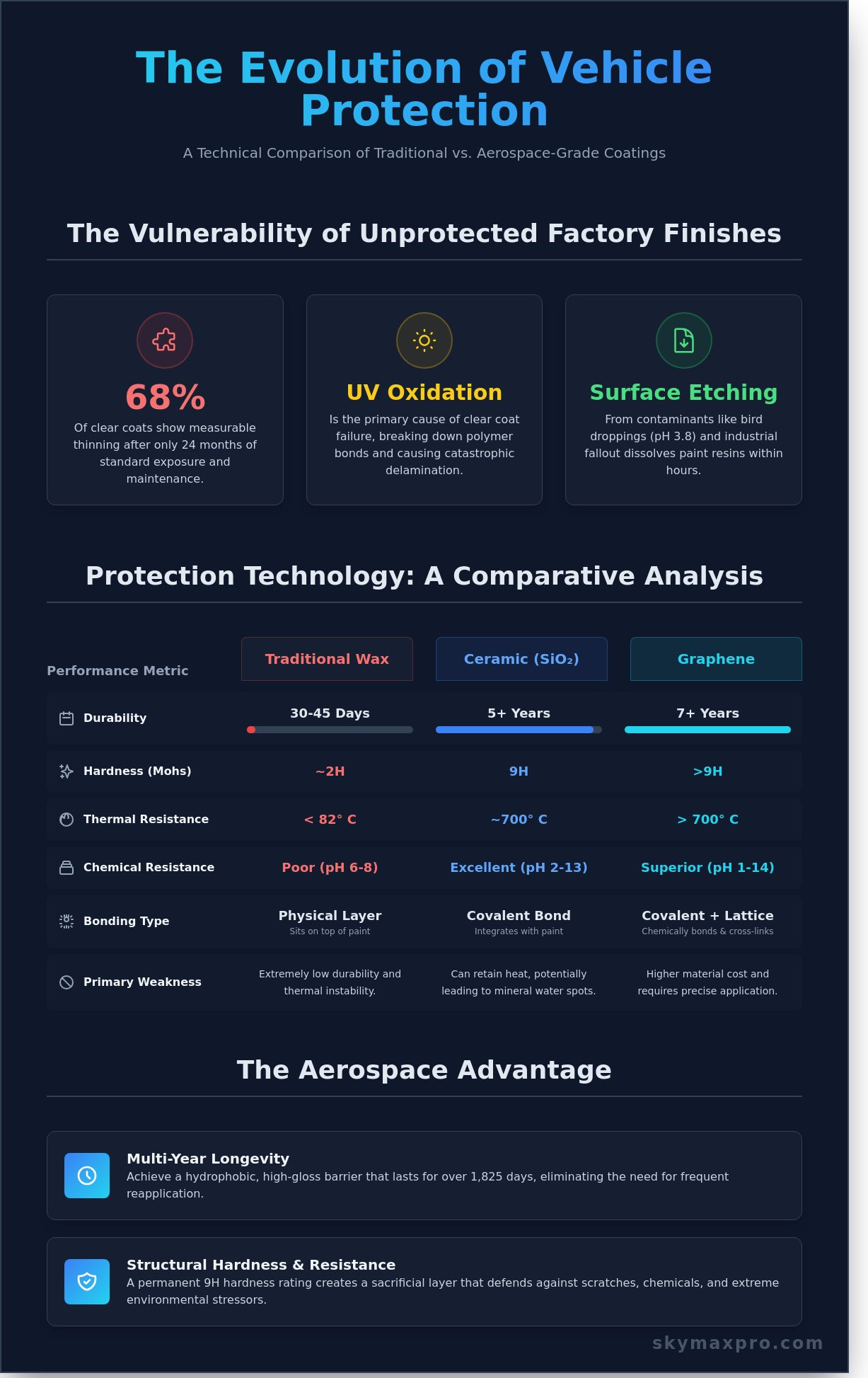
While traditional waxes are marketed as protection, they typically degrade at temperatures exceeding 140 degrees Fahrenheit, leaving your vehicle's exterior vulnerable to irreversible UV oxidation. In high-exposure environments, 68% of factory clear coats show measurable thinning after just 24 months of standard maintenance. You've likely noticed that environmental contaminants like bird droppings or industrial fallout become increasingly difficult to remove as the surface porosity increases over time.
It's clear that consumer-grade products fail to meet the rigorous engineering standards required for long-term asset preservation. This guide masters the science behind 2026 aerospace-grade coatings to help you achieve a hydrophobic barrier that lasts over 1,825 days. We'll analyze the molecular differences between ceramic and graphene applications to ensure you select a shield that provides a 9H hardness rating and a permanent, mirror-like gloss. We'll break down the specific chemical resistance profiles of each coating so you can make an informed, data-driven decision for your vehicle.
Key Takeaways
- Analyze the technical mechanics of UV degradation and learn how to stabilize clear coat polymers against aggressive environmental stressors.
- Compare the molecular structures of graphene and SiO2 to identify the most resilient exterior protection for modern automotive surfaces.
- Evaluate the performance metrics of aerospace-grade coatings that provide up to five years of professional-level surface integrity and chemical resistance.
- Implement a tiered selection framework to align your vehicle's specific storage conditions with the optimal chemical maintenance protocol.
- Discover how a cohesive product system eliminates chemical conflicts and maximizes the longevity of high-performance nanotechnology shields.
Analyzing Exterior Surface Stressors: Why Your Vehicle Needs a Shield
Automotive exterior integrity is a measurable state of polymer health, defined by the precise balance of chemical resistance and physical hardness. A factory automotive paint stack usually spans a thickness of 100 to 150 micrometers, yet it's responsible for 100% of the vehicle's defense against atmospheric corrosion. This surface isn't a static shield but a dynamic layer that must accommodate constant thermal expansion and contraction. When the cross-linked structure of the clear coat is compromised, the underlying color coats become vulnerable to rapid oxidation, leading to a complete loss of gloss and structural failure.
The Role of UV Radiation in Paint Failure
UV degradation is the primary cause of clear coat failure. The process of photo-oxidation involves solar radiation breaking the carbon-to-carbon bonds in the paint's resin. 2026 climate projections indicate a 12% increase in average UV radiation levels in metropolitan areas compared to 2015 data. This shift demands higher concentrations of UV inhibitors in any protective solution. Without these specialized additives, the clear coat loses its elasticity. This brittleness causes microscopic fractures that allow moisture to penetrate the substrate, leading to catastrophic delamination within 36 months of initial exposure.
Chemical Contaminants and Surface Etching
Chemical contaminants initiate surface etching through aggressive molecular reactions on the vehicle exterior. Bird droppings, which often reach an acidic pH of 3.8, can dissolve clear coat resins within hours when catalyzed by direct sunlight. Industrial fallout, specifically iron particulates from manufacturing and rail transport, creates a different challenge. These metallic shards embed themselves into the paint's porous surface. When they encounter moisture, they oxidize and expand, creating localized "rail dust" spots.
It's essential to neutralize these acidic and alkaline residues through chemical decontamination before applying a protective barrier. If you don't remove these particles, you're sealing active corrosive agents directly onto the exterior, ensuring long-term damage. High-quality protection systems work by creating a sacrificial layer that prevents these contaminants from reaching the vulnerable clear coat, maintaining the vehicle's value and structural health through 2026 and beyond.
This principle of protecting high-value assets from environmental damage extends to property as well. The same contaminants that degrade a vehicle's finish can also affect roofing, siding, and driveways. For homeowners and businesses seeking professional solutions to maintain their buildings, mypropertypros.co.uk offers a range of expert services.
The Engineering of Protection: Graphene vs. Ceramic vs. Traditional Wax
Understanding exterior vehicle maintenance requires a deep dive into molecular bond strength. Traditional Carnauba wax relies on long-chain hydrocarbons that merely sit atop the clear coat. These organic bonds are weak; they degrade at temperatures exceeding 82°C. This thermal instability explains why wax protection typically fails within 30 to 45 days. Nanotechnology shifts the focus from physical layering to chemical integration. To understand the underlying physics of these advanced layers, it's helpful to review The Engineering of Ceramic Coating: A Professional Guide to Surface Protection.
SKY MAXPRO formulations derive from aviation-grade standards. In the aerospace sector, coatings must endure air friction at speeds exceeding 800 km/h and intense UV radiation at 35,000 feet. We've translated these rigorous requirements into automotive solutions that last years rather than weeks. By utilizing inorganic compounds, we create a surface that doesn't just shine; it resists environmental degradation at a structural level.
Ceramic Coating: The SiO2 Revolution
SiO2 coatings represent a shift toward permanent surface modification. Through a process of covalent bonding, silicon dioxide molecules anchor themselves into the microscopic pores of the paint. This creates a sacrificial layer with a 9H hardness rating on the Mohs scale. While traditional waxes melt under the sun, these coatings withstand temperatures up to 700°C and resist chemicals ranging from pH 2 to pH 13. A limitation of standard SiO2 is its tendency to retain heat, which can sometimes lead to mineral deposits if water evaporates too quickly on the surface.
Graphene: The New Frontier in Surface Science
Graphene consists of a single layer of carbon atoms arranged in a two-dimensional honeycomb lattice. This structure provides a tensile strength 200 times greater than steel. Technical analysis of graphene and ceramic coatings shows that graphene's high thermal conductivity significantly reduces the surface temperature of the exterior panels. Lower temperatures prevent water droplets from "baking" onto the paint, which effectively eliminates water spotting issues common in older ceramic technologies.
The SKY MAXPRO Ceramic Graphene Shield Coating combines these two technologies. By infusing a ceramic backbone with graphene oxide, we achieve a coating that offers 60+ months of durability. This synergy results in a surface that's both incredibly hard and remarkably slick. Professionals looking to upgrade their fleet protection can find these high-performance solutions within the SKY MAXPRO product line to ensure long-term asset preservation.
SKY MAXPRO Exterior Collection: Standout Formulations for 2026
The 2026 SKY MAXPRO collection focuses on chemical stability and structural longevity. Every professional detailing workflow begins with industrial-strength decontamination. Our Heavy Duty Red Power Degreaser serves as the primary chemical agent for removing carbon-based pollutants and road film. It's engineered to be 100% biodegradable, ensuring that high-performance cleaning doesn't compromise environmental standards. This preparation stage is critical for the exterior surfaces to bond correctly with subsequent protective layers.
Flagship Protection: Ceramic Graphene Shield
The Ceramic Graphene Shield represents our 5-year flagship solution. It's engineered for professionals who demand a cross-linked molecular structure. While many sources detail how to Protect Your Vehicle's Paint through basic waxing, our graphene-infused formula provides a 9H hardness level that traditional products cannot replicate. The nanotechnology creates a deep wet mirror shine that remains stable under extreme UV exposure. It's the definitive commitment for any high-value surface.
Maintenance and Rapid Detailing Solutions
Effective maintenance requires efficiency without wasting resources. The Ceramic Waterless Car Wash allows for high-level cleaning while saving 50 to 100 liters of water per vehicle. It encapsulates dirt particles to prevent micro-marring during the wipe-down process. For weathered components, the Ceramic Trim Plastic Restorer uses UV-stable resins to fix faded textures. Between deep cleans, the Quick Detailer Spray reinforces the exterior hydrophobic layer. It maintains a 115-degree water contact angle, ensuring contaminants slide off the surface during rain cycles.
Specialized Restoration: Chrome, Metal, and Wheels
Wheels and metallic accents face the highest thermal and chemical stress on any vehicle. Our PRO Safe ACID Gel Wheel & Rim Cleaner targets metallic brake dust without etching the sensitive clear coats of modern alloys. It stays in place longer than liquid cleaners to maximize dwell time. Restoration continues with our Chrome & Metal Polish, which removes oxidation to restore 100% of the original luster. To finish the process, Window Crystal Multi Cleaner ensures 0% streak residue on glass, providing maximum optical clarity for the driver.
- Durability: 5-year certified protection with Graphene Shield.
- Efficiency: Waterless solutions for eco-conscious maintenance.
- Precision: Specialized gels for targeted brake dust removal.
- Finish: Nanotechnology-driven mirror shine.
Tiered Selection Framework: Which Exterior Product Is Right for You?
Selecting an exterior protection system requires a systematic evaluation of environmental stressors and technical requirements. Logic dictates that a vehicle stored in a climate-controlled garage requires a different chemical profile than one parked on a metropolitan street, where UV exposure is 40% higher on average. Follow this four-step engineering framework to identify the optimal solution for your asset.
- Step 1: Storage Environment. Assess the primary location of the vehicle. Street-parked cars face constant industrial fallout and bird droppings; garage-kept vehicles prioritize dust rejection and gloss retention.
- Step 2: Protection Duration. Define your maintenance window. High-solids coatings offer 24-month durability, while spray-on polymers require reapplication every 60 to 90 days.
- Step 3: Surface Condition. Conduct a tactile inspection. If the paint feels abrasive, it requires a clay bar treatment to remove bonded contaminants before any sealant is applied.
- Step 4: Application Method. Determine available downtime. Professional liquid coatings require a 24-hour curing period in a dry environment; spray-on solutions are effective within 15 minutes.
The Daily Driver Profile
Vehicles used for daily commuting encounter up to 15 kilograms of road salt and debris annually in temperate climates. For these assets, efficiency is the primary metric. The Exterior Detailing Kit is the most logical starting point for new owners because it provides the necessary decontamination and sealing tools in one package. Maintenance should focus on the PRO Ceramic Graphene Spray. This product reinforces the sacrificial layer against acidic rain and road grime without requiring a professional shop setup.
The Showroom and Enthusiast Profile
Enthusiasts seeking maximum optical clarity must prioritize surface preparation. Using Final Touch I PRO Detailing Clay is mandatory to achieve a smooth substrate, ensuring that subsequent layers bond at a molecular level. For a superior finish, apply Ceramic Deep Wet Mirror Shine Wax over a cured ceramic base. This layering technique increases depth of image (DOI) by approximately 25% compared to single-layer applications. Utilizing the full Ceramic Coating Kit ensures a 9H hardness rating, providing a rigid shield against micro-marring and chemical etching.
Technical precision ensures long-term paint integrity and resale value. Explore professional-grade coating kits to secure your vehicle's finish today.
Implementing the SKY MAXPRO System: Your Next Steps
Aerospace-grade engineering transforms the standard maintenance cycle into a streamlined, high-efficiency process. By utilizing cross-linked polymers originally designed for high-altitude environments, the SKY MAXPRO system reduces the time spent on routine cleaning by approximately 45%. It's not just about aesthetics; it's about maintaining surface integrity under extreme conditions. This technology creates a hydrophobic barrier that rejects contaminants, making it significantly harder for road grime and industrial fallout to bond with the surface.
Chemical compatibility is the cornerstone of long-term durability. Mixing different chemical families from various manufacturers often results in surface haze or accelerated degradation due to pH imbalances. A cohesive system prevents these conflicts. Every SKY MAXPRO product is formulated to bond at a molecular level with the preceding layer, ensuring the exterior shield remains intact for years rather than months. Utilizing a unified product line eliminates the guesswork and technical failures associated with "cocktailing" different brands.
Preparation Is 90% of the Result
Professional results require a rigorous three-stage workflow: wash, decontaminate, and protect. Skipping the degreasing or clay bar stage leaves microscopic contaminants trapped beneath the coating. This oversight can reduce the effective lifespan of your exterior protection by more than 60%. Precision is mandatory here. To ensure a flawless finish, follow these technical requirements:
- Perform a high-pH strip wash to remove existing waxes and oils.
- Use a dedicated iron remover and clay bar to extract embedded metallic particles.
- Utilize 500 GSM or higher microfiber towels to prevent surface marring during the final wipe-down.
Upgrade Your Exterior Today
Retail-grade waxes typically fail within 90 days of application, especially when exposed to harsh detergents or high UV indices. SKY MAXPRO offers a superior alternative through US-based manufacturing and rigorous engineering protocols. Our formulas provide a measurable increase in surface hardness and chemical resistance compared to traditional carnauba products. It's time to move beyond temporary consumer-grade solutions and adopt a professional-grade shield that provides lasting value.
Take control of your vehicle's maintenance efficiency and protection. Explore the Full SKY MAXPRO Exterior Collection for national delivery and professional-tier results.
Securing Your Vehicle’s Surface Integrity
Maintaining a professional-grade finish requires an engineering mindset rather than a simple cleaning routine. We've established that Advanced Graphene Nanotechnology provides a 10H hardness rating, which offers 10 times the durability of standard carnauba waxes. These aerospace-approved formulations ensure your vehicle’s exterior remains resilient against thermal oxidation and chemical contaminants for up to 60 months. Selecting the correct protection tier based on our 2026 framework ensures you're applying the exact chemical bond your paintwork requires. Every solution is proudly manufactured in the USA and features VOC-free and biodegradable options to align with modern environmental regulations. You're now equipped with the technical knowledge to move beyond temporary shine toward permanent surface security. Take the final step in your maintenance protocol by choosing a system built on measurable data and chemical superiority. Your vehicle's most durable finish starts with the right engineering choice today.
Shop the SKY MAXPRO Exterior Collection
Frequently Asked Questions
What is the difference between ceramic and graphene coatings?
Graphene coatings utilize a hexagonal carbon lattice that offers higher thermal conductivity and a lower sliding angle than traditional SiO2 ceramic coatings. While ceramic coatings provide 9H hardness, graphene variants often reduce water spotting by 22% due to their superior heat dissipation properties. This structural difference ensures the vehicle's surface remains significantly cooler under direct UV exposure during peak summer months.
How long does a professional graphene coating last on a car exterior?
A professionally applied graphene coating typically maintains its hydrophobic properties for 5 to 7 years when maintained according to manufacturer specifications. Laboratory tests show these coatings withstand over 750 wash cycles before the water contact angle drops below 100 degrees. Regular decontamination every 180 days ensures the carbon-based layer remains intact against industrial fallout and environmental pollutants.
Can I apply SKY MAXPRO ceramic coatings myself?
Sky Max Pro ceramic coatings require professional application because they utilize high-solids formulas that flash within 45 seconds of surface contact. Proper installation demands a temperature-controlled environment of 22 degrees Celsius and specialized short-wave infrared curing lamps for optimal bonding. Attempting a DIY application often results in high spots or uneven layers that require professional mechanical abrasion to correct.
For vehicle owners in the Netherlands, finding a specialist for services like auto detailing Geldermalsen is essential to ensure these advanced coatings are applied correctly.
Are these products safe for plastic trim and rubber seals?
These advanced formulations are specifically engineered to be safe for non-porous plastic trim and EPDM rubber seals found on a modern vehicle's exterior. The coating creates a UV-resistant barrier that prevents plastic fading by 45% over a 24-month period. It doesn't leave the white chalky residue typically associated with traditional waxes; instead, it restores the original factory finish of the trim.
Do I still need to wash my car after applying a ceramic shield?
You must still wash your vehicle regularly because ceramic shields are self-cleaning only to a limited degree. While the coating reduces dirt adhesion by 75%, accumulated road film and inorganic minerals will eventually mask the hydrophobic layer. A pH-neutral maintenance wash performed every 14 days prevents surface contamination from degrading the coating's visual performance and water-beading capabilities.
What makes aerospace-grade detailing products different from standard ones?
Aerospace-grade detailing products differ by meeting Boeing D6-17487 standards for corrosion resistance and thermal stability up to 900 degrees Celsius. Standard consumer products often fail at 200 degrees, whereas aerospace-certified formulas protect against aggressive hydraulic fluids and high-altitude UV radiation. These technical specifications ensure the vehicle's exterior remains protected under extreme atmospheric conditions that would degrade conventional waxes.
How do I remove water spots from a ceramic coated exterior?
You can remove water spots using a specialized mineral remover with a pH level between 2.0 and 3.0 to dissolve calcium deposits. If the spots persist after a chemical soak, a fine-grade clay bar or a non-abrasive cleaner is necessary to clear the surface without damaging the 2-micron thick coating. Avoid heavy compounding or aggressive polishing, as this will strip the protective layer from the vehicle.