

For a black car owner, the "clean for five minutes" syndrome isn't just a minor annoyance; it's a fundamental failure of traditional surface protection. You understand the specific frustration of watching micro-marring and swirl marks reappear almost immediately after a wash, often caused by the extreme heat absorption and high surface energy characteristic of dark automotive finishes. Maintaining that pristine, factory-fresh appearance requires more than just frequent cleaning; it demands a shift toward professional-grade surface engineering.
Discovering the best way to protect black car paint involves moving away from temporary organic waxes and adopting advanced nanotechnology designed for long-term durability. We promise to show you how to utilize graphene-based shields and structured maintenance protocols to eliminate visible scratches and preserve a deep, wet-look mirror finish. This guide provides a technical overview of how to achieve high hydrophobicity and UV resistance, ensuring your vehicle remains protected against environmental degradation while significantly reducing the effort required for routine maintenance through the application of high-hardness coatings.
Key Takeaways
- Identify how thermal absorption and the magnification effect accelerate paint degradation, requiring a shift from basic cleaning to advanced surface engineering.
- Evaluate the structural limitations of traditional waxes and learn why graphene nanotechnology represents the best way to protect black car paint against environmental stressors.
- Explore the chemical synergy of SiO2 and graphene in the Ceramic Graphene Shield Coating to establish a semi-permanent, high-hardness bond with the clear coat.
- Implement a professional maintenance protocol using specialized tools like PRO Safe ACID Gel Wheel & Rim Cleaner to mitigate the risk of physical micro-marring.
- Leverage the SKY MAXPRO Engineering Standard to maintain a deep, mirror-like finish through superior hydrophobicity and professional-grade decontamination techniques.
The Vulnerability of Black Paint: Why Standard Protection Fails
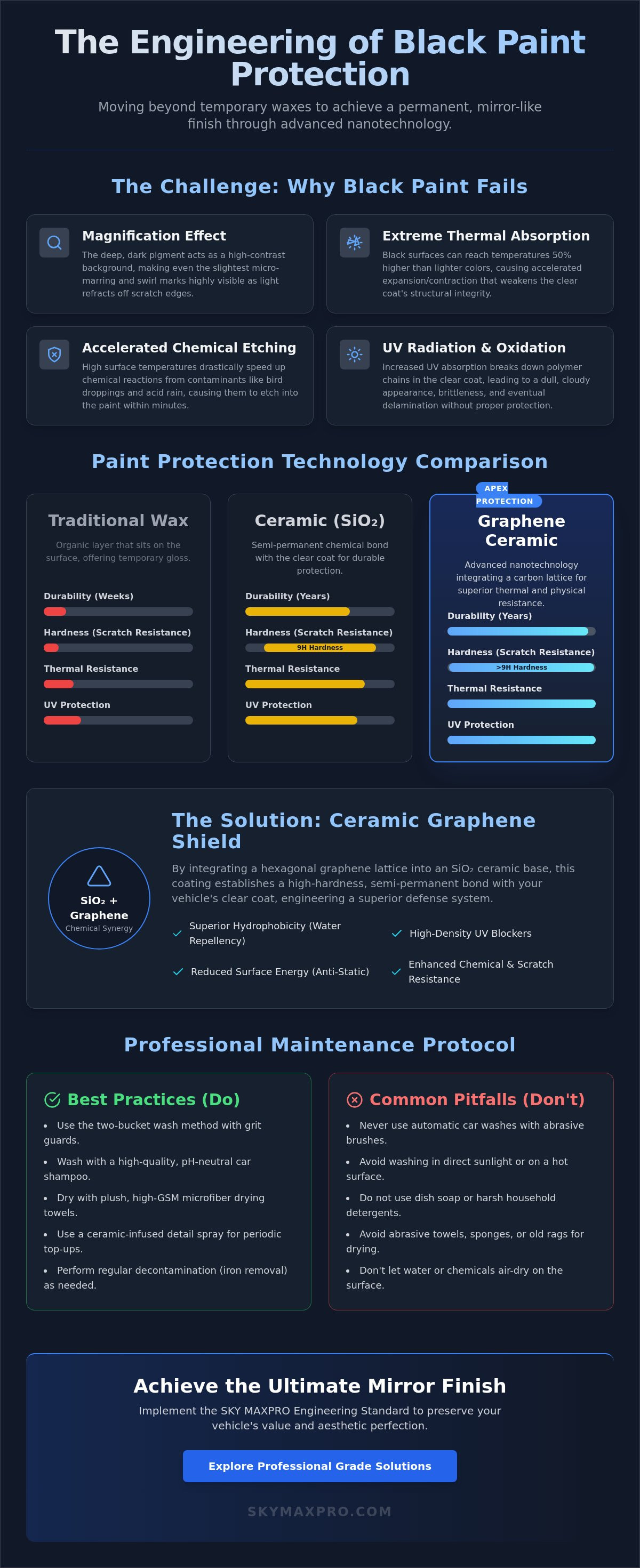
Black paint isn't inherently softer than other colors, but its optical properties make it the most difficult surface to maintain. The dark pigment absorbs nearly the entire visible light spectrum, creating a high-contrast background that reveals micro-marring and swirl marks that would be invisible on lighter shades. This magnification effect occurs because light refracts off the edges of shallow scratches in the clear coat, highlighting the damage against the deep black substrate. Understanding the basic composition of Automotive paint is essential here; the clear coat acts as the final sacrificial layer, and on black vehicles, it's under constant physical and thermal stress. It's this visibility of defects that makes finding the best way to protect black car paint so critical for long-term aesthetics.
Thermal absorption represents a significant engineering challenge for dark finishes. While white paint reflects solar energy, black surfaces can reach temperatures up to 50% higher than white panels under direct sunlight. These extreme temperatures cause the clear coat to expand and contract at an accelerated rate. This constant thermal cycling weakens the paint's structural integrity over time. High surface temperatures also accelerate the chemical activity of environmental contaminants. Bird droppings or acid rain that might sit harmlessly on a cool panel will etch into a heated black clear coat within minutes. This chemical sensitivity is why traditional protection often falls short.
Standard carnauba waxes often fail because they weren't engineered for these thermal extremes. Organic waxes have a relatively low melting point and begin to soften or evaporate at temperatures frequently reached by black hoods and roofs. Once the wax degrades, the paint is left entirely vulnerable to the elements. For a black vehicle, relying on wax is a temporary solution that fails exactly when the paint needs protection the most.
The Role of Surface Energy in Contamination
High surface energy on untreated black paint creates a "static cling" effect that attracts dust and airborne particulates immediately after washing. Standard consumer-grade products don't significantly lower this surface energy, meaning contaminants bond more easily to the finish. Professional-grade formulations focus on reducing surface energy to create a slick, low-friction environment. This technical approach is vital for black cars, as it prevents the immediate dust accumulation that ruins a fresh detail.
UV Radiation and Oxidation Risks
Dark vehicles face an accelerated rate of clear coat oxidation due to increased UV absorption. UV radiation breaks down the polymer chains within the clear coat, leading to a dull, cloudy appearance. Without high-quality UV inhibitors, the clear coat becomes brittle, eventually leading to failure and delamination. Implementing a shield with high-density UV blockers is the first line of defense for maintaining the best way to protect black car paint and ensuring a long-term mirror finish in high-UV environments.
Comparing Protection Technologies: Wax vs. Ceramic vs. Graphene
Selecting the correct protective medium requires a rigorous comparison of molecular stability and surface hardness. While many owners seek basic advice like 5 Ways To Protect Your Vehicle's Paint, engineers focus on the chemical bond and thermal resistance. Traditional carnauba wax provides a temporary aesthetic improvement but lacks structural integrity. It sits on top of the clear coat rather than bonding with it. As established, black panels reach extreme temperatures that quickly degrade these organic layers; often within weeks of application. Synthetic paint sealants offer improved longevity over wax, yet they provide negligible scratch resistance. They are essentially a polymer film with limited cross-linking capabilities.
Ceramic coatings utilize Silicon Dioxide (SiO2) to create a semi-permanent layer. These coatings achieve a 9H hardness on the Pencil Scale, offering significant resistance to chemical etching and environmental contaminants. However, graphene represents the current apex of surface engineering. By integrating a hexagonal carbon lattice into a ceramic base, these coatings provide the best way to protect black car paint by addressing the specific thermal and static challenges inherent to dark finishes. This transition from SiO2 to graphene-infused technology represents a significant leap in functional durability.
The Graphene Advantage for Black Vehicles
Graphene's high thermal conductivity allows for better heat dissipation. This is critical for reducing the surface temperature of dark panels and directly addresses the "water spotting" issue common with standard ceramics, where heat causes mineral deposits to bake into the coating. High contact angles, often exceeding 110 degrees, create extreme hydrophobicity. This ensures that water and contaminants are shed with minimal surface friction. The increased tensile strength of the carbon lattice also provides a superior barrier against the micro-marring that typically occurs during the wash process.
Cost vs. Longevity Analysis
While a professional ceramic coating application can range from $600 to over $2,800, the long-term ROI is substantial. Data indicates that these coatings can reduce annual detailing costs by 40-60% compared to traditional waxing protocols. For the DIY enthusiast, a high-quality Ceramic Graphene Shield Coating offers an industrial-grade solution that bridges the gap between consumer sprays and professional applications. Choosing "aerospace-approved" formulations ensures the product has been tested against the most rigorous atmospheric conditions, providing the best way to protect black car paint over a multi-year lifecycle rather than a multi-week one.
Implementing the Ceramic Graphene Shield Solution
The transition from standard ceramic coatings to a hybrid graphene matrix represents a significant advancement in surface science. The Ceramic Graphene Shield Coating utilizes a sophisticated molecular structure where Silicon Dioxide (SiO2) serves as the foundational anchor, while a reduced graphene oxide lattice provides the functional reinforcement. This hybrid approach creates a dense, cross-linked matrix that bonds at a molecular level with the clear coat. Unlike consumer-grade sprays that rely on weak physical adhesion, this professional-grade formulation establishes a semi-permanent barrier. It's widely considered the best way to protect black car paint because it offers multi-year durability that survives aggressive chemical cleaners and environmental pollutants that would strip away lesser products.
The visual results of this engineering are particularly striking on dark pigments. Graphene's specific refractive index enhances the depth and clarity of black paint, producing a crisp, high-definition "wet look" mirror finish. This isn't the greasy, temporary shine associated with older carnauba waxes; it's a permanent enhancement of the paint's optical properties. Beyond the aesthetics, the coating provides a formidable defense against industrial fallout, road salt, and harsh solvents. These contaminants are prevented from reaching the clear coat, ensuring the underlying paint remains factory-fresh even in harsh industrial or coastal environments.
Aerospace-Grade Engineering for the Road
Surface protection technologies have migrated from aviation to the automotive sector to meet the demand for extreme durability under high-stress conditions. Modern formulations are engineered to be fully compatible with contemporary automotive clear coat chemistry, which is often thinner and more sensitive than older paint systems. We prioritize VOC-free and biodegradable formulations to ensure the application process meets modern environmental standards without compromising on performance. This shift toward sustainable, high-performance chemistry represents the future of professional detailing, where technical superiority is achieved through clean, efficient science.
Professional Application Protocol
Achieving an optimal molecular bond requires a meticulous preparation sequence that cannot be bypassed. Paint correction is a non-negotiable prerequisite; applying a permanent shield over existing swirl marks will lock those defects under the coating, making them permanent. The decontamination phase is equally critical for the best way to protect black car paint. Utilizing Final Touch I PRO Detailing Clay allows for the mechanical removal of bonded contaminants, such as iron particles or tree sap, that standard washing cannot eliminate. Once the substrate is perfectly smooth, environmental factors like humidity and ambient temperature must be monitored during the application. Proper curing allows the SiO2-Graphene matrix to fully cross-link, ensuring the coating reaches its rated 9H hardness and maximum hydrophobic potential.
Maintenance Protocols: How to Wash a Protected Black Car
Establishing a rigorous maintenance cycle is the best way to protect black car paint after a professional coating has been applied. The primary objective of this protocol is the "No-Touch" philosophy, which seeks to minimize physical contact with the paint surface. Even with a 9H hardness rating, mechanical friction from traditional sponges or brushes can introduce micro-marring over time. By utilizing high-pressure rinses and chemical decontamination, you reduce the reliance on physical agitation, which is the leading cause of swirl marks on dark finishes.
Chemical safety is equally important for preserving the integrity of the graphene matrix. You must use pH-neutral car washes that don't contain harsh degreasers or waxes that could interfere with the coating's hydrophobic properties. For specialized areas like wheels, PRO Safe ACID Gel Wheel & Rim Cleaner provides an engineered solution that targets metallic fallout and brake dust without compromising the surrounding finish. This targeted approach ensures that aggressive contaminants are removed before they can bond to the surface or migrate to the paint panels during the wash process.
The drying phase is where many maintenance routines fail. To prevent water spots and marring, use filtered compressed air or a high-velocity blower to remove standing water from the surface. If physical drying is necessary, only high-GSM (grams per square meter) microfiber towels should be used. These towels are designed to pull any remaining particulates deep into the pile, away from the paint, significantly reducing the risk of surface scratches. Consistent adherence to these technical steps is the best way to protect black car paint and maintain its structural clarity.
Waterless and Rinseless Options
For light dust accumulation between deep cleans, a Ceramic Waterless Car wash provides a safe, high-lubricity alternative to a full hose wash. The formulation encapsulates dust particles, allowing them to be wiped away without direct contact with the clear coat. This method is particularly effective for black cars stored in controlled environments where heavy mud or road salt isn't present. Lubrication remains your primary defense against scratching during these quick maintenance sessions.
Topping and Maintaining the Shine
Even the most durable coatings benefit from periodic reinforcement. Utilizing a PRO Ceramic Graphene Spray Coating as a quarterly maintenance booster replenishes the sacrificial layer and restores maximum hydrophobicity. For immediate aesthetic enhancement, a Quick Detailer Spray with Ceramic High Gloss Finish removes light fingerprints and adds a sacrificial layer of lubricity. If mineral deposits do occur, you should address them immediately with a specialized Water Spot Remover to prevent permanent etching into the graphene shield.
Maintain your vehicle's mirror finish with the Exterior Detailing Kit, designed for professional-grade surface care.
The SKY MAXPRO Engineering Standard for Automotive Care
The SKY MAXPRO Engineering Standard represents a commitment to chemical precision and operational efficiency. Identifying the best way to protect black car paint requires an understanding of chemical stability and industrial manufacturing standards. Our Ceramic Graphene Shield Coating is the industry benchmark because it bridges the gap between aerospace technology and automotive utility. Every product in our catalog is US-manufactured, ensuring that the formulations meet rigorous performance benchmarks that generic retail brands cannot replicate. This domestic control over the manufacturing process allows us to provide specialized detailing supplies that are both high-performance and eco-friendly.
Our approach focuses on comprehensive systems rather than isolated products. Whether you are performing a single-vehicle transformation or managing high-volume work through our wholesale and bulk distribution, the engineering remains consistent. Our kits are designed to provide a logical progression from decontamination to final shielding. By utilizing high-performance nanotechnology, we ensure that every surface of the vehicle, not just the paint, receives professional-grade protection. This systematic approach reduces the margin for error and maximizes surface longevity.
Selecting the Right Kit for Your Vehicle
The Ceramic Coating Kit contains the specific sequence of products needed for a professional transformation. This includes the preparatory agents and the final graphene shield. For owners who desire an even deeper aesthetic impact, integrating the Ceramic Deep Wet Mirror Shine Wax Sealant provides an additional layer of optical clarity. This specific sealant is engineered to work in synergy with our graphene coatings, enhancing the "wet look" without compromising the underlying protection. Professionals often choose our bulk options to maintain this standard across multiple assets, ensuring a consistent level of surface hardness and hydrophobicity across their entire fleet.
Beyond the Paint: Total Surface Protection
A truly protected vehicle requires a holistic approach to all exterior substrates. Faded exterior components can be restored and protected using the Ceramic Trim Plastic Restorer, which utilizes similar nanotechnology to bond with porous plastic surfaces. Glass surfaces also require specialized care to maintain visibility and repel water. The Window Crystal Multi Cleaner provides a streak-free finish while leaving a microscopic protective layer. For a deeper technical understanding of these processes, you can explore The Engineering of Ceramic Coating: A Professional Guide to Surface Protection. By following this engineering standard, you ensure that every square inch of your vehicle is equipped to resist environmental degradation, providing the best way to protect black car paint and all adjacent surfaces for the long term.
Achieving Permanent Surface Integrity
Maintaining a black automotive finish at a professional standard requires moving beyond superficial treatments. You've seen how thermal absorption and light refraction make dark pigments uniquely vulnerable to degradation and visible micro-marring. By transitioning to a graphene-infused surface shield, you address these engineering challenges at the molecular level. This technology provides the necessary heat dissipation and 9H hardness to resist environmental etching and physical wear, ensuring the clear coat remains structurally sound.
Implementing a structured maintenance protocol alongside aerospace-approved nanotechnology is the best way to protect black car paint for the long term. Our formulations are manufactured in the USA to ensure consistent quality and professional-grade durability. This systematic approach transforms your vehicle's maintenance from a recurring struggle into a predictable, high-efficiency process. You can now preserve that deep, wet-look finish without the constant risk of surface damage or premature coating failure.
Secure your vehicle's finish with our Ceramic Graphene Shield Coating today. We're committed to providing the technical solutions required to keep your vehicle in showroom condition regardless of environmental stressors.
Frequently Asked Questions
Is graphene better than ceramic for black cars?
Graphene is superior for black vehicles because its hexagonal carbon lattice provides higher thermal conductivity and lower surface energy than standard ceramic. These properties are critical for dark finishes that absorb extreme heat. By dissipating surface temperature more efficiently, graphene reduces the risk of water spotting and chemical etching, which are the most common failure points for traditional SiO2 coatings on black panels.
How often should I apply protection to my black paint?
The application frequency depends on the technology, but a professional-grade Ceramic Graphene Shield Coating provides up to 5 years of structural protection. If you prefer spray-based maintenance, applying a booster every 6 to 12 months is the best way to protect black car paint and maintain its hydrophobic performance. This schedule ensures the sacrificial layer remains thick enough to resist environmental degradation and UV radiation.
Can I apply a graphene coating myself at home?
You can achieve professional results at home using a Ceramic Coating Kit if you strictly follow the decontamination and preparation sequence. The process requires a controlled environment and a clean substrate, often involving the use of detailing clay to remove bonded particulates. Without proper paint correction and surface cleaning, the coating won't bond effectively to the clear coat, which significantly reduces its rated longevity.
Will a ceramic coating prevent all scratches on a black car?
No coating can prevent all scratches, but a 9H hardness rating provides significant resistance against micro-marring and swirl marks. These coatings act as a sacrificial barrier that is substantially harder than the factory clear coat. While they protect the paint during routine maintenance and from light environmental abrasion, they aren't a solution for deep scratches caused by heavy impacts or aggressive physical contact.
What is the best way to remove water spots from a black finish?
The most effective method is using a specialized Water Spot Remover as soon as the mineral deposits are identified. These chemical formulations dissolve calcium and magnesium deposits without the need for abrasive polishing. Prompt removal is vital for black cars because high surface temperatures can cause these minerals to etch permanently into the clear coat or coating within a few hours of sun exposure.
How do I maintain the 'wet look' on black paint without constant waxing?
Maintaining a deep mirror finish is achieved through the permanent optical clarity of graphene nanotechnology rather than temporary oils. Once a graphene shield is cured, the paint's depth is enhanced at a molecular level. You can refresh this appearance by using a Quick Detailer Spray with Ceramic High Gloss Finish, which removes light dust and restores the surface tension that creates a crisp, reflective shine.
Is a waterless car wash safe for black paint with a ceramic coating?
A Ceramic Waterless Car wash is safe for black paint when used to remove light dust or fingerprints between deep cleaning cycles. These products utilize high-lubricity polymers to encapsulate contaminants, allowing them to be wiped away without introducing scratches. This method is the best way to protect black car paint for owners who don't have access to a hose or need a rapid maintenance solution without sacrificing surface safety.
Why does my black car get so hot, and can a coating help?
Black paint absorbs nearly the entire visible light spectrum, converting that energy into heat and raising surface temperatures up to 50% higher than white panels. While a coating doesn't change the color's light absorption, graphene's high thermal conductivity helps dissipate that heat across the panel. This prevents localized "hot spots" that would otherwise accelerate clear coat oxidation and the chemical etching of environmental contaminants.