

Most vehicle owners view surface protection as a luxury aesthetic upgrade, but from a strictly engineering perspective, it's a high-performance chemical barrier designed for long-term asset preservation. It's understandable to feel frustrated by the massive price gap when evaluating DIY vs professional ceramic coating cost, especially when retail marketing claims for a basic kit often mirror those of a multi-stage professional installation. You aren't just paying for labor; you're investing in specific chemical concentrations and surface preparation protocols that dictate the coating's structural integrity.
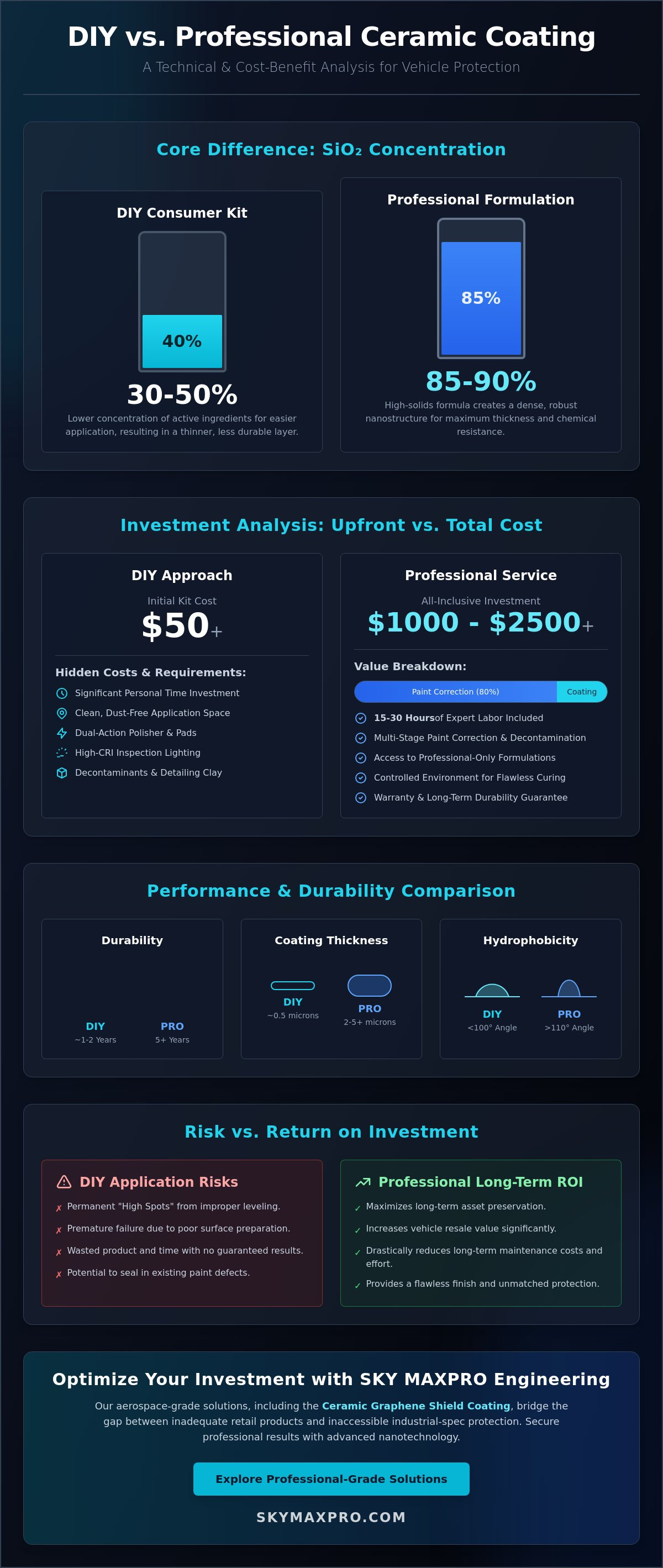
This article provides an objective, data-driven breakdown of the technical trade-offs between consumer-grade applications and industrial-spec services. We'll examine how SiO2 concentrations, ranging from 30% in retail kits to over 85% in professional formulations, impact the annualized return on your investment. By the end of this guide, you'll have a clear cost-benefit matrix and a decision framework to protect your vehicle's finish without overpaying for redundant features or risking permanent application errors. We'll focus on the measurable metrics of durability and chemical resistance to ensure your choice aligns with your long-term maintenance strategy.
Key Takeaways
- Understand the molecular distinction between consumer-grade SiO2 kits and professional nanotechnology formulations that ensure superior thickness and structural cross-linking.
- Analyze the comprehensive DIY vs professional ceramic coating cost through a 5-year ROI matrix that accounts for labor, specialized equipment, and durability cycles.
- Identify the technical risks of surface high spots and why professional-grade paint correction represents 80% of the total labor value in a successful installation.
- Learn how high-performance surface protection directly influences vehicle resale value and long-term maintenance efficiency in the 2026 automotive market.
- Discover how SKY MAXPRO’s aerospace-grade solutions, including the Ceramic Graphene Shield Coating, bridge the gap between retail products and industrial-spec protection.
Understanding the Cost Components of Automotive Surface Protection
The financial barrier to entry for vehicle protection varies significantly because the term "protection" covers a broad spectrum of chemical engineering. Traditional waxes and sealants function as sacrificial layers with limited durability. Modern nanotechnology solutions, however, utilize inorganic, non-metallic materials to create a semi-permanent bond with the clear coat. When evaluating the DIY vs professional ceramic coating cost, you've got to account for three primary variables: the chemical grade of the materials, the specialized infrastructure required for application, and the intensive labor hours dedicated to paint correction.
Professional service pricing often appears high because it includes significant overhead for surface preparation. A professional installation isn't just about applying the liquid; it's about the 15 to 30 hours of labor spent removing microscopic defects. Research indicates that paint correction alone can add between $300 and $1,000 to the total invoice. Without this step, the coating won't bond effectively, leading to premature failure. In contrast, a basic retail solution might only cost $50, but it lacks the high-solids concentration found in industrial-spec systems.
Material Costs: SiO2 vs. Graphene Shielding
The price per milliliter of a coating is dictated by its molecular complexity. Standard SiO2 coatings are effective, but aerospace-approved Graphene Shield formulas command a higher material cost due to their enhanced thermal conductivity and chemical resistance. A single 30ml or 50ml bottle of high-concentration Graphene Shielding is engineered for maximum coverage and structural density. While bulk purchasing reduces the cost for high-volume shops, the individual consumer pays a premium for the stability and shelf life of these advanced formulations.
The Infrastructure of Application
Successful application requires more than just the coating bottle. It demands a suite of professional-grade cleaners, decontaminants, and specialized tools. The preparation phase is non-negotiable; using a high-quality clay like Final Touch I PRO Detailing Clay is essential to strip embedded industrial fallout and metallic particles from the pores of the paint.
- Decontamination: Chemical iron removers and mechanical claying are required to ensure a sterile surface.
- Environment: Professional shops utilize climate-controlled, dust-free bays. Replicating this at home adds a hidden cost to the DIY approach.
- Lighting: High-CRI (Color Rendering Index) lighting is necessary to identify "high spots" or leveling errors before they cure.
Calculating the DIY vs professional ceramic coating cost requires looking beyond the initial kit price. If you don't already own a dual-action polisher, high-output LED lamps, and a clean indoor space, the "cheap" DIY route quickly accumulates significant equipment expenses.
The Technical Divergence: Consumer Kits vs. Professional-Grade Formulas
Molecular density serves as the primary differentiator in the DIY vs professional ceramic coating cost equation. While retail kits prioritize ease of application by lowering the solids content, professional-grade formulas utilize a higher concentration of active ingredients to facilitate robust cross-linking. This nanotechnology-driven process creates a dense, three-dimensional lattice structure that provides significantly greater thickness than standard consumer products. Research indicates that DIY coatings typically contain 30% to 50% SiO2, whereas professional formulations often reach 85% to 90% concentration. This disparity in chemical volume directly correlates to the coating's ability to withstand environmental abrasion and chemical etching over several years.
Hydrophobic efficiency is another critical metric where professional formulas excel. We measure this through water contact angles. High-performance coatings achieve contact angles exceeding 110 degrees, creating a surface so smooth that contaminants cannot easily adhere. SKY MAXPRO leverages these aerospace-grade standards to ensure that even consumer-accessible products maintain high structural integrity. By focusing on molecular bonding strength rather than temporary gloss, these formulations bridge the gap between simple aesthetic upgrades and genuine long-term paint preservation.
Graphene vs. Traditional Ceramic Coatings
The introduction of Graphene Shield Coating represents a significant shift in surface engineering. Graphene-infused formulas offer superior thermal and chemical resistance compared to traditional SiO2-only coatings. Because graphene has a high heat-dissipation rate, it effectively reduces the risk of water spotting by preventing mineral deposits from baking into the surface. From a cost-efficiency perspective, a graphene-based formula is a strategic choice. While the initial material cost is higher, the durability cycle is often five times longer than a standard wax, reducing the frequency of reapplication and the associated labor costs.
Application Sophistication
The technical challenge of high-solids coatings lies in managing flash times and leveling. Professional detailers charge for their expertise because these formulas have a narrow window for error. If the coating cures before it's properly leveled, it creates permanent "high spots" that require abrasive removal. For those who possess detailing experience but aren't ready for a full professional installation, the PRO Ceramic Graphene Spray Coating provides a high-performance alternative with a more forgiving application window. This allows intermediate users to achieve professional-level hydrophobic results without the extreme technical risks of a high-solids professional bottle. Calculating the DIY vs professional ceramic coating cost must include this risk assessment; a failed DIY application on a premium vehicle can lead to correction costs that far exceed the price of an initial professional service.
ROI Analysis: Durability, Asset Appreciation, and Maintenance Efficiency
Calculating the DIY vs professional ceramic coating cost requires a shift from viewing the initial invoice as an expense to analyzing it as a multi-year amortization of asset protection. A standard professional installation, typically ranging from $800 to $2,500, offers a durability cycle of three to seven years. In contrast, a DIY kit costing $150 might only provide 12 to 24 months of effective protection. When you amortize these figures, a $1,500 professional coating lasting five years results in an annualized cost of $300. While the upfront DIY cost is lower, the frequency of reapplication and the labor hours required to maintain that protection often erode the perceived savings.
The real ROI is found in the structural preservation of the factory clear coat. High-performance coatings act as a permanent sacrificial barrier against UV radiation, oxidation, and chemical etching from bird droppings or road salt. By preventing these contaminants from reaching the paint, you eliminate the need for aggressive paint correction in the future. A single-stage respray for just one panel can cost between $500 and $1,000, which makes the preventative cost of a professional-grade coating a sound financial strategy for long-term vehicle ownership.
Quantifying Maintenance Savings
Maintenance efficiency is a measurable metric that directly impacts your annual operating costs. High-performance coatings possess self-cleaning properties that significantly reduce the bond strength of surface contaminants. This allows for less frequent detailing and a reduction in the volume of specialized chemicals required for a standard wash. Utilizing a Ceramic Waterless Car Wash allows you to maintain the surface integrity between deep cleans without the need for high-pressure water systems or heavy degreasers. By eliminating the necessity for quarterly waxing or sealant re-application, you save approximately 12 to 20 hours of labor per year, which is a critical factor for high-mileage users and enthusiasts alike.
Asset Preservation and Resale
In the 2026 automotive market, documented surface protection history is a significant factor in vehicle valuation. A car that has been shielded by a professional-grade graphene or ceramic formula retains its "showroom" grade finish, free from the micro-marring and swirl marks that plague unprotected vehicles. This aesthetic superiority translates into a higher resale price, as the factory clear coat remains at its original thickness. Digital paint thickness measurements during trade-in appraisals now serve as a primary metric for determining clear coat health and overall vehicle valuation. By maintaining the structural integrity of the paint against industrial fallout and environmental degradation, you ensure that the vehicle commands a premium price when it's time to trade or sell.
Mitigating Risk: The Hidden Technical Requirements of Successful Application
The financial equation of DIY vs professional ceramic coating cost often ignores the contingency costs associated with application failure. While a professional shop assumes the liability for a perfect finish, a DIY enthusiast carries the full risk of surface "high spots" or improper bonding. High spots occur when excess product cures on the surface before being leveled, creating a dark, cloudy, or iridescent patch. Because these coatings are designed for permanent molecular adhesion, high spots cannot be washed away. They require machine polishing to remove, which adds unexpected labor hours and forces the user to buy additional coating for reapplication. This technical risk represents a hidden cost factor that can quickly equalize the price difference between a home kit and a professional service.
Precision tooling is a non-negotiable requirement for professional-grade results. You need high-output LED inspection lamps to detect microscopic defects and a dual-action orbital polisher to achieve the necessary surface clarity. If you don't already own this infrastructure, your initial investment increases by several hundred dollars. Professional detailers justify their pricing because paint correction accounts for approximately 80% of the total labor hours. They aren't just applying a liquid; they're re-engineering the clear coat to a level of flatness that retail consumers rarely achieve with hand-application methods.
The Paint Correction Prerequisite
Applying a high-solids coating over paint imperfections locks in swirls, scratches, and oxidation permanently. This creates a technical barrier to future corrections, as the coating must be abraded away before the paint can be reached. The technical protocol involves a multi-stage polishing process to ensure the clear coat is structurally sound. Only after achieving a defect-free surface should you proceed with a Ceramic Graphene Shield application. Evaluating your skill level with a machine polisher is critical; if you lack the experience to remove 90% of surface defects, the final ROI of your coating will be significantly diminished by the visible damage trapped beneath the shield.
Chemical Decontamination Strategy
Effective molecular bonding requires a sterile surface, free from industrial fallout, waxes, and silicone oils. This isn't achieved by a standard soap wash. The engineering-standard approach involves a deep chemical cleaning using a solution like Heavy Duty Red Power Degreaser to strip all previous sacrificial layers. Following the degreasing stage, an isopropyl alcohol (IPA) wipe-down is necessary to neutralize any remaining surfactants. Common DIY failure points include applying the coating in high-humidity environments or failing to control the surface temperature, both of which accelerate flash times and lead to uneven curing. Secure the necessary chemical foundation for your project by investing in SKY MAXPRO professional-grade kits designed for high-precision results.
Optimizing Your Investment with SKY MAXPRO Engineering
SKY MAXPRO addresses the fundamental friction in the DIY vs professional ceramic coating cost debate by providing consumer access to industrial-strength chemical engineering. While the market is saturated with entry-level retail sprays, our aerospace-grade formulations are designed for enthusiasts who demand shop-quality durability without the four-figure labor invoice. By integrating high-solids nanotechnology into accessible application formats, we enable owners to achieve a level of surface protection that was previously reserved for professional detailing studios. Utilizing Professional Car Detailing Products ensures that your vehicle receives a barrier capable of resisting the chemical and environmental stressors of the 2026 climate. Our support structure extends from individual coatings to complete detailing kits, ensuring that every stage of the application process is backed by technical precision.
Professional-Grade DIY Kits
The Ceramic Coating Kit serves as a comprehensive solution for cost-conscious owners who possess the technical discipline for home application. Unlike fragmented retail offerings, these kits include every necessary chemical component, from decontaminants to primers, to ensure a successful molecular bond. This all-in-one approach eliminates the hidden costs of sourcing individual supplies, providing a measurable ROI. Many professional detailers utilize SKY MAXPRO bulk supplies precisely because the chemical stability and predictable cure times optimize their operational efficiency and profit margins. By using the same chemical foundation as the pros, you're removing the performance gap usually found in consumer-grade products.
The Engineering of Long-Term Protection
The 5-year durability of the Ceramic Graphene Shield Coating represents the pinnacle of our surface engineering. To maintain this investment, we recommend a disciplined maintenance protocol using our Quick Detailer Spray. This product reinforces the existing hydrophobic layer, ensuring that the water contact angles remain at peak performance levels throughout the coating's lifecycle. Regular use of a ceramic-infused detailer prevents the accumulation of mineral deposits and environmental fallout, extending the functional life of the base layer.
The final decision in the DIY vs professional ceramic coating cost comparison depends on your available infrastructure and technical skill. If you have a climate-controlled environment and experience with machine polishing, a SKY MAXPRO DIY kit provides the highest ROI by eliminating labor overhead. However, if your vehicle requires extensive multi-stage paint correction or if you lack the specialized lighting to detect high spots, seeking a professional installer who utilizes SKY MAXPRO products is the most responsible way to protect your automotive investment. Either path ensures that your vehicle is shielded by the most advanced nanotechnology available in the current market.
Securing Your Automotive Asset with Precision Engineering
Navigating the DIY vs professional ceramic coating cost requires a clear understanding of your vehicle's long-term maintenance requirements and your own technical proficiency. While a professional application offers a comprehensive solution for those lacking specialized tooling, high-performance DIY kits now provide a viable path to industrial-grade protection for the disciplined enthusiast. The real value isn't found in the lowest initial price point but in the chemical stability and structural integrity of the barrier you choose to apply. You've seen that surface preparation remains the most critical variable in determining the functional lifespan of your investment.
SKY MAXPRO formulations bridge the gap between retail marketing and genuine aerospace-grade performance. Manufactured in the USA for maximum quality control, our nanotechnology solutions are trusted by aviation experts and professional detailers to withstand the most aggressive environmental conditions. Whether you're seeking the convenience of a spray-on shield or the permanent bond of a graphene-infused coating, we provide the chemical foundation for superior asset preservation. Explore the SKY MAXPRO Ceramic Graphene Shield Collection to secure a showroom finish that lasts for years. Your vehicle deserves the highest standard of protection available today.
Frequently Asked Questions
How much does professional ceramic coating cost compared to a DIY kit?
Professional installations typically range from $600 to $3,500, whereas high-quality DIY kits generally cost between $50 and $300. This disparity reflects the inclusion of professional labor, climate-controlled facilities, and intensive paint correction. When evaluating the DIY vs professional ceramic coating cost, you've got to consider that the professional price includes the removal of surface defects that a retail kit simply doesn't address.
Is it worth paying for professional ceramic coating on a new car?
Investing in professional protection for a new vehicle is a strategic decision to preserve the factory clear coat before environmental exposure begins. Even new cars often arrive with "dealer swirls" or industrial fallout from transport that require professional correction. Securing the surface early ensures the highest possible bond strength and maximizes the long-term ROI of the coating by preventing early oxidation.
Can I apply professional-grade ceramic coating myself without experience?
Applying high-solids professional formulas without experience carries a high risk of permanent surface errors known as high spots. These industrial-grade products have narrow flash times and require precise leveling protocols. For those without detailing experience, starting with a user-friendly option like the PRO Ceramic Graphene Spray Coating provides a safer entry point with a more forgiving application window while still delivering superior protection.
What is the lifespan of a DIY ceramic coating vs. a professional service?
DIY coatings typically maintain their integrity for one to two years, while professional-grade services can last between three and seven years. This durability gap is a result of the SiO2 concentration and the molecular cross-linking achieved during professional application. The higher initial DIY vs professional ceramic coating cost for services is often offset by the significantly longer protection cycle and reduced frequency of reapplication.
Does ceramic coating actually increase the resale value of my vehicle?
Ceramic coatings maintain vehicle resale value by preserving the showroom grade of the factory paint and preventing clear coat thinning. Documented protection history serves as a verifiable metric of maintenance for prospective buyers. In the 2026 market, vehicles with intact, high-gloss finishes command a premium price because the coating has prevented the micro-marring and chemical etching that usually plague unprotected vehicles.
What happens if I apply a ceramic coating incorrectly?
Incorrect application usually results in high spots, which appear as iridescent or dark patches that can't be washed away. These defects occur when the product cures before proper leveling and can only be removed through abrasive machine polishing. In severe cases, a failed application requires a full paint correction and surface re-engineering, which significantly increases the total cost and labor time of the project.
How much time does it take to apply a ceramic coating as a DIY project?
A comprehensive DIY application typically requires 10 to 20 hours of labor depending on the vehicle's condition. The majority of this time is dedicated to the decontamination and paint correction phases, which are essential for a successful molecular bond. Rushing the process or skipping the prep stages will lead to premature coating failure and a wasted investment in both time and chemical materials.
Do I need a machine polisher for DIY ceramic coating application?
Utilizing a dual-action machine polisher is necessary to achieve the surface clarity required for a professional-grade finish. While hand polishing can remove light oxidation, it's insufficient for leveling the clear coat to the standards needed for high-solids nanotechnology. Using professional tools in conjunction with Final Touch I PRO Detailing Clay ensures the surface is structurally ready for the coating to bond effectively.