

The 9H hardness rating you've been told to chase is often the primary reason your vehicle suffers from baked-on mineral deposits. While traditional SiO2-based protection offers incredible gloss, its high surface tension and thermal retention create the perfect environment for permanent water spotting. You've likely discovered that many high-end DIY products are surprisingly temperamental, leaving behind "high spots" that require abrasive correction. When evaluating graphene spray coating vs ceramic spray coating, it's clear the industry has reached a technical crossroads where marketing buzzwords no longer suffice for professional-grade results.
We'll move past the hype to examine the molecular reality of these formulations, focusing on how graphene's hexagonal carbon lattice provides superior heat dissipation compared to pure silicon dioxide. You'll discover the specific performance benchmarks for 2026, including why advanced hybrids now reach 12 months of durability while maintaining strict VOC compliance. This engineering comparison breaks down chemical bonding, hydrophobic contact angles, and the practical application techniques required to achieve a laboratory-grade finish without the traditional ceramic frustrations.
Key Takeaways
- Analyze the molecular differences between Silicon Dioxide (SiO2) and reduced Graphene Oxide (rGO) to understand how they bond with automotive clear coats at a nano-scale.
- Compare the technical performance benchmarks of graphene spray coating vs ceramic spray coating regarding tensile strength, UV resistance, and 12-month durability ratings.
- Discover why graphene’s superior thermal conductivity prevents the "baking" of mineral deposits, effectively solving the water spotting issues common with traditional ceramic products.
- Evaluate the "candy-like" aesthetic of silica-based sprays against the "deep-wet" finish provided by carbon-lattice structures to match your vehicle's specific paint profile.
- Master the professional application sequence, from decontamination and clay bar preparation to optimizing flash times for aerospace-grade surface bonding.
The Science of Surface Protection: Graphene vs. Ceramic Foundations
Nanotechnology has transitioned from protecting jet turbine blades to safeguarding automotive clear coats. This evolution represents a shift from simple wax barriers to molecular-level bonding. Understanding the fundamental chemistry of a graphene spray coating vs ceramic spray coating is essential for selecting the correct protection for high-performance vehicles. Both technologies rely on advanced surface science to reduce maintenance cycles and preserve the structural integrity of the paintwork.
What is Ceramic Spray Coating?
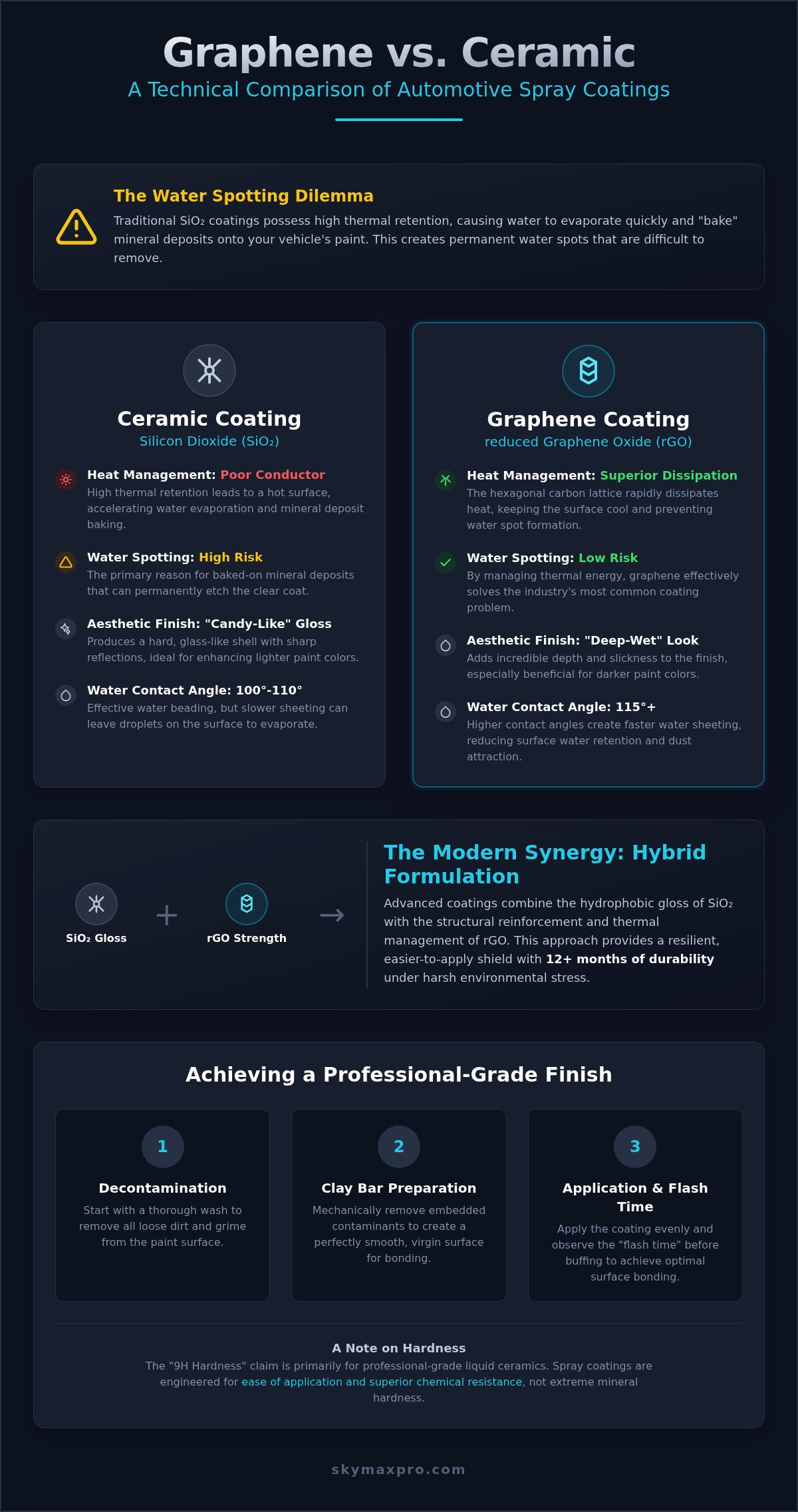
Ceramic coatings utilize Silicon Dioxide (SiO2) as their primary active component. When applied, these nanoparticles bond with the paint surface to form a semi-permanent sacrificial layer. This layer provides glass-like hardness and a high surface tension that repels water and environmental contaminants. While effective for UV protection, pure ceramic formulations often struggle with thermal retention. Because silica is a poor conductor of heat, it allows water droplets to reach high temperatures quickly. This often results in mineral deposits being "baked" into the coating, a common industry challenge known as water spotting.
What is Graphene Spray Coating?
Graphene protection introduces reduced Graphene Oxide (rGO) into the chemical matrix. Graphene is a single layer of carbon atoms arranged in graphene's honeycomb lattice structure, which grants it remarkable tensile strength and thermal conductivity. In detailing science, graphene is considered a "conductive" coating because it dissipates surface heat rapidly. This thermal management reduces the surface temperature of the vehicle, preventing water spots from forming during evaporation. It's this molecular configuration that enhances surface slickness and reduces the static charge that attracts dust.
Modern engineering has moved toward a hybrid approach. Flagship products like the Ceramic Graphene Shield Coating combine the hydrophobic properties of SiO2 with the structural reinforcement of rGO. This synergy creates a coating that's not only easier to apply but also more resilient to the environmental stresses of 2026. By integrating carbon-based lattices into traditional ceramic foundations, engineers have successfully addressed the inherent thermal limitations of pure silica. This technical progression ensures that the debate between graphene spray coating vs ceramic spray coating is no longer about choosing one over the other; it's about leveraging the benefits of both through advanced nanotechnology.
Performance Benchmarks: Comparing Durability, Gloss, and Resistance
Visual performance varies significantly based on the molecular foundation of the product. Ceramic sprays typically produce a high-gloss, "candy-like" shell that enhances the sharp reflections on lighter paint colors. Graphene, by contrast, tends to provide a "deep-wet" look that adds measurable depth to darker finishes. When evaluating graphene spray coating vs ceramic spray coating, the choice often depends on the desired aesthetic outcome and the specific environmental stressors the vehicle faces. Both technologies provide a level of surface enhancement that traditional waxes cannot match.
Hydrophobic performance is measured by water contact angles. High-quality ceramic sprays generally achieve contact angles between 100 and 110 degrees. Graphene-infused hybrids often push these angles to 115 degrees or higher, resulting in faster sheeting speeds and reduced water retention. This superior impermeability is documented in The Science of Graphene Coatings, which highlights the material's resistance to chemical penetration. This protection is critical for neutralizing acidic contaminants like bird droppings and road salt before they can etch the clear coat. When analyzing the longevity of a graphene spray coating vs ceramic spray coating, real-world data indicates that graphene-infused hybrids maintain their integrity longer under harsh UV exposure.
Hardness and Scratch Resistance
The marketing of "9H hardness" in spray products is frequently misunderstood. Professional liquid coatings can reach these levels, but spray-on formats are designed for ease of application rather than extreme mineral hardness. For context, the Mohs scale measures the scratch resistance of minerals, where automotive clear coats typically rank between 2 and 3. While a spray coating won't stop a rock chip, graphene's inherent flexibility allows the layer to absorb minor abrasions better than the more brittle structure of pure ceramics. This elasticity helps prevent micro-marring during maintenance washes.
UV Protection and Oxidation Prevention
Both technologies excel at blocking UV radiation, which is the primary cause of paint oxidation and fading. However, graphene's thermal properties provide a distinct advantage in high-heat environments. By dissipating heat across the surface, products like the Ceramic Graphene Shield Coating prevent the clear coat from reaching critical temperatures that accelerate chemical breakdown. This thermal management is essential for vehicles stored outdoors in tropical or desert climates. For those seeking a professional-grade finish with enhanced durability, integrating a graphene-infused ceramic hybrid into your maintenance routine ensures long-term color preservation and surface stability.
The Water Spotting Dilemma: Why Graphene Holds the Engineering Edge
One of the most persistent technical challenges in automotive surface protection is the formation of mineral deposits, commonly known as water spots. When comparing a graphene spray coating vs ceramic spray coating, the difference in resistance is rooted in thermal management rather than just hydrophobicity. Traditional silica-based coatings act as thermal insulators. They retain heat from solar radiation, which causes water droplets to evaporate at an accelerated rate. As the liquid phase disappears, dissolved minerals like calcium and magnesium precipitate, bonding aggressively to the coating’s surface. This "baking" effect is the primary reason ceramic-coated vehicles often require specialized acidic decontamination washes to restore their finish.
Graphene technology addresses this engineering flaw through superior thermal conductivity. Because graphene is a highly efficient conductor, it allows surface heat to dissipate across the entire panel rather than concentrating it under individual water droplets. This leads to a lower surface temperature, which slows the rate of evaporation and gives the surface’s hydrophobic sheeting properties more time to move the water off the panel. In a side-by-side evaluation of graphene spray coating vs ceramic spray coating, the graphene-enhanced surface significantly reduces the likelihood of permanent mineral etching, even in high-heat environments.
Heat Dissipation Science
Thermal imaging reveals that panels treated with carbon-lattice additives operate at lower temperatures than those with pure silica barriers. This reduction in heat prevents the clear coat from reaching the critical threshold where mineral bonding becomes irreversible. By maintaining a cooler surface, the coating ensures that moisture doesn't flash-dry before it can sheet off the vehicle. For a deeper technical dive into how these molecular layers interact with paint, consult The Engineering of Ceramic Coating.
Anti-Static Properties
Electrical resistance is another key differentiator in surface engineering. Ceramic coatings are non-conductive, which facilitates the buildup of static electricity as the vehicle moves through the air. This static charge acts as a magnet for fine dust, pollen, and industrial fallout. Graphene, being a conductive material, allows these charges to bleed off the surface naturally. The result is a vehicle that stays cleaner for longer periods, particularly in dry or dusty environments. This reduction in surface contamination directly translates to higher maintenance efficiency and fewer abrasive contact washes over the coating's lifecycle. By minimizing the frequency of maintenance, you preserve the structural integrity of the protection layer.
Application Engineering: Efficiency in the Detailing Process
Operational efficiency in automotive detailing is determined by the synergy between surface preparation and the chemical flash point of the chosen sealant. When evaluating a graphene spray coating vs ceramic spray coating for professional or high-end DIY use, the "user experience" during the leveling process is often the deciding factor. Ceramic sprays typically exhibit a shorter flash time, requiring immediate buffing to prevent high spots. In contrast, modern graphene-infused formulas often provide a more forgiving window, allowing the installer to cover larger sections before the product begins to "rainbow" and bond permanently to the clear coat.
The structural integrity of the bond depends entirely on surface energy. Any residual oils, waxes, or industrial fallout will prevent the nanoparticles from anchoring to the paint. This is why the decontamination phase is the most critical step in the engineering sequence. While a ceramic spray might feel slicker immediately after application, a graphene hybrid typically reaches its peak hydrophobic state after a shorter cure cycle. For most 2026 formulations, the vehicle is safe for environmental exposure within 4 to 6 hours, though a full 24-hour dry period is recommended before the first maintenance wash.
The Professional Workflow
Achieving aerospace-grade results requires a methodical approach to surface leveling. To apply the PRO Ceramic Graphene Spray Coating, you must first ensure the panels are cool to the touch. Use a high-GSM microfiber towel to level the product in a cross-hatch pattern, ensuring uniform coverage without excessive product buildup. For a comprehensive breakdown of the preparation steps required for high-tensile bonding, refer to our Professional Auto Detailing Master Checklist. Using a dual-towel method, one for the initial wipe and a second for the final buff, is the most effective way to eliminate streaking.
Common Application Mistakes
The most frequent failure point in the application of a graphene spray coating vs ceramic spray coating is working in direct sunlight. High surface temperatures cause the carrier solvents to evaporate prematurely, leaving behind uneven concentrations of SiO2 or rGO that are difficult to level without abrasive polishing. Over-application is another common error; these concentrated formulas are designed for efficiency, and using too much product leads to "oil sweating" or hazy patches. Always ensure the surface has been stripped with an IPA-based cleaner to remove any polishing oils before the final application. To ensure your vehicle receives the highest level of protection, you can order the PRO Ceramic Graphene Spray Coating directly for your next detailing project.
The Verdict: Choosing Your Aerospace-Grade Protection
Selecting the optimal sealant involves an objective assessment of your vehicle's environmental exposure and paint profile. When comparing a graphene spray coating vs ceramic spray coating, the decision shouldn't be based on marketing trends but on the technical requirements of the surface. Ceramic sprays remain a highly effective solution for light-colored vehicles where a sharp, "candy-like" gloss is the primary objective. These SiO2-based products provide excellent UV protection and are often the most cost-efficient choice for high-volume detailing maintenance where water spotting is less of a concern due to frequent washing.
Graphene formulations represent the superior engineering choice for dark-colored paints and vehicles operating in high-heat environments. The thermal dissipation properties of reduced graphene oxide (rGO) mitigate the risk of mineral etching, a critical advantage for daily drivers parked outdoors. From an investment perspective, graphene-infused hybrids offer a higher level of efficiency. While the initial chemical acquisition may be higher than entry-level silica sprays, the extended durability—often reaching 12 months with proper maintenance—reduces the total annual labor hours and product consumption required to maintain a protected finish.
Decision Matrix: Ceramic vs. Graphene
To assist in your selection, we've categorized the primary use cases based on 2026 performance benchmarks:
- Daily Drivers in Harsh Climates: Graphene is the recommended choice due to its chemical resistance against road salt and its ability to prevent water spots during rapid evaporation cycles.
- Show Cars and Light Colors: Ceramic sprays excel at providing maximum light refraction and "pop" on white, silver, and light gray finishes.
- Surface Compatibility: While both technologies are safe for wheels and glass, graphene’s anti-static properties make it more effective at repelling brake dust on high-performance wheels.
- Textured Plastics and Trim: The flexibility of graphene lattices prevents the chalky residue sometimes associated with older ceramic technologies on porous surfaces.
Next Steps for Ultimate Protection
The longevity of any aerospace-grade barrier is dependent on the maintenance protocol. Using a pH-neutral Ceramic Waterless Car Wash ensures that you're cleaning the surface without stripping the underlying molecular bonds. This process adds a sacrificial layer of protection with every wash, effectively extending the life of your base coating. For those seeking to maximize both gloss and resistance, the hybrid approach utilized in our professional-grade formulas provides the most balanced protection profile available in the current market. You can explore our full range of high-tensile solutions and upgrade your vehicle’s defense by visiting the SKY MAXPRO Graphene Collection to select the formula that matches your specific engineering requirements.
Advancing Your Surface Maintenance Strategy
The technical evolution from pure silica to carbon-reinforced matrices ensures that vehicle protection is no longer a compromise between gloss and durability. By understanding the chemical foundations of graphene spray coating vs ceramic spray coating, you can implement a maintenance cycle that prioritizes thermal management and chemical resistance. Graphene's ability to dissipate heat effectively eliminates the primary cause of mineral etching while maintaining the hydrophobic performance professionals demand. This engineering transition allows for longer protection intervals and reduced surface maintenance costs over the vehicle's lifecycle.
SKY MAXPRO provides the tools necessary for this transition, offering solutions engineered with aerospace-approved nanotechnology. Our formulations are trusted by detailing professionals nationwide to deliver measurable results in the most demanding environments. We back every product with a 100% Satisfaction Guarantee to ensure your vehicle receives the highest standard of surface protection. Explore the SKY MAXPRO Aerospace-Grade Graphene Collection to optimize your detailing workflow today.
Achieving a laboratory-grade finish is now a standard reality for every high-performance vehicle owner.
Frequently Asked Questions
Is graphene spray coating better than ceramic spray coating?
Graphene is technically superior in specific environments, particularly where heat and water spotting are prevalent. While ceramic offers excellent gloss, graphene's carbon-based lattice provides better thermal conductivity and chemical resistance. This makes it a more resilient choice for daily drivers exposed to extreme elements and industrial fallout. The decision depends on whether you prioritize pure visual "pop" or long-term structural durability.
How long does a graphene spray coating last compared to ceramic?
Longevity varies by formulation, but graphene sprays typically offer 6 to 12 months of protection. Standard ceramic sprays generally reach their performance limit between 2 and 6 months. When comparing graphene spray coating vs ceramic spray coating durability, the carbon-lattice structure provides a more stable bond against UV degradation and abrasive maintenance cycles. This extended lifespan reduces the total annual labor required for paint preservation.
Can I apply graphene spray coating over an existing ceramic coating?
You can apply a graphene spray over a professional ceramic coating to serve as a sacrificial top-up layer. This "stacking" method leverages the hardness of the base ceramic while adding the slickness and thermal benefits of graphene. It effectively extends the life of the primary coating and enhances its hydrophobic properties. This is a common strategy for maintaining high-end professional detailing work.
Does graphene coating really prevent water spots better than ceramic?
Graphene significantly reduces the occurrence of water spots by lowering the surface temperature of the paint. Because graphene conducts heat away from water droplets, they don't evaporate as quickly. This prevents mineral deposits from "baking" into the clear coat, which is a common failure point for traditional silica-based coatings. It's the most effective chemical solution for vehicles stored in high-heat environments.
Is graphene spray coating harder to apply than ceramic?
Graphene sprays are often more user-friendly than pure ceramic sprays during the leveling phase. They tend to have longer flash times, which gives the installer more time to buff the product before it bonds permanently. This reduces the risk of high spots and streaking. It's an ideal technology for those who want professional-grade protection without the temperamental application requirements of traditional ceramic products.
Can graphene spray be used on glass and plastic trim?
These sprays are highly effective on non-porous surfaces like glass, wheels, and plastic trim. Graphene's flexibility prevents the white, chalky residue that some silica-based products leave on textured plastics. On glass, it provides extreme hydrophobicity that improves visibility during rain. Its versatility allows for a "one-product" approach to protecting the entire exterior of the vehicle, from wheels to window seals.
How much graphene is actually in these spray-on products?
Spray-on products contain reduced graphene oxide (rGO) as a functional additive rather than a primary bulk ingredient. Even at low concentrations, these nanoparticles are sufficient to alter the surface energy and thermal properties of the coating. The performance comes from the quality of the dispersion within the silica matrix. It's the molecular arrangement, not the raw volume, that provides the engineering advantage.
Do I need to polish my car before applying a graphene spray coating?
Polishing is recommended to ensure a surgically clean surface for molecular bonding. While you can apply the coating to unpolished paint, any existing swirl marks or oxidation will be sealed underneath. Removing these defects and using an IPA-based prep spray ensures the graphene spray coating vs ceramic spray coating performance reaches its full engineering potential. Proper preparation is the foundation of any long-lasting surface barrier.