

Most vehicle owners view the engine compartment as a high-risk "no-go zone" because they equate moisture with catastrophic electrical failure. It's true that improper saturation can damage sensitive sensors, but leaving baked-on oil and road salt to accumulate allows for accelerated oxidation and thermal insulation of critical components. If you've been hesitant about how to clean engine bay surfaces due to fears of water entering the alternator or air intake, your caution is logically sound. You shouldn't have to choose between mechanical safety and a factory-clean finish.
This article bridges the gap between caution and cleanliness by introducing a technical protocol rooted in aerospace-grade chemistry and precision decontamination. You'll learn how to deploy Heavy Duty Red Power Degreaser to break stubborn organic bonds without leaving the white residue common in consumer-grade products. We'll also cover the application of nanotechnology-based Ceramic Trim Plastic Restorer and high-heat shields to ensure a professional finish that protects against future degradation. By following this structured engineering approach, you can restore your engine bay with complete confidence in the safety and longevity of your vehicle's electronics.
Key Takeaways
- Understand why engine detailing is a critical maintenance protocol that prevents component heat retention and metal oxidation rather than just a cosmetic upgrade.
- Learn the professional protocol for how to clean engine bay surfaces using Heavy Duty Red Power Degreaser to break organic bonds without leaving white residue.
- Master a 6-step technical workflow that prioritizes thermal stabilization and poly-film shielding to protect sensitive electrical connectors and air intakes.
- Discover how nanotechnology-based Ceramic Trim Plastic Restorer fortifies high-heat surfaces against dust accumulation and plastic fading.
- Implement an aerospace-grade maintenance schedule using Quick Detailer Spray for efficient, repeatable spot-cleaning between deep decontamination cycles.
The Engineering Logic Behind Engine Bay Detailing
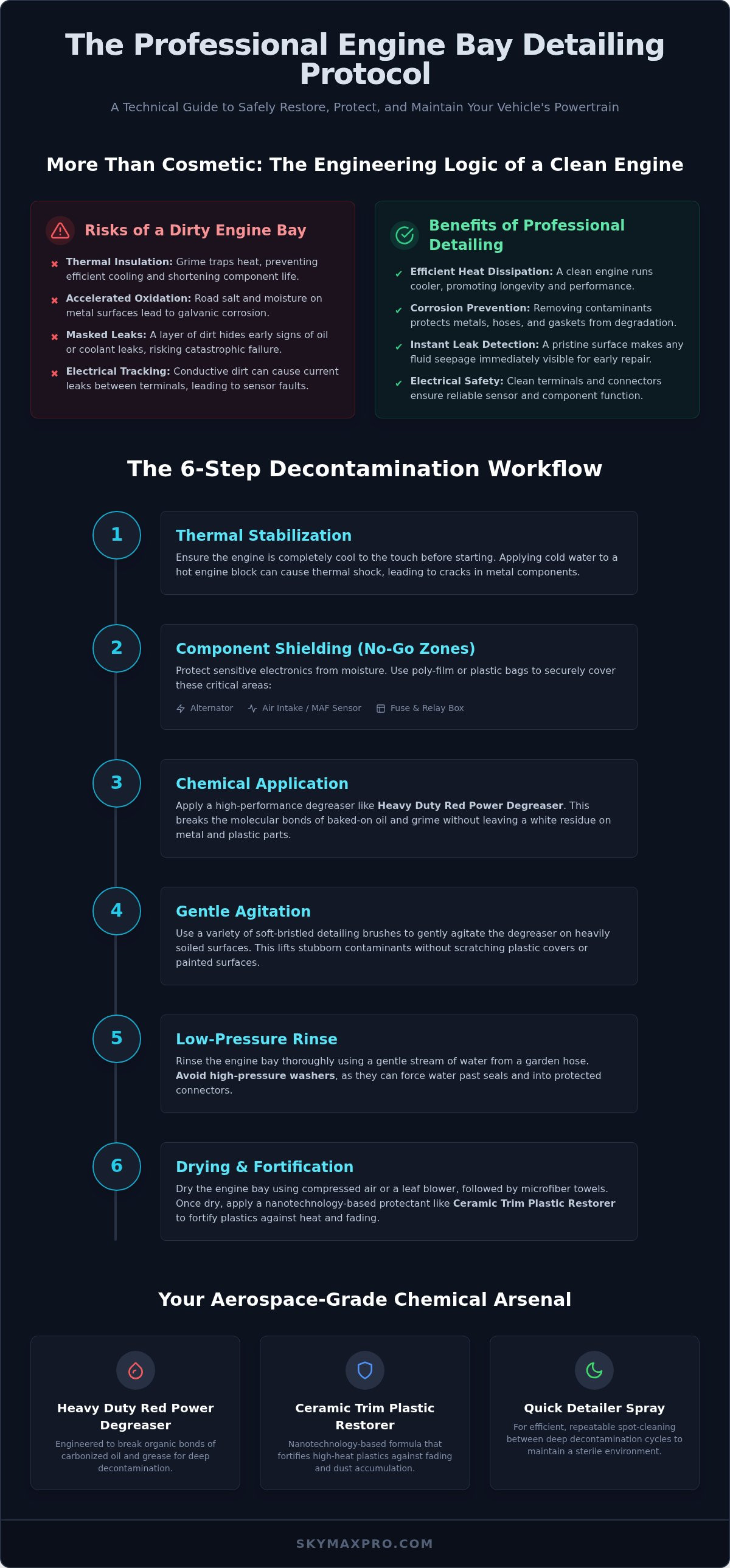
Engine bay detailing is frequently misunderstood as a purely aesthetic endeavor. However, applying professional Auto detailing principles to the powertrain compartment is actually a critical maintenance protocol. A layer of carbonized oil and road grime doesn't just look unprofessional; it acts as a thermal insulator. This "heat soak" effect prevents efficient heat dissipation from the engine block and cooling lines, potentially shortening the service life of high-performance components. When researching how to clean engine bay environments, you must view the process as a technical decontamination task rather than a simple wash.
The contaminants found under the hood are chemically aggressive. Road salt, atmospheric fallout, and carbonized oil create a destructive cocktail. Road salt initiates galvanic corrosion when it settles on dissimilar metals, while oil saturation causes the elastomers in hoses and gaskets to swell and lose structural integrity. The debate between "dry" and "wet" cleaning is usually solved by assessing the level of buildup. While light dust can be managed with compressed air, heavy decontamination requires a high-performance surfactant like Heavy Duty Red Power Degreaser to break the chemical bonds of baked-on lubricants. Using the right chemistry ensures that grime is emulsified without the need for excessive mechanical scrubbing or dangerous water pressure.
Why Cleanliness Impacts Mechanical Longevity
Maintaining a sterile environment under the hood allows for instantaneous leak detection. A clean engine makes the first sign of a weeping gasket or a hairline crack in a plastic coolant reservoir immediately visible. This early warning system prevents catastrophic failures during operation. Additionally, removing conductive dirt buildup reduces the risk of electrical tracking. This phenomenon occurs when current "leaks" across dirty surfaces between terminals, causing mysterious sensor faults, parasitic battery drain, or erratic idling that's difficult for standard diagnostics to catch.
Anatomy of the Engine Bay: Critical 'No-Go' Zones
Modern vehicles utilize sophisticated electronics with specific Ingress Protection (IP) ratings, but these aren't foolproof against high-pressure liquid. Components like the alternator, air intake, and fuse box are high-risk zones that require physical shielding with poly-film before any liquid is introduced. You must ensure the engine is cool to the touch to prevent thermal shock, as cold water hitting a hot cast-iron or aluminum block can cause immediate structural cracking or warping. Learning how to clean engine bay components safely requires recognizing that while sensors are designed for weather resistance, they aren't engineered for direct, high-pressure impingement. Precision and protection are the primary safeguards against electrical short circuits.
Chemical Decontamination: The Role of Heavy-Duty Degreasers
Generic maintenance guides often suggest that mild dish soap is sufficient for engine bay upkeep. This approach ignores the complex molecular bond formed when engine oil and road contaminants are subjected to thousands of high-heat thermal cycles. When you're determining how to clean engine bay surfaces effectively, you must address these carbonized resins. Standard surfactants merely slide over the surface; they don't break the organic bond. High-performance chemistry is required to lower the surface tension between the grease and the substrate, allowing the cleaner to penetrate deep into the microscopic pores of the cast aluminum and plastic components.
Aqueous-based cleaners are generally superior to harsh, solvent-heavy alternatives because they offer precise pH control. Choosing a formula with a balanced pH prevents the "white spotting" or etching often seen on alloy components after using industrial-strength caustic cleaners. It's about finding a chemical equilibrium where the solution is aggressive enough to emulsify grease but stable enough to maintain the structural integrity of the metal. This is the difference between a simple wash and a professional engineering protocol.
Breaking the Molecular Bond of Grease
Heavy Duty Red Power Degreaser is specifically engineered to target organic resins and carbonized fluids. It operates through advanced emulsification, where the hydrophobic tail of the surfactant molecule attaches to the oil while the hydrophilic head remains in the water. This process effectively lifts the contaminant away from the surface, suspending it in a solution that can be safely rinsed away. Unlike consumer-grade products that leave a chalky film, this technical approach ensures a residue-free finish on all engine alloys.
Compatibility with Aerospace-Grade Materials
Modern engine bays contain a diverse array of materials, including EPDM rubber hoses, silicone vacuum lines, and glass-filled nylon covers. Using chemicals that adhere to Professional Car Detailing Supplies safety standards is vital for long-term reliability. Aerospace-approved formulations provide a higher safety margin because they're tested against strict stress-corrosion cracking benchmarks. This ensures that while you're removing grime, you aren't inadvertently drying out critical seals or causing plastic embrittlement.
For those prioritizing environmental safety alongside mechanical performance, selecting a VOC-free, biodegradable formula is the modern standard. Dwell time is the final variable in this equation. You must allow the chemistry several minutes to work, but you shouldn't let it dry on the surface. If the degreaser begins to evaporate, a light mist of water can reactivate the surfactants. Utilizing Heavy Duty Red Power Degreaser provides the necessary working time to ensure deep decontamination without risking damage to sensitive plastics. Understanding these chemical dynamics is the foundation of how to clean engine bay areas with professional results.
The Professional 6-Step Engine Cleaning Protocol
Executing a systematic protocol is what differentiates professional engineering from amateur maintenance. Many vehicle owners suffer from the "spray and pray" method found on public forums, which often leads to moisture ingress and electrical faults. Applying a structured protocol for how to clean engine bay surfaces ensures repeatable, safe results every time. This sequence is designed to neutralize contaminants while respecting the delicate Ingress Protection (IP) ratings of modern automotive sensors.
- Step 1: Thermal Stabilization. Ensure the engine is cool to the touch. Applying liquids to a hot block can lead to thermal shock, causing micro-fractures in aluminum alloys or cast iron.
- Step 2: Technical Prep. Use poly-film or high-quality plastic wrap to shield the alternator, air intake, and fuse box. Secure these with tape to prevent high-velocity air or water from displacing the protection.
- Step 3: Dry Decontamination. Use compressed air to remove loose debris, leaves, and dust. This prevents the formation of abrasive "mud" when the degreaser is applied.
- Step 4: Targeted Degreasing. Apply Heavy Duty Red Power Degreaser to areas with heavy oil accumulation. Focus on the lower block and frame rails where grease is most concentrated.
- Step 5: Agitation. Work the chemistry into intricate areas using detailing brushes. This mechanical action helps the surfactants penetrate baked-on resins.
- Step 6: Controlled Rinse. Use a low-pressure mist to neutralize and carry away the emulsified grime. Never use a high-pressure jet directly on electrical connectors.
Precision Agitation Techniques
Effective agitation requires selecting the right tool for the specific substrate. Use soft boar's hair brushes for plastic engine covers and synthetic-bristle brushes for the metal block and transmission casing. We utilize a "top-down" methodology to prevent the re-contamination of lower components as you work. This includes cleaning the underside of the hood and the insulation pads first. If the insulation is fragile, use a dry-foam method rather than saturation to prevent the material from sagging or molding.
Drying and Moisture Management
Moisture management is the most critical phase for preventing post-cleaning sensor errors. Forced air is non-negotiable for removing standing water from spark plug wells and deep electrical plugs. Once the bulk of the moisture is displaced, use high-GSM microfiber towels for final absorption on flat surfaces. For a complete inventory of necessary equipment to support this protocol, consult our Professional Auto Detailing Checklist. Understanding how to clean engine bay components correctly requires this attention to detail during the drying phase to ensure the vehicle starts without hesitation.
Fortifying High-Heat Surfaces: From Plastics to Chrome
After completing the decontamination process, the engine bay enters a state of high vulnerability. High-heat surfaces, particularly glass-filled nylon and EPDM rubber, possess high surface energy that naturally attracts atmospheric dust and microscopic debris. If you've mastered how to clean engine bay components but fail to fortify them, the result is a short-lived aesthetic that quickly reverts to a grimy state. Unlike traditional silicone-based dressings that create a sticky, dust-attracting film, professional engineering requires a dry-touch finish that bonds at a molecular level.
Traditional dressings are fundamentally flawed in an engine environment. Under the extreme thermal cycles of a combustion engine, silicone oils evaporate or become "tacky," trapping road grit and making future maintenance more difficult. Nanotechnology-driven coatings reorganize the surface structure to create a hydrophobic and oleophobic barrier. This fortification prevents UV-induced fading and chemical oxidation of plastic covers and rubber hoses, maintaining the material's elasticity and structural integrity over thousands of operating hours.
Ceramic and Graphene Integration
Ceramic Graphene Shield Coating offers a robust sacrificial barrier designed to withstand the intense temperatures of the powertrain. Graphene is the superior choice for engine bays due to its high thermal conductivity. By integrating this material, you ensure that the protection doesn't act as an insulator but rather allows for efficient thermal management of the engine compartment. For restoring faded engine covers and trim pieces to a factory-satin look, applying Ceramic Trim Plastic Restorer is essential. This product penetrates the pores of the plastic to reverse graying and provides a durable, heat-resistant seal. Explore our full range of aerospace-grade surface protection to secure these results.
Metal Restoration and Polishing
Bare metals such as aluminum intake manifolds and steel strut bars are prone to surface oxidation when exposed to moisture and road salts. Using Chrome & Metal Polish allows you to remove this oxidation without the need for aggressive abrasives that could scratch or mar the finish. Once polished, these metals should be sealed with a graphene or ceramic spray to prevent the return of corrosion. This comprehensive approach to how to clean engine bay metals ensures that the mechanical heart of the vehicle remains resistant to environmental degradation while maintaining a high-precision, professional appearance. Consistent fortification is the only way to prevent the long-term "pitting" of aluminum blocks and brackets.
Long-Term Maintenance and the Aerospace Advantage
Effective vehicle stewardship requires more than a single decontamination cycle. Establishing a maintenance schedule based on your specific driving conditions is the final step in mastering how to clean engine bay environments for the long term. If you operate in high-dust regions or coastal areas with high salinity, a quarterly technical inspection is recommended. For standard urban driving, a bi-annual deep clean combined with monthly interim maintenance is sufficient to prevent the re-accumulation of carbonized grease and road fallout.
The "Spot Clean" method is an essential technique for sustaining a factory finish without repeated water exposure. By using Quick Detailer Spray with Ceramic High Gloss Finish, you can neutralize light dust and oil mist before they bond to the surface. Aerospace-grade products provide a distinct advantage here. These formulations are engineered to resist high-temperature degradation and aggressive automotive fluids better than retail alternatives. While retail cleaners often rely on high-pH surfactants that can damage sensitive alloys over time, professional-grade supplies utilize stable chemistry that protects the substrate while emulsifying contaminants.
Maintaining the Ceramic Barrier
Once you've established a protective layer, maintaining that barrier is straightforward. Using Ceramic Waterless Car Wash allows for light engine dusting without the risks associated with high-pressure water. You'll know a coating needs a "booster" application when the hydrophobic properties begin to diminish or when the surface loses its characteristic satin finish. Beyond mechanical health, a meticulously maintained engine bay has a measurable impact on vehicle resale value. It serves as a primary indicator to prospective buyers that the powertrain has been managed with engineering-level precision and care.
The SKY MAXPRO Engineering Standard
Our "Clean, Restore, Protect" philosophy is built on the premise that automotive preservation should be a systematic, data-driven process. Moving away from haphazard cleaning methods and adopting a technical protocol ensures the longevity of every plastic connector, rubber hose, and metal bracket under the hood. This systematic approach reduces the total cost of ownership by preventing the premature failure of parts due to environmental stress. To achieve these results at home, equip your garage with the SKY MAXPRO Exterior Detailing Kit for professional-grade decontamination and fortification. Mastering how to clean engine bay surfaces is ultimately about applying the same level of precision to the engine as the manufacturer did when it left the assembly line.
Advancing Your Automotive Preservation Strategy
Transitioning from a neglected engine compartment to a professionally decontaminated powertrain requires a shift from cosmetic cleaning to engineering-level maintenance. By understanding the thermal impacts of grease accumulation and the molecular mechanics of surfactants, you've moved beyond amateur methods. You now possess the technical framework to manage sensitive electronics while achieving a factory-satin finish that retail products simply cannot replicate.
Mastering how to clean engine bay surfaces is only the first phase of the protocol. The long-term durability of your work depends on fortifying these high-heat components with advanced graphene nanotechnology and aerospace-approved formulations. This systematic approach ensures that every plastic connector and metal bracket remains protected against oxidation and thermal stress, preserving the mechanical heart of your vehicle.
To achieve these standards in your own garage, Shop Aerospace-Grade Engine Detailing Supplies at SKY MAXPRO. Equip yourself with the same professional-grade tools used by specialists to secure measurable results and lasting mechanical integrity. Your vehicle's powertrain deserves the highest level of technical care. Start your restoration with confidence today.
Frequently Asked Questions
Is it safe to clean an engine bay with a pressure washer?
It's safe to clean an engine bay with a pressure washer provided you use a low-pressure nozzle and maintain a distance of at least 24 inches from sensitive components. High-pressure streams can force water past IP-rated seals on sensors and connectors, causing immediate failure. You should aim for a wide fan pattern rather than a concentrated jet to ensure safe decontamination without mechanical damage to fragile plastic clips.
Will cleaning my engine bay cause electrical problems?
Cleaning your engine bay won't cause electrical problems if you follow a technical protocol that includes shielding high-risk zones and using forced air for drying. Most issues arise from standing water in spark plug wells or saturated fuse boxes that weren't properly dried. By implementing a structured approach for how to clean engine bay electronics, you mitigate the risk of short circuits or erratic sensor data.
How often should I clean my vehicle's engine bay?
You should clean your engine bay approximately every six months for standard road use. Vehicles operated in high-dust environments or regions where road salt is used in winter require a quarterly schedule to prevent accelerated oxidation of aluminum parts. Regular maintenance cycles make each cleaning session significantly faster by preventing the heavy carbonization of organic fluids on engine surfaces, ensuring your powertrain remains visible for easy inspection.
Do I need to cover the alternator before cleaning?
You must cover the alternator with poly-film before introducing any liquid cleaners or water. While alternators are designed for atmospheric moisture, direct saturation or chemical ingress can damage the internal brushes, bearings, and voltage regulator. This simple technical precaution is the most effective way to prevent charging system failure during the decontamination process. It's a standard professional safety measure that protects your vehicle's electrical charging capacity.
What is the best degreaser for baked-on engine oil?
Heavy Duty Red Power Degreaser is the most effective solution for emulsifying baked-on engine oil and carbonized fluids. Its advanced surfactant technology lowers surface tension to break organic bonds that standard soaps cannot penetrate. This formula is engineered to be aggressive on grime while remaining safe for the aluminum alloys and cast-iron blocks found in modern powertrains. It ensures a residue-free finish that prepares the surface for nanotechnology-based protection.
Can I clean my engine while it is hot?
You shouldn't clean an engine while it's hot because of the risk of thermal shock to the block and exhaust manifold. Rapid cooling from water can cause micro-fractures in cast metals or warping of precision-machined surfaces. The engine should be cool to the touch, or only slightly warm, to ensure the cleaning chemicals don't evaporate prematurely. Early evaporation can lead to chemical spotting and uneven decontamination across different material substrates.
How do I make the plastic covers in my engine look new again?
You can restore engine covers to a factory-satin finish by applying Ceramic Trim Plastic Restorer after a deep clean. This product utilizes nanotechnology to penetrate the pores of faded plastic, reversing the graying effects of heat-cycle oxidation. When you understand how to clean engine bay plastics correctly, you avoid the sticky residues of traditional dressings that attract dust and degrade under high heat. This results in a durable, dry-touch protective barrier.
Does cleaning the engine bay help with pest control?
Cleaning the engine bay significantly assists with pest control by removing the organic scents and nesting materials that attract rodents. Mice and rats are often drawn to the warmth of an engine and the residual smells of food or nesting debris left by previous inhabitants. By maintaining a sterile environment and using professional-grade products, you eliminate the sensory cues that lead to costly wiring harness damage and insulation destruction.